50s Country Guitar Lessons: Songs You Can Play
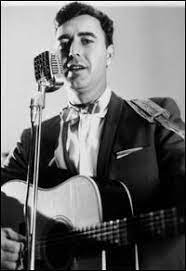
The late 1950s were a great time for country music. Honky-tonk, rockabilly and pop all met on the radio, and the songs from those years are still fun to play on an acoustic guitar.
On this page you’ll find seven classics that I’ve arranged and taught, from Billy Grammer’s “Gotta Travel On” and Guy Mitchell’s “Singing The Blues” to Johnny Horton’s story songs, Lefty Frizzell’s honky-tonk blues, Floyd Cramer’s piano favorite “Last Date” and Johnny Preston’s “Running Bear.” Each lesson shows you the chords, the rhythm pattern and the little picking touches that make the song sound right.
Whether you’re brushing up on the era or learning it for the first time, I hope you’ll find a song here that you’ll enjoy playing.
50s Country Guitar Lessons — Video Previews
performance clips taken directly from the complete lesson videos.
Click Play, then drag the timeline to quickly preview any 50s country lesson featured on this page.
Note: Every arrangement has been personally created, recorded and taught by Kirby
using teaching methods refined through decades of acoustic guitar instruction.
What's Included With Every Lesson
📦 Your Lesson Package Includes
✓ 8–12 minute HD video lesson so you can learn each song step-by-step.
✓ Printable chords & lyrics PDF for easy practice away from the screen.
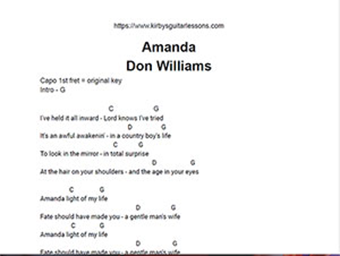
✓ Instant download—start playing in minutes.
✓ Learn at your own pace on any device.
50s Country Guitar Lessons Included On This Page
Floyd Cramer - Last Date
Guy Mitchell - Singing The Blues
Johnny Horton - I'm A One Woman Man - Sink The Bismarck
Johnny Preston - Running Bear
Lefty Frizzell - Cigarettes And Coffee Blues
🎁 Free Demo Preview
Scroll down to check out a completely free demo on Guy Mitchell's “Singing The Blues”Billy Grammer Songs - Learn To Play On Acoustic Guitar
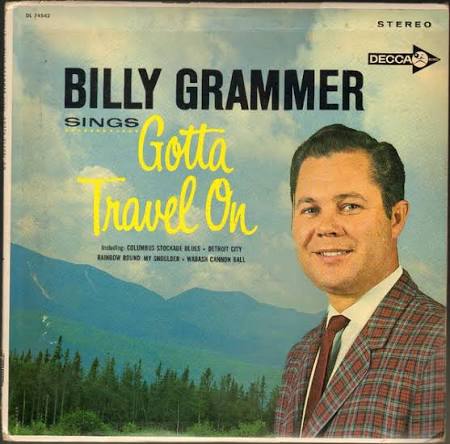
Gotta Travel On has the kind of origin story only folk songs get: it first appeared in print in 1927 as “Yonder Comes the High Sheriff,” decades before it became a pop hit. By 1958, Paul Clayton,
The Weavers, Larry Ehrlich and Dave Lazer had shaped the version Billy Grammer recorded in Nashville with the Anita Kerr Singers. It was also the very first record released on Fred Foster’s new Monument label, and it paid off big: No. 4 on the Hot 100, No. 5 on the country chart, No. 2 in Canada and about a million copies sold.
Grammer joined the Grand Ole Opry in 1959, and Buddy Holly reportedly opened his final tour with the song.
What You'll Learn From This Lesson
I play this one in standard tuning with a root down up down up down up rhythm pattern or you could play a root down up bass up down up pattern. You'll need a G, C and a D, D7 as well as an A and E for this one when they do a key change. Some picking required.
Guitar Lesson Details - (chords & lyrics sheet incl with lesson)
Back To Song List
Floyd Cramer Songs - Learn To Play On Acoustic Guitar

Last Date is Floyd Cramer at his most recognizable: a piano instrumental built on the “slip note” style that gave Nashville’s studio sound its signature.
Cramer wrote it and recorded it on July 12, 1960, at RCA Victor’s Nashville studio with Chet Atkins producing. It rose to No. 2 on the Hot 100 and No. 11 on the country chart, held out of the top spot only by Elvis Presley’s “Are You Lonesome Tonight?”, a record Cramer also played on.
Words came later. Skeeter Davis and Boudleaux Bryant wrote lyrics in 1960, and Conway Twitty added his own in 1972, turning it into a No. 1 country hit, a feat Emmylou Harris repeated in 1982. Cramer’s original sold over a million copies.
What You'll Learn From This Lesson
I play this song in standard tuning with a down down up down down down up and repeat rhythm pattern with picking and the chords C, F, G7, G, Am, Dm and a Gsus.
Guitar Lesson Details - (chords & lyrics sheet incl with lesson)
Back To Song List
Guy Mitchell Songs - Learn To Play On Acoustic Guitar

Singing The Blues came from Melvin Endsley, a songwriter who had used a wheelchair since childhood polio and wrote it in 1954.
Marty Robbins recorded it first and ruled the country charts for 13 weeks, but it was Guy Mitchell’s pop version, produced by Mitch Miller and trimmed with a whistled hook, that took over the Hot 100 in December 1956 and stayed at No. 1 into February.
Britain turned it into a duel: Mitchell and Tommy Steele’s rival recording traded the No. 1 spot in early 1957, which made it the only song to knock itself off the top twice. Randy Travis and The Kentucky Headhunters have recorded it since.
What You'll Learn From This Lesson
Play a root down up root up down up rhythm pattern for this one in standard tuning and some lead. The chords needed are E, C7, B7 and an A
Guitar Lesson Details - (chords & lyrics sheet incl with lesson)
Back To Song List
Johnny Horton Songs - Learn To Play On Acoustic Guitar

I'm A One Woman Man catches Johnny Horton before the history ballads made him a star: a honky-tonk number with a rockabilly kick. Horton and his manager Tillman Franks wrote it, and Horton cut it at his first Columbia session in January 1956.
Columbia released it that September as the follow-up to his debut hit, “Honky-Tonk Man,” and it peaked at No. 7 on the country chart. No studio album carried it at the time, since Horton’s first LPs didn’t appear until the end of the decade.
The song has had a long second life, though: George Jones recorded it in 1960 and again in 1988, when it reached No. 5 and became his last solo top-10 hit, and Glen Campbell and Josh Turner have covered it too.
What You'll Learn From This Lesson
Played with Drop D Tuning and a capo on the 2nd, you'll pick a bit in this tune while playing a down up down up with walking bass rhythm pattern. The chords you'll need is a G, C and D.
Guitar Lesson Details - (chords & lyrics sheet incl with lesson)
Back To Song List

Sink The Bismarck turns the chase and sinking of the German battleship Bismarck in 1941 into a rolling, marching ballad. Johnny Horton and Tillman Franks wrote it, inspired by the 20th Century Fox movie of the same name, and Columbia released it in early 1960 with Don Law producing.
The song was used in U.S. theater trailers, though it never made it into the film. It reached No. 3 on the Hot 100 in April 1960, No. 6 on the country chart and No. 1 in Canada, and it’s on the album Johnny Horton Makes History.
Homer and Jethro poked fun at it as “We Didn’t Sink the Bismarck.” Horton was killed in a car accident that November, at only 35.
What You'll Learn From This Lesson
This one has down down up down quick shuffle pattern to start. The it turns into a root down bass down and repeat rhythm pattern with some bass runs. Played in Drop D Tuning with the chords D, G and A.
Guitar Lesson Details - (chords & lyrics sheet incl with lesson)
Back To Song List
Johnny Preston Songs - Learn To Play On Acoustic Guitar

Running Bear is a teenage tragedy song about two young lovers from feuding tribes, written by J.P. Richardson, better known as the Big Bopper of “Chantilly Lace.”
Richardson offered it to his friend Johnny Preston, a singer from Port Arthur, Texas, and they recorded it in Houston in 1958, with Richardson, George Jones and producer Bill Hall supplying the “uga-uga” chanting and war cries in the background. Richardson died in the February 1959 plane crash that also killed Buddy Holly and Ritchie Valens, so Mercury released the single that August without him.
It reached No. 1 on the Hot 100 for three weeks in January 1960, right after Marty Robbins’ “El Paso,” and topped the UK chart too.
What You'll Learn From This Lesson
This one I play with a capo 2nd fret in standard tuning while playing down strokes for a rhythm pattern followed by down up down up and repeat Pattern. Some lead here with the chords, G, C, D and an A7.
Guitar Lesson Details - (chords & lyrics sheet incl with lesson)
Back To Song List
Lefty Frizzell Songs - Learn To Play On Acoustic Guitar

Cigarettes And Coffee Blues sometimes listed as “Smokin’ Cigarettes and Drinkin’ Coffee Blues,” was written by Marty Robbins, but Lefty Frizzell got to it first.
He recorded it in 1958 and Columbia released it that November. It reached No. 13 on the country chart in early 1959 and gave Frizzell a welcome comeback after a long cold streak that began in the mid-1950s, years after his No. 1 hits like “If You’ve Got the Money I’ve Got the Time.”
The track is a danceable honky-tonk number built on a shuffle beat, walking bass and boogie-woogie piano. Robbins cut his own version in January 1963 and took it to No. 14. Frizzell’s recording later appeared on the 1967 compilation Mom and Dad’s Waltz.
What You'll Learn From This Lesson
I play a root down root up down up and repeat rhythm pattern here in standard tuning with just a few riffs required. For chords play a G, C, F and a C7.
Guitar Lesson Details - (chords & lyrics sheet incl with lesson)
Back To Song List
Thanks for stopping by and spending some time with these 50s country guitar lessons. These songs have lasted for good reason, and I hope you have as much fun playing them as I do teaching them.
Take your time with each one, learn it at your own pace, and keep your guitar close by. I add new lessons regularly, so please check back for the latest additions. And if there’s a song from this era you’d like to see here, send me a note through the Contact page.
Explore More Country Guitar Lessons ... (click images)


Home Page
Very Easy Country Guitar Songs

Kirby Swinemar is an acoustic guitar instructor, performer and song arranger who has taught online for 21 years and created more than 4,000 original acoustic guitar lessons. He specialises in song-based acoustic guitar instruction, rhythm guitar techniques, and creating full-sounding solo arrangements that help beginner and intermediate players move beyond basic strumming.
Explore more of Kirby's work at Kirby's Guitar Lessons, watch his performances and tutorials on his YouTube Channel or follow him on Facebook. You can also learn more about his teaching background on the About Me page.
Latest 100 Tutorials
© 2019–2026 KirbysGuitarLessons.com — All Rights Reserved