50s and 60s Country Songs on Guitar: Chords, Demos and Lessons
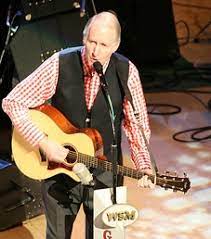
The country radio of the 1950s and 60s was full of wonderful storytellers, from Hank Snow’s runaway train to Porter Wagoner’s haunting tale of a small-town crash.
These songs still hold up because they’re built on a few honest chords and a melody you can hum after one listen, which makes them great fits for the acoustic guitar. On this page you’ll find 16 classics by 14 artists, including Faron Young’s “Hello Walls,” George Hamilton IV’s “Abilene,” Jack Greene’s “There Goes My Everything” and Roy Acuff’s “The Wabash Cannonball.”
Each purchase has a free chord sheet, full lesson with a full demo.
Billy Walker - Charlie's Shoes
Eddy Arnold - Make The World Go Away
Faron Young - Hello Walls
George Hamilton IV - Abilene, Break My Mind
Hank Snow - I'm Movin' On
Jack Greene - There Goes My Everything
Leroy Van Dyke - Walk On By
Porter Wagoner - The Carroll County Accident
Red Steagall - Lone Star Beer & Bob Wills Music
Roy Acuff - The Wabash Cannonball
Roy Clark - If I Had To Do It All Over Again, Yesterday When I Was Young
Slim Dusty - Lights On The Hill
Tommy Hunter - Traveling Man
Wilma Lee & Stoney Cooper - This Ole House
50s And 60s Country Songs
Chords, Lyrics, Demos, Tutorials
Billy Walker Songs - Learn To Play On Guitar

Charlie's Shoes gave Billy Walker the only No. 1 country hit of his career, and it came after years of hits that stopped short of the top.
Roy Baham wrote the song, and Walker recorded it in Nashville on November 20, 1961, with Don Law producing for Columbia. It reached the top of the chart in 1962, spending two non-consecutive weeks at No. 1 and 23 weeks on the chart, and it later appeared on his 1963 Greatest Hits album.
Guy Mitchell, Eddy Arnold and Faron Young all recorded it too, but Walker’s version was the one that stuck. The Tall Texan joined the Grand Ole Opry in 1960 and stayed until a van accident took his life in 2006, at age 77.
Chords And Strumming
I play this one in standard tuning with some lead with the chords D, G, A7 and an EM. For rhythm play a root down up down up down up and repeat pattern.
Guitar Lesson Details - (chords & lyrics sheet incl with lesson)
Chords & LyricsBack To Song List
Eddy Arnold Songs - Learn To Play On Guitar

Make The World Go Away is said to have come to Hank Cochran in about fifteen minutes. He had left a movie theater in 1960 while on a date, and by the time he reached home he had the whole song.
Ray Price recorded it first in 1963 and took it to No. 2 on the country chart, but Eddy Arnold made it famous. Arnold cut it on June 22, 1965, at RCA’s Nashville studio with Chet Atkins producing and Floyd Cramer on piano, and it spent three weeks at No. 1 on the country chart in December 1965.
It also reached No. 6 on the Hot 100, topped the adult contemporary chart and entered the Grammy Hall of Fame in 1999.
Chords And Strumming
This one I play with a capo 2nd fret and drop D tuning while playing a root up down up and repeat rhythm pattern. Some lead with the chords G, C, Am, D, Em and a Cm.
Guitar Lesson Details - (chords & lyrics sheet incl with lesson)
Chords & LyricsBack To Song List
Faron Young Songs
- Learn To Play On Guitar

Hello Walls put Willie Nelson on the map as a songwriter. He wrote it soon after Pamper Music hired him in Nashville, and Hank Cochran, who had stepped out to make a call, came back to find the song finished and told him it was a hit.
Faron Young recorded it on January 7, 1961, with The Wilburn Brothers on backing vocals, and Capitol released it that March. Nelson, short on cash, offered to sell Young the song’s publishing rights for $500.
It spent nine weeks at No. 1 on the country chart and reached No. 12 on the Hot 100, Young’s only top-40 pop hit. The song is a heartbroken man’s one-sided chat with his walls, window and ceiling.
Chords And Strumming
For this number I play a root up down up and repeat with walkin' bass rhythm pattern in standard tuning and no lead. The chords are C, F, G and a D7.
Guitar Lesson Details - (chords & lyrics sheet incl with lesson)
Chords & LyricsBack To Song List
George Hamilton IV Songs
- Learn To Play On Guitar

Abilene began with a Western movie. Bob Gibson was inspired to write it after watching the Randolph Scott film Abilene Town, and he finished it with John D. Loudermilk and Lester Brown.
George Hamilton IV, a North Carolina singer who had been signed to RCA by Chet Atkins, recorded it with Atkins producing, and the label released it in May 1963. It spent four weeks at No. 1 on the country chart that fall, reached No. 15 on the Hot 100 and No. 4 on the adult contemporary chart, and became his biggest hit.
Hamilton also sang it in the 1963 movie Hootenanny Hoot, and Bobby Bare recorded it on his 500 Miles Away from Home album.
Chords And Strumming
I play a root up down up root up down up repeat rhythm pattern here in standard tuning and some lead. The chords you'll need are E, Ab, A, Gb, B7 and an A7.
Guitar Lesson Details - (chords & lyrics sheet incl with lesson)
Chord & LyricsBack To Song List

Break My Mind was another John D. Loudermilk song for George Hamilton IV, and by 1967 the two were close collaborators, with Loudermilk even arranging Hamilton’s recording. RCA released it in the summer of 1967 as the follow-up to Hamilton’s cover of Joni Mitchell’s “Urge for Going,” which had reached No. 7.
This one did a notch better, climbing to No. 6 on the country chart. Both songs came from his folk-flavored album Folksy, one of several 1960s records in which Hamilton blended country with folk material.
A long list of artists, from Anne Murray and Glen Campbell to Linda Ronstadt and Vern Gosdin, have recorded “Break My Mind” since.
Chords And Strumming
A bit of picking here with a root down up root up down up rhythm pattern with a capo 5th fret. The chords here are C, F and G7.
Guitar Lesson Details - (chords & lyrics sheet incl with lesson)
Chord & LyricsBack To Song List
Hank Snow Songs - Learn To Play On Guitar

I'm Movin' On nearly never got recorded. Hank Snow tried to cut it at his first RCA session in 1949, but recording director Steve Sholes turned it down, and by the spring of 1950 Sholes had forgotten the rejection.
Snow recorded it on March 28 in Nashville, and RCA released it in May. The 12-bar blues about a man leaving behind a woman who was flying too high for him hit No. 1 on August 19, 1950, and stayed there for 21 weeks, tying the record for the most weeks at the top. It saved his RCA contract and was the first of seven No. 1 hits for him.
Ray Charles took it to No. 40 on the pop chart in 1959, and the Rolling Stones recorded it.
Chords And Strumming
Only a D, G and an A in this one with a root down up down up down up and repeat rhythm pattern in standard tuning. Some lead required.
Guitar Lesson Details - (chords & lyrics sheet incl with lesson)
Chords & LyricsBack To Song List
Jack Greene Songs - Learn To Play On Guitar

There Goes My Everything came from the pen of Dallas Frazier, a staff writer for Ferlin Husky’s publishing company, who wrote it after seeing the fallout from two broken marriages among friends.
Husky recorded it first in 1966, but Jack Greene’s version, produced by Owen Bradley for Decca, entered the country chart on October 22, 1966, and stayed at No. 1 for seven weeks. It also reached No. 65 on the Hot 100.
At the first CMA Awards in 1967, the song won Single of the Year and Song of the Year, the album won Album of the Year, and Greene was named Male Vocalist of the Year. Engelbert Humperdinck took it to No. 20 on the Hot 100, and Elvis Presley recorded it too.
Chords And Strumming
Play a capo 3rd fret in standard tuning for this one with a root down up down up and repeat rhythm pattern. A little picking in here with the chords G, C, D and a D7.
Guitar Lesson Details - (chords & lyrics sheet incl with lesson)
Chords & LyricsBack To Song List
Leroy Van Dyke Songs - Learn To Play On Guitar

Walk On By isn’t the Bacharach and David classic Dionne Warwick sang; this one is a country cheating song written by Kendall Hayes, with Gary Walker credited in some sources.
Leroy Van Dyke, best known until then for the 1956 novelty “The Auctioneer,” recorded it for Mercury with Shelby Singleton producing, and it came out in the summer of 1961. It stayed at No. 1 on the country chart for a record 19 weeks, a mark that stood for 51 years, and it climbed to No. 5 on the Hot 100 and the UK chart.
It sold more than 1.5 million copies, and in 1994 Billboard named it the biggest country record in history. Donna Fargo and Asleep at the Wheel recorded it later.
Chords And Strumming
The chords here are a C, D, G and an Am with some lead required. I'm play a capo 4th in standard tuning with a down up down up down up and repeat rhythm pattern.
Guitar Lesson Details - (chords & lyrics sheet incl with lesson)
Chords & LyricsBack To Song List
Porter Wagoner Songs
- Learn To Play On Guitar

Carroll County Accident is a story song with a sting in its last verse. Bob Ferguson, who produced both Porter Wagoner and Dolly Parton, got the idea while driving through Tennessee when he passed a “Carroll County” sign and thought that if he didn’t slow down, he’d become the next Carroll County accident.
The narrator describes a single-car crash near his hometown, and the final verse reveals his own family connection to the victim.
Wagoner recorded it at RCA’s Nashville studio on September 18, 1968, with Ferguson producing. It reached No. 2 on Billboard’s country chart, No. 1 on Cash Box and No. 1 in Canada, and it won CMA Song of the Year in 1969. Dolly Parton and Ernest Tubb later recorded it too.
Chords And Strumming
For rhythm play a root down up down down up and repeat rhythm pattern in standard tuning. No lead with the chords G, C, A7, D, E and a B7.
Guitar Lesson Details - (chords & lyrics sheet incl with lesson)
Chords & LyricsBack To Song List
Red Steagall Songs - Learn To Play On Guitar

Lone Star Beer And Bob Wills Music was Red Steagall’s biggest hit, and it came at just the right moment. Steagall and producer Glenn Sutton wrote it, and ABC/Dot released it in January 1976 as Steagall’s first single for the label, with “I’ve Never Been This Loved Before” on the flip side.
It climbed to No. 11 on Billboard’s country chart and gave its name to his 1976 album, which Sutton also produced.
The song celebrates two Texas pleasures and leans on the western swing sound that Bob Wills made famous. Sutton recycled its melody for “Lone Star Love” on Steagall’s next album, Texas Red. Steagall is also credited with helping launch Reba McEntire’s career.
Chords And Strumming
In this one I play a drop D tuning and a capo 2nd fret. For rhythm I play a root down root up down up and the a steady up and down in the ch with walking bass with some lead. The chords here are D, G, A, A7 and a D7.
Guitar Lesson Details - (chords & lyrics sheet incl with lesson)
Chords & LyricsBack To Song List
Roy Acuff Songs
- Learn To Play On Guitar

The Wabash Cannonball is older than almost anything else on this page. Its tune and chorus first appeared in an 1882 song called “The Great Rock Island Route,” credited to J.A. Roff, and William Kindt rewrote it as “Wabash Cannon Ball” in 1904.
The Carter Family and Hugh Cross were among the first to record it in 1929, but it’s Roy Acuff’s version that became the standard. Acuff and his band recorded it in 1936, with Dynamite Hatcher singing lead, and it wasn’t released until late 1938, when it reached No. 12 on the charts.
It’s one of fewer than 40 singles said to have sold 10 million copies worldwide, and it appears on Acuff’s 1965 album Great Train Songs.
Chords And Strumming
A capo 2nd fret will get you in the original key and played with a root down root up down up rhythm pattern in standard tuning. Some lead with the chords G, C, D and D7.
Guitar Lesson Details - (chords & lyrics sheet incl with lesson)
Chords & LyricsBack To Song List
Roy Clark Songs
- Learn To Play On Guitar

If I Had To Do It All Over Again gave Roy Clark one of his biggest hits of the 1970s, a No. 2 country single in early 1976. Bobby Lee Springfield wrote it, and ABC/Dot released it in January 1976 as the follow-up to “Heart to Heart.”
Both songs come from the 1975 album Heart to Heart, which Jim Foglesong produced at Jack Clement Studios in Nashville, with Harold Bradley and Bill McElhiney arranging the strings.
At only about two and a half minutes, it’s a compact single. Clark, famous as a Hee Haw co-host and for his dazzling guitar and banjo picking, took the song to a wide audience.
Chords And Strumming
The rhythm here is a root down root up down up and repeat pattern in standard tuning and no lead, just a few riffs. For chords play a D, Gbm, Em, A7, G, B7, E and an A.
Guitar Lesson Details - (chords & lyrics sheet incl with lesson)
Chords & LyricsBack To Song List

Yesterday When I Was Young began life in France as “Hier encore,” written by Charles Aznavour with music by Georges Garvarentz and released in 1964.
Herbert Kretzmer later wrote the English lyrics about a man looking back on a youth spent chasing pleasure, who now wishes he’d spent it more wisely. Roy Clark recorded it in January 1969 with producer Joe Allison, and Dot released it that May. It reached No. 9 on the country chart, No. 19 on the Hot 100 and No. 6 on the adult contemporary chart, becoming his biggest pop hit.
It also gave its name to his 1969 album. More than 90 versions had been recorded by 1972.
Chords And Strumming
Soon
Guitar Lesson Details - (chords & lyrics sheet incl with lesson)
Chords & LyricsBack To Song List
Slim Dusty Songs
- Learn To Play On Guitar

Lights On The Hill is Australia’s trucking anthem, and it was written by Slim Dusty’s wife and longtime songwriting partner, Joy McKean. The song follows a truck driver on a night run with a heavy load who is blinded by lights on a hill, hits a pole and goes off the road, realizing he’s about to die.
Dusty’s recording, released as a single in the early 1970s, won Best Single at the first Golden Guitar Awards in Tamworth in January 1973, while McKean won the first Song of the Year award.
It later gave its name to a Slim Dusty album. Keith Urban and Mental As Anything have both covered it, and a Queensland memorial for lost truck and coach drivers carries its name.
Chords And Strumming
I play a capo 2nd fret for this one with a root down root up down up and repeat rhythm pattern and some lead required in standard tuning. For chords you'll need a D, G and an A7.
Guitar Lesson Details - (chords & lyrics sheet incl with lesson)
Chords & LyricsBack To Song List
Tommy Hunter Songs
- Learn To Play On Guitar

Traveling Man is the song most closely tied to Tommy Hunter, “Canada’s Country Gentleman.” Hunter used it as the closing theme on his long-running CBC television show, and it’s often described as his signature song.
Songwriter Al Rain is reported to have written it for the show in the 1960s, and it opened Hunter’s 1968 Columbia album Tommy Hunter before landing on his 1973 compilation Tommy Hunter’s Greatest Hits.
It doesn’t appear to have been issued as a single. Hunter, born in London, Ontario, won three Juno Awards, was inducted into the Canadian Country Music Hall of Fame in 1984 and was made a Member of the Order of Canada in 1986.
Chords And Strumming
For rhythm here I play a root down up down up down up and repeat pattern with a capo 3rd fret in standard tuning. Some lead with the chords G, F, C, D, A#, D7, Em, Bm, Em/D and a Db.
Guitar Lesson Details - (chords & lyrics sheet incl with lesson)
Chords & LyricsBack To Song List
Wilma Lee & Stoney Cooper Songs - Learn To Play On Guitar
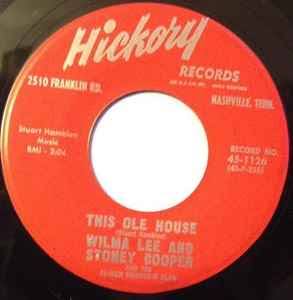
This Ole House reportedly started on a hunting trip in the Sierra, where songwriter Stuart Hamblen and actor John Wayne came across a mountain hut with a dead man inside and his dog still standing guard.
Hamblen turned the scene into the last words of an old man in a crumbling house, ready to meet the saints. His own 1954 recording reached No. 2 on the country chart, and Rosemary Clooney had a No. 1 pop hit with it the same year.
Stoney and Wilma Lee Cooper, the Opry husband-and-wife duo, recorded their version for Hickory Records in 1960, and it reached No. 16 on the country chart. Shakin’ Stevens took it to No. 1 in Britain in 1981.
Chords And Strumming
Soon
Guitar Lesson Details - (chords & lyrics sheet incl with lesson)
Back To Song List
Thank you for spending some time with these old country favorites.
Whether you grew up with these records or are just discovering them, I hope you’ll find a song here that feels good under your fingers. Start with a chord sheet, take it slowly, and add the rhythm and the little picking touches when you’re ready.
I add new lessons often, so please come back and see what’s new, and if there’s a country classic you’d like to see here, send me a note through the Contact page.
If you liked this mixed country page you might also like ... (click images)


Very Easy Country Guitar Songs

Kirby Swinemar is an acoustic guitar instructor, performer and song arranger who has taught online for 21 years and created more than 4,000 original acoustic guitar lessons. He specialises in song-based acoustic guitar instruction, rhythm guitar techniques, and creating full-sounding solo arrangements that help beginner and intermediate players move beyond basic strumming.
Explore his work at Kirby's Guitar Lessons and on social media on his social media YouTube Channel and his Facebook Page. Learn more about Kirby on his About Me page.
Latest 100 Tutorials
© 2019–2026 KirbysGuitarLessons.com — All Rights Reserved