- Home
- Motown Blues
- Best Sam Cooke Guitar Songs
Learn These Sam Cooke Songs on Acoustic Guitar
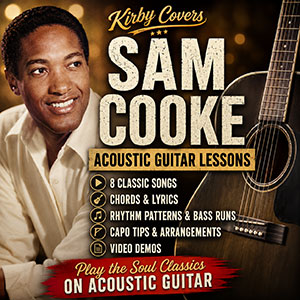
Welcome to this collection of Sam Cooke acoustic guitar lessons, featuring eight songs from one of the most influential voices in soul music. From the romantic simplicity of “You Send Me” and “Cupid” to the driving groove of “Chain Gang” and the emotional power of “A Change Is Gonna Come,” these songs offer plenty of variety for an acoustic player.
Each lesson includes a free video demo along with the chords, lyrics and a breakdown of how I play the song on acoustic guitar. Across the collection you'll find different rhythm patterns, bass runs, shuffle rhythms and optional picking sections, along with capo suggestions where changing the key can help accommodate your vocal range.
Choose a favorite below and start there, or work your way through the collection to explore the different rhythms and styles that helped make Sam Cooke's music so distinctive.
🎸 Watch the Sam Cooke Guitar Lessons Overview
performance clips taken directly from the complete lesson videos.
Click Play, then drag the timeline to quickly preview any Sam Cooke lesson featured on this page.
Note: Every arrangement has been personally created, recorded and taught by Kirby
using teaching methods refined through decades of acoustic guitar instruction.
What's Included With Every Lesson
📦 Your Lesson Package Includes
✓ 8–12 minute HD video lesson so you can learn each song step-by-step.
✓ Printable chords & lyrics PDF for easy practice away from the screen.

✓ Instant download—start playing in minutes.
✓ Learn at your own pace on any device.
New to Sam Cooke? Start Here
If you're new to playing Sam Cooke songs on acoustic guitar, these lessons offer a few different places to begin depending on the type of arrangement you'd like to explore. Start with a song that appeals to you, then use the arrangement details in each lesson to see what you'll encounter before you begin.
- Cupid – A good introduction to the collection with five chord shapes, one repeating bass-note rhythm and an optional melody picking break.
- Chain Gang – A strong choice if you want to concentrate on rhythm and groove. The arrangement uses four chords with a distinctive dragging strum that helps recreate the work-song pulse of the original.
- Wonderful World – Explore a lighter shuffle feel while learning how to adjust the capo to suit your vocal range. An optional melody-line picking break adds another element when you're ready for it.
- Bring It On Home To Me – Move into an arrangement with more bass movement, including bass riffs and runs blended into the rhythm, plus an optional melody picking section.
- Twistin' The Night Away – A great one for exploring walking bass on acoustic guitar, with descending bass runs and a steady rhythm working together to create the song's swinging groove.
- A Change Is Gonna Come – Finish with a more involved solo-acoustic interpretation that combines rhythmic changes, chord color and an optional lead section while leaving plenty of room for the vocal.
Sam Cooke Guitar Lessons Included On This Page
Bring It On Home Guitar Lesson
Chain Gang Guitar Lesson
Cupid Guitar Lesson
I'll Come Running Back To You Guitar Lesson
Twistin The Night Away Guitar Lesson
Wonderful World Guitar Lesson
You Send Me Guitar Lesson
🎁 Free Demo Preview
Scroll down to check out a completely free demo on Sam Cooke's “You Send Me”.A Change Is Gonna Come
- Learn To Play On Acoustic Guitar
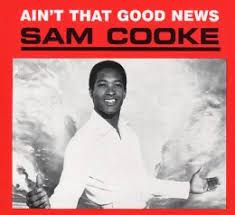
A Change Is Gonna Come was written by Sam Cooke in 1963 and recorded in January 1964 for his album Ain't That Good News. Inspired partly by Cooke's own experiences with racial discrimination and by the growing civil rights movement, the song reflected his frustration with inequality while expressing hope that change would eventually come.
Bob Dylan's “Blowin' in the Wind” was also an important inspiration, encouraging Cooke to address these issues directly in his own songwriting. The song was released as a single in December 1964, shortly after Cooke's death, with “Shake” on the other side.
It became one of his most enduring recordings and an anthem of the civil rights movement, and was later selected for the National Recording Registry.
What You'll Learn From This Lesson
The chords are G, Am, C, B7, Em, Daug, A7 and D7. My main rhythm follows a down-down-down-up-down-up-down pattern with accents added where they suit the phrasing. There are also two sections where I switch briefly to quicker shuffle strums, giving the arrangement some additional movement.
The original recording doesn't include a traditional lead break, but I've added a short optional lead section to my arrangement. You can leave that out and concentrate entirely on accompanying the vocal if you prefer.
Start by getting comfortable with the chords and finding a key that works with your vocal range. Then settle into the main rhythm without rushing the song's slow ballad feel. Once that's comfortable, add the quicker shuffle sections and finally the optional lead break. The goal is to let the guitar support the vocal and give the song room to breathe rather than trying to fill every space.
Guitar Lesson Details
- (chords & lyrics sheet incl with lesson)
Back To Song List
Bring It On Home To Me
- Learn To Play On Acoustic Guitar
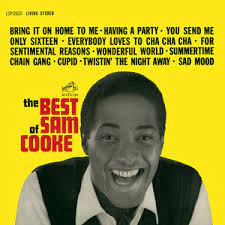
Bring It On Home To Me became one of Sam Cooke’s signature soul recordings after its release in 1962. The song was inspired in part by Charles Brown’s 1959 recording “I Want to Go Home,” but Cooke reshaped the idea with the call-and-response style of his gospel roots. Lou Rawls provided the distinctive backing responses to Cooke’s lead vocal, giving the recording much of its enduring character.
Released alongside “Having a Party,” the song reached #2 on Billboard’s R&B chart and #13 on the Hot 100. It later appeared on The Best of Sam Cooke and became a widely covered standard, with versions recorded by artists including Otis Redding, The Animals, John Lennon and Sonny & Cher.
What You'll Learn From This Lesson
I play Bring It On Home To Me in Drop D tuning with a capo on the 2nd fret, putting my arrangement in the key of E. Sam Cooke's recording sits lower, but I found this position works better for my vocal range. You can adjust the capo or key as needed to find a comfortable place for your own voice.
The chords in my arrangement are D, G, A, A# and D7. Rhythmically, there are a few ways to approach the song. I use either a down-down-down-up-down-up pattern, a down-up-down-up-down-up pattern, or a combination of the two depending on the section.
An important part of the arrangement is the bass movement blended into the rhythm. There are several bass riffs along with a few bass runs that help create the groove and give the acoustic version a fuller sound. I've also added a melody picking break blended with the rhythm, giving the arrangement an instrumental section beyond the original vocal accompaniment.
Start by learning the chord changes and choose whichever rhythm pattern feels most natural. Once that's comfortable, work the bass notes and runs into the rhythm to establish the groove. The melody picking break can be added last, after the accompaniment is solid. That way you can build the arrangement in stages rather than trying to tackle everything at once.
Guitar Lesson Details - (chords & lyrics sheet incl with lesson)
Back To Song List
Chain Gang
- Learn To Play On Acoustic Guitar
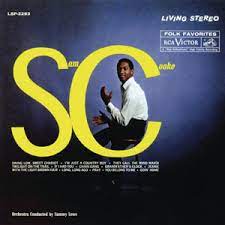
Chain Gang was inspired by a real encounter Sam Cooke had while touring, when he came across a group of prisoners working on a highway. That experience became the basis for the song, with its distinctive grunts, chants and rhythmic backing vocals evoking the sound of a prison work crew.
Released in 1960, it was Cooke's first major hit for RCA Victor and one of the biggest singles of his career. “Chain Gang” reached #2 on both the Billboard Hot 100 and R&B chart, while climbing to #9 in the UK, where it became his first Top 10 hit. The song was later included on Cooke's 1961 album Swing Low.
What You'll Learn From This Lesson
I play Chain Gang in standard tuning using the four chords G, Em, C and D. There are two rhythm approaches you can use, but my main pattern is a root-down-up-down-up-down-up rhythm.
The important part of that pattern is the first downstroke. I use a slow raking strum across the strings to create a dragging feel that reflects the chain-gang work rhythm heard throughout the song. That small rhythmic detail helps give the acoustic arrangement much more of the character of the original recording.
If you prefer a different approach, you can use a root-up-down-up-down-up-down-up-down-up pattern and repeat it throughout the song. There is no lead or separate picking section in my arrangement, so the focus stays on the rhythm, chord changes and the distinctive “ooh, ah” vocal responses.
Once you have the four chords comfortable, spend your time getting that dragging rhythm to feel natural and steady. The chords themselves aren't the main challenge here — capturing the pulse and groove is what makes the arrangement sound like Chain Gang.
Guitar Lesson Details - (chords & lyrics sheet incl with lesson)
Back To Song List
Cupid - Learn To Play On Acoustic Guitar
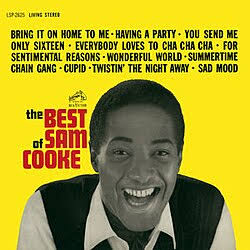
Cupid arrived in 1961 during Sam Cooke's successful run with RCA Victor and became another of his enduring pop-soul recordings. Using the familiar image of Cupid and his bow, Cooke turns a simple plea for romance into an instantly memorable song, even incorporating the sound of an arrow being released into the original recording.
The single reached #17 on the Billboard Hot 100 and #20 on the R&B chart, while performing even better in Britain, where it climbed to #7. “Cupid” later appeared on The Best of Sam Cooke and inspired numerous covers, including versions by Johnny Nash and The Spinners, both of whom returned the song to the charts years later.
What You'll Learn From This Lesson
I play Cupid in standard tuning using the chords G, Em, C, D and D7. Sam Cooke sings the song toward the higher end of the key of G, which is too high for my vocal range. To preserve the chord structure while bringing the melody into a comfortable range for my voice, I sing it on the lower end and use a capo on the 3rd fret.
For rhythm, I use a root-down-up-down-up-down-up pattern and repeat it as I move through the chord progression. The bass note at the beginning of the pattern helps keep the arrangement moving while maintaining the light rhythmic feel of the song.
Like several Sam Cooke recordings, the original doesn't feature a separate guitar lead break. For my acoustic version, I've added an optional melody-line picking break blended with the rhythm. You can learn and include the break to give a solo performance a little more variety, or leave it out completely and move directly into the next verse.
Start with the five chords and get the single rhythm pattern flowing comfortably through the song. Once the accompaniment is solid, you can come back and add the melody picking break if you want to give the arrangement a little more instrumental character.
Guitar Lesson Details - (chords & lyrics sheet incl with lesson)
Back To Song List
I'll Come Running Back To You
- Learn To Play On Acoustic Guitar
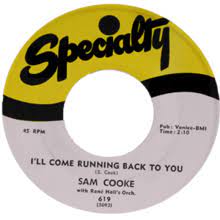
I'll Come Running Back To You became Sam Cooke's second major pop success, although the recording actually predates his breakthrough hit “You Send Me.” Cooke recorded the song in New Orleans in December 1956 while still associated with Specialty Records, but it remained unreleased until his sudden success with Keen Records the following year.
Specialty added overdubs designed to give the track a sound similar to “You Send Me” and released it in November 1957. The strategy worked, with the single reaching #18 on Billboard's pop Best Sellers chart and #1 on the Most Played R&B by Jockeys chart in early 1958.
Unlike many of Cooke's later hits, the original recording was issued as a standalone single rather than on one of his contemporary studio albums.
What You'll Learn From This Lesson
I play I'll Come Running Back To You in standard tuning using the chords G, Adim, Am7, D7, B7, C, A and Gb. My arrangement is played one fret below the original recording, so if you want to match Sam Cooke's original key, simply place a capo on the 1st fret and use the same chord shapes.
There is no lead work in my arrangement, and the main rhythm is a root-up-down-up-bass-up-down-up pattern that can be used throughout the entire song.
I add a few basic bass runs between the chords to create smoother transitions as the progression moves along. I've also changed the feel of the chorus slightly by adding some walking bass, which gives that section a little more swagger and helps distinguish it from the verses. That walking bass is completely optional. You can leave it out and continue using the same rhythm pattern through the chorus.
Although there are several chords in the arrangement, the main thing to concentrate on is getting comfortable moving through the progression while keeping the rhythm smooth and steady. Once that's in place, you can add the bass runs and then the optional walking bass in the chorus if you want to give the arrangement some additional movement.
There's no separate picking or lead section to learn. A short ending riff wraps up the song and gives the acoustic arrangement a clean finish.
Guitar Lesson Details - (chords & lyrics sheet incl with lesson)
Back To Song List
Twistin' The Night Away
- Learn To Play On Acoustic Guitar
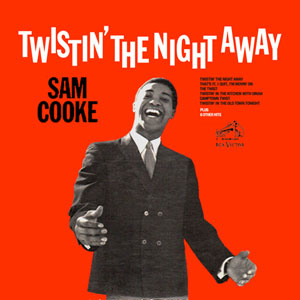
Twistin The Night Away captured the dance-craze excitement of the early 1960s and became one of Sam Cooke's biggest uptempo hits. Recorded in December 1961 and released the following January, the song celebrates people from all walks of life enjoying the Twist, a dance that had become a national phenomenon.
The lively studio arrangement featured prominent Los Angeles session musicians including guitarist René Hall, drummer Earl Palmer and guitarist Tommy Tedesco. The single reached #1 on Billboard's R&B chart and #9 on the Hot 100, while also climbing to #6 in the UK.
It became the title track of Cooke's 1962 album Twistin' the Night Away, an LP built largely around the popularity of contemporary dance music.
What You'll Learn From This Lesson
I play Twistin' The Night Away in standard tuning. The song is in the key of A, but I use a capo on the 2nd fret and play the chord shapes G, Em, C and D7. This position makes it easier to create the rhythmic groove and bass movement that drive my acoustic arrangement.
The original recording opens with a horn intro, which I've adapted into a short acoustic guitar riff to start the song. Once the vocal begins, the arrangement relies heavily on walking bass lines to capture that swinging, danceable feel.
My main rhythm is a steady root-up-down-up-root-up-down-up pattern. Throughout the song, I combine that rhythm with the walking bass along with some descending bass runs between the chords. Those bass movements are an important part of the arrangement because they keep a single acoustic guitar moving in much the same way the full-band groove carries the original recording.
There is no separate lead break in this arrangement. Once you have the four chord shapes and rhythm pattern comfortable, concentrate on learning the bass runs and then blending the walking bass smoothly into the rhythm. The bass carries this arrangement and makes all the difference to the groove.
Guitar Lesson Details - (chords & lyrics sheet incl with lesson)
Back To Song List
Wonderful World
- Learn To Play On Acoustic Guitar
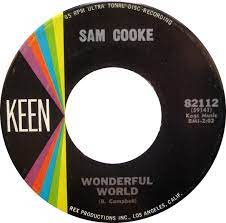
Wonderful World became one of Sam Cooke's most recognizable recordings, although it nearly remained unreleased. Cooke recorded the song in March 1959 during one of his final sessions for Keen Records, after helping Lou Adler and Herb Alpert reshape the lyrics around school subjects and romance.
After Cooke moved to RCA Victor, Keen released the recording as a single in April 1960, and it reached #12 on the Billboard Hot 100 and #2 on the R&B chart.
The song enjoyed an unusual second life in 1986 after being associated with the film Witness and a popular Levi's commercial, reaching #2 in the UK and #1 in the Netherlands more than 25 years after its original release.
What You'll Learn From This Lesson
I play Wonderful World in standard tuning in the key of G, using the chords G, Em, C, D, D7 and A. Sam Cooke's original recording is in B, which is much too high for my vocal range. If you want to match the original key using my chord shapes, place a capo on the 4th fret.
If that puts the vocal too high for you, simply move the capo down one fret at a time until you find a comfortable range. In my case, I play without a capo and sing toward the higher end of G.
My rhythm is a root-down-up-down-up-root-up-down-up pattern. There's a quick little shuffle within the pattern that helps give the acoustic arrangement the light, bouncing feel of the song. That's an important detail here because the rhythm contributes much more to the character of the arrangement than simply strumming through the chord changes.
I've also added a melody-line picking break to my arrangement. You can include the break to add an instrumental section to a solo performance, or leave it out and hum through that part before returning to the vocal.
Start by finding the capo position that works best with your voice, then get comfortable with the chord progression and shuffle rhythm. Once the accompaniment has the right feel, add the melody picking break if you want the fuller solo-acoustic arrangement.
Guitar Lesson Details - (chords & lyrics sheet incl with lesson)
Back To Song List
You Send Me
- Learn To Play On Acoustic Guitar
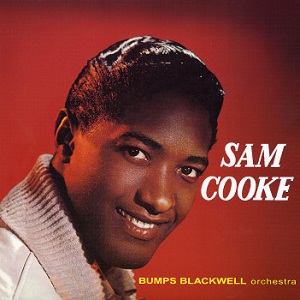
You Send Me was a huge commercial success for Sam Cooke back in 1957 as this song went to #1 on both Billboard and R&B charts. He wrote both the music and lyrics.
Cooke gave the writing credits to his younger brother LC Cook who spelled his name without the e on the end so Sam would not have to give away profits to the publisher.
The singing group The Manhattans released a version in 1985 and had a hit, but only Sam was able to get the song to #1. Teresa Brewer, The Four Seasons, Van Morrison, Steve Miller and several other artists have recorded this number.
What You'll Learn From This Lesson
I play You Send Me in standard tuning using the chords Daug, G, Em, Am7, D7, C, F, A7 and E7. My main verse rhythm is a root-up-down-up-down, root-up-down-up-down pattern, with several bass runs added between the chord changes to help create smoother transitions.
In the chorus, I change to a down-up-down-up-down pattern and repeat it through the section. This breaks up the steadier rhythm used in the verses and gives the chorus a slightly choppier feel. The original recording creates some of this contrast through its orchestration, while my version uses the change in acoustic rhythm to help distinguish the sections.
The instrumental section is another place where my arrangement differs from Sam Cooke's recording. In the original, you hear background vocals, a few guitar notes and Sam singing partial phrases rather than a conventional guitar solo. For my acoustic arrangement, I've turned that section into a full melody lead break blended with the rhythm.
Start by getting comfortable with the chord progression, particularly the quicker changes, and then work the bass runs into the main verse rhythm. Once that's flowing smoothly, add the different chorus rhythm. For the instrumental section, you can follow the vocal approach heard in the original or learn my lead break if you want to feature the acoustic guitar more prominently.
Guitar Lesson Details - (chords & lyrics sheet incl with lesson)
Back To Song List
Sam Cooke Guitar Lessons FAQ
Can Sam Cooke songs be played on one acoustic guitar?
Yes. Although many of Sam Cooke's original recordings feature full-band or orchestral arrangements, the songs can work very well on one acoustic guitar. My arrangements use rhythm patterns, bass movement, riffs and occasional melody picking to capture important elements of the original while keeping the guitar supportive of the vocal.
Do I need to play Sam Cooke songs in the original key?
No. Vocal range is especially important with Sam Cooke's music, and several lessons on this page are played in a different key from the original recording. Where appropriate, I explain how a capo can be used to move the arrangement higher or lower while retaining the same chord shapes.
What kind of strumming patterns are used in these Sam Cooke guitar lessons?
The rhythms vary from song to song because much of Sam Cooke's music depends on groove and feel. You'll encounter steady bass-note rhythms, lighter shuffle patterns, walking-bass accompaniment and changes in rhythm between different sections of a song. For songs such as “Chain Gang,” the pulse itself is an important part of making the acoustic arrangement recognizable.
Do these arrangements include bass runs, riffs or guitar picking?
Some do. Depending on the song, I've incorporated bass runs, walking bass lines, short riffs and melody picking into the rhythm to give a single acoustic guitar a fuller sound. These elements aren't added to every song simply for the sake of adding guitar parts; they're used where they help support the groove or provide an instrumental section.
Do I have to learn the picking and lead sections to play these songs?
No. Several of my Sam Cooke arrangements include an added melody or lead section, but these can be treated as optional parts of the arrangement. You can concentrate on the chords, rhythm and vocal accompaniment first, then add the instrumental sections if you want a fuller solo-acoustic performance.
Sam Cooke's songs translate beautifully to acoustic guitar because so much of their character comes from rhythm, melody, phrasing and groove. Across these eight lessons, you'll encounter everything from the steady pulse of “Chain Gang” and the shuffle feel of “Wonderful World” to the walking bass of “Twistin' The Night Away” and the more expressive acoustic approach of “A Change Is Gonna Come.”
Several of the arrangements also include bass runs, melody lines and optional picking sections that can help fill out a solo acoustic performance, while songs such as “Cupid” and “You Send Me” show how a relatively simple accompaniment can leave plenty of room for the vocal.
Whether you work through several songs or simply choose the Sam Cooke favorites you enjoy most, I hope these lessons help you capture some of the soul, warmth and rhythmic character that made his recordings so memorable. When you're ready for more, continue exploring the other classic soul, Motown and R&B guitar lessons here on the site.
If you liked this best Sam Cooke guitar songs page you might also like ... (click images)
Motown Rhythm And Blues

Kirby Swinemar is an acoustic guitar instructor, performer and song arranger who has taught online for 21 years and created more than 4,000 original acoustic guitar lessons. He specialises in song-based acoustic guitar instruction, rhythm guitar techniques, and creating full-sounding solo arrangements that help beginner and intermediate players move beyond basic strumming. Explore his work at Kirby's Guitar Lessons and on social media on his social media YouTube Channel and his Facebook Page. Learn more about Kirby on his About Me page.
Latest 100 Tutorials
© 2019–2026 KirbysGuitarLessons.com — All Rights Reserved