Best Steve Miller Band Guitar Songs To Learn On Acoustic Guitar

The Steve Miller Band blended blues, rock and a bit of cosmic flair to create some of the most recognizable music of the ’70s. On this page, you'll find acoustic guitar lessons for 11 Steve Miller songs, covering everything from laid-back grooves and shuffle rhythms to arpeggio picking, riffs, bass runs and lead work.
Whether you're here to learn The Joker, Fly Like an Eagle, Jet Airliner or dig into lesser-known tracks like Serenade and Winter Time, each lesson includes a demo, chord and lyric sheet, and a complete tutorial showing you how I play the song on acoustic guitar.
These arrangements are designed for one acoustic guitar, adapting the important rhythm, picking and signature guitar parts into something you can play on your own. Choose a song below, or use the New To Steve Miller section if you're not sure where to begin.
🎸 Watch the Steve Miller Guitar Lessons Overview
performance clips taken directly from the complete lesson videos.
Click Play, then drag the timeline to quickly preview any Steve Miller lesson featured on this page.
Note: Every arrangement has been personally created, recorded and taught by Kirby
using teaching methods refined through decades of acoustic guitar instruction.
What's Included With Every Lesson
📦 Your Lesson Package Includes
✓ 8–12 minute HD video lesson so you can learn each song step-by-step.
✓ Printable chords & lyrics PDF for easy practice away from the screen.

✓ Instant download—start playing in minutes.
✓ Learn at your own pace on any device.
New To Steve Miller?
If you're new to Steve Miller's music on acoustic guitar, these three songs give you a good introduction to the different styles you'll find in this collection.
Start with “Take The Money And Run” if you want to begin with a straightforward chord-and-rhythm arrangement. With four chords, a repeating strumming pattern and a short shuffle section, you can concentrate on getting the groove established without having to worry about a lead break.
Move on to “The Joker” for a little more variety. This arrangement uses Drop D tuning, two rhythm feels, hammer-ons and a lead section, giving you a chance to work some recognizable guitar details into the rhythm once the basic progression is comfortable.
Then try “Winter Time” for a different approach altogether. Much of this arrangement is built around arpeggio picking before moving into a fuller strumming section, with an intro riff and lead passage adding another layer to the performance.
Steve Miller Guitar Lessons Included On This Page
Fly Like An Eagle Guitar Lesson
Heart Like A Wheel Guitar Lesson
Jet Airliner Guitar Lesson
Jungle Love Guitar Lesson
Serenade Guitar Lesson
Swingtown Guitar Lesson
Take The Money And Run Guitar Lesson
The Joker Guitar Lesson
True Fine Love Guitar Lesson
Winter Time Guitar
🎁 Free Lesson And Free Demo Preview
Scroll down to check out a completely free demo and lesson on Steve Miller’s “The Joker"Dance Dance Dance
- Learn To Play On Acoustic Guitar
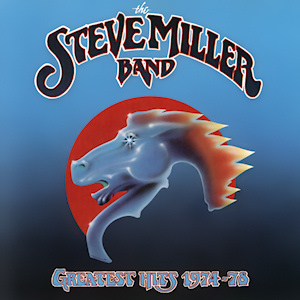
Dance Dance Dance first appeared on the Steve Miller Band's 1976 album Fly Like an Eagle and was later included on the hugely successful Greatest Hits 1974–78 collection.
Miller shares the songwriting credit with Joseph and Brenda Cooper. Although it was never released as a single, the track became familiar to many listeners through the greatest-hits album, which went on to become one of the band's biggest-selling releases.
With its upbeat country-rock feel and straightforward groove, “Dance, Dance, Dance” shows a lighter, rootsier side of the Steve Miller Band than some of the polished rock hits that dominated the group's mid-1970s output.
What You'll Learn From This Lesson
Dance Dance Dance is played in standard tuning using the chords G, C, D, G6 and Am. The main rhythm is a root–down–root–up–down–up pattern, which gives the arrangement a steady bass-note-led groove and keeps the acoustic rhythm moving throughout the song.
Along with the main strumming pattern, I work several bass runs and quick picking riffs into the chord changes. These little fills help connect the progression without interrupting the rhythm. There is also a main picking section to learn, giving you a more complete one-guitar arrangement rather than simply strumming through the song.
A good way to approach this lesson is to learn the chords and basic rhythm first, then add the bass runs once the groove is comfortable. From there, work on the shorter picking riffs individually before tackling the main picking section. By building the arrangement in layers, you can keep the rhythm flowing while gradually adding the fills and picking parts that give the song its character.
Guitar Lesson Details - (chords & lyrics sheet incl with lesson)
Back To Song List
Fly Like An Eagle
- Learn To Play
On Acoustic Guitar
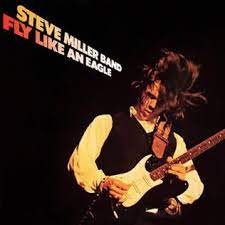
Fly Like An Eagle became one of the Steve Miller Band's signature songs after appearing as the title track of their hugely successful 1976 album. Released as a single in 1977, its distinctive synthesizer opening and laid-back, spacey groove helped carry the song to #2 on the Billboard Hot 100 and #2 in Canada.
The lyrics pair that dreamy sound with a more serious message about poverty and helping those in need. Two decades later, Seal introduced the song to another generation with his version for the 1996 film Space Jam.
Released as a single, Seal's recording reached #10 in the US and #13 in the UK.
What You'll Learn From This Lesson
Fly Like An Eagle is played in standard tuning using just three chords: Am, Dm and F. I start the arrangement with the opening riff before moving into a steady down–up–down–up rhythm pattern. Throughout the verses, I blend several bass riffs into that rhythm while using palm muting to keep the sound tighter and more restrained.
That changes when the song moves into the chorus, where I let the full chords ring out instead of maintaining the muted feel of the verses. This gives the acoustic arrangement some natural contrast while still keeping the underlying rhythm consistent. There is no dedicated lead section here—the guitar work is centered around the opening riff, steady rhythm, palm muting and the bass movement woven into the verses.
A good way to learn the arrangement is to begin with the three chords and steady rhythm pattern. Once that feels comfortable, work the bass riff into the strumming and practice muting the strings as you move through those bass notes. Then bring in the verse-to-chorus dynamic change before adding the vocal. The song is in A and sits toward the higher end vocally, so getting the guitar part comfortable first will make it easier to concentrate on the vocal arrangement.
Guitar Lesson Details - (chords & lyrics sheet incl with lesson)
Back To Song List
Heart Like A Wheel - Learn To Play On Acoustic Guitar

Heart Like A Wheel opens the Steve Miller Band's 1981 album Circle of Love, arriving after the enormous commercial success Miller enjoyed during the second half of the 1970s.
The song has a more reflective feel than hits such as “Jet Airliner” and “The Joker,” while still retaining Miller's familiar blend of rock and blues.
Circle of Love marked the band's return with a new studio album after a four-year gap following Book of Dreams in 1977. Although “Heart Like A Wheel” was not one of Miller's major chart singles, it provides an interesting snapshot of his sound as he moved from his classic 1970s period into the changing musical landscape of the early 1980s.
What You'll Learn From This Lesson
The original key of “Heart Like A Wheel” is B, so you'll need a capo on the 4th fret to reach that key using the chord shapes taught in this lesson. Since that position is too high for my vocal range, I play the song without the capo using G, C, D, F and Em, along with Drop D tuning for a deeper bass sound. Drop D is optional if you'd rather stay in standard tuning.
For the rhythm, you can use all downstrokes or a steady down-up-down-up pattern. I use a combination of the two, changing the feel as the arrangement moves along. There are also several slides, an intro picking pattern and repeated lead breaks that help give this acoustic version more of the character of the song.
Start by getting comfortable with the chords, particularly if you're using the Drop D arrangement. Then experiment with the two rhythm approaches until the transitions feel natural. From there, add the intro picking and slides, followed by the main picking break wrapped into the rhythm. Once those pieces are comfortable, bring everything together into the complete arrangement.
Guitar Lesson Details - (chords & lyrics sheet incl with lesson)
Back To Song List
Jet Airliner
- Learn To Play
On Acoustic Guitar

Jet Airliner became one of the Steve Miller Band's biggest hits when it appeared on the 1977 album Book of Dreams. Released as the album's lead single, it reached #8 on the Billboard Hot 100 and made the Top 20 in several other countries.
The song actually came from singer-songwriter Paul Pena, who recorded his own version in 1973 for an album that became tied up in a dispute with his record label and remained unreleased for decades. Steve Miller heard Pena's recording in the mid-1970s and cut his version during the sessions that produced Fly Like an Eagle and Book of Dreams.
Pena's original recording finally received an official release in 2000, giving listeners the chance to hear the source of Miller's familiar hit.
What You'll Learn From This Lesson
Jet Airliner is played with a capo on the 2nd fret, which lets me use the easier chord shapes of A, D and G while keeping the song in the key of B. I also use Drop D tuning for my arrangement, although that's optional if you'd rather stay in standard tuning.
The rhythm is driven mainly by downstrokes, with a few quick shuffles worked in throughout the song to add some movement. I also incorporate several of the song's signature riffs into the rhythm so the acoustic arrangement retains those recognizable parts without needing a separate lead section.
Drop D becomes particularly useful during the chorus, where I work in some bass runs that fit naturally with the lower tuning and help fill out the sound of one acoustic guitar. There isn't a dedicated lead break here, so the arrangement stays focused on rhythm, riffs and bass movement.
Start by learning the A, D and G chord shapes, either with Drop D or without it. Once those are comfortable, get the mostly downstroke rhythm working and add the quick shuffles. From there, learn the signature riffs and finally work the bass runs into the chorus. That layered approach lets you build the arrangement without losing the steady forward motion that drives the song.
Guitar Lesson Details - (chords & lyrics sheet incl with lesson)
Back To Song List
Jungle Love
- Learn To Play
On Acoustic Guitar

Jungle Love joined the Steve Miller Band's run of late-1970s hits when it was released from the 1977 album Book of Dreams. The single reached #23 on the Billboard Hot 100 and #18 in Canada. The song came from Miller's longtime bassist Lonnie Turner and guitarist Greg Douglass, who had originally intended it for Dave Mason.
After Miller heard the song, he decided it belonged on Book of Dreams, and it became the final track recorded for the album.
According to Douglass, the recording came together remarkably quickly, in about 30 minutes. Years later, “Jungle Love” found another audience through its recurring use on the television sitcom Everybody Loves Raymond.
What You'll Learn From This Lesson
“Jungle Love” is sung at the high end of D. In my arrangement I maintain the original chord shapes, but I sing the song in a lower register. If that sits too low for your voice—or you want to get closer to the original higher vocal—you can experiment with a capo to find a comfortable position.
I play this one in Drop D tuning, which gives you access to several low bass notes used throughout the arrangement. The chords are E, D, G, C and Em. For the main rhythm, use a repeating down-up-down-up pattern. In the chorus I change the feel slightly to down-down-up-down-up-down-up, with a few quick shuffle sections appearing along the way.
There isn't a dedicated lead break, but there are several bass runs to work into the chord changes, along with an intro riff that returns later in the song.
Start by learning that intro riff in Drop D tuning, then get comfortable with the chords. Add the two rhythm patterns and the quick shuffle changes next. Finally, work in the bass runs and watch for the point where the opening riff returns later in the arrangement.
Guitar Lesson Details - (chords & lyrics sheet incl with lesson)
Back To Song List
Serenade
- Learn To Play
On Acoustic Guitar
Serenade is an album track from the Steve Miller Band's landmark 1976 release Fly Like an Eagle. Although it was never issued as a single, the song appeared alongside some of Miller's best-known recordings during one of the band's most commercially successful periods.
Fly Like an Eagle produced the major hits “Take the Money and Run,” “Rock'n Me” and the title track, while “Serenade” remained one of the deeper cuts discovered by listeners who bought the album.
Its relaxed, melodic sound and atmospheric quality fit comfortably within the mixture of blues, rock and more spacious production that helped define Miller's mid-1970s work.
What You'll Learn From This Lesson
The original key of “Serenade” is Am, and no capo is required to play it in that key. I use a capo to adjust the song for my vocal range, since I'm singing it lower while Steve Miller's vocal sits toward the high end of Am. The arrangement is played in standard tuning using Am, Am/G, F, G, D and Gmaj7.
The song uses a shuffle rhythm throughout. I play down-down-up-down-up-down, followed immediately by a quicker up-down-up-down-up-down-up sequence. There isn't a pause between the two parts—the pattern keeps flowing as one continuous rhythm.
There is no dedicated lead break in the original, but I've added a short one to my acoustic arrangement. It's completely optional, so you can play the song effectively with just the chords and shuffle rhythm.
Start by learning the chords and work through the rhythm pattern slowly until the complete sequence flows smoothly, then gradually bring it up to tempo. At that point you've essentially got the song. If you'd like to include the extra detail from my version, go back and learn the short lead passage and practice blending those notes into the rhythm.
Guitar Lesson Details - (chords & lyrics sheet incl with lesson)
Back To Song List
Swingtown
- Learn To Play
On Acoustic Guitar

Swingtown kept the Steve Miller Band's hit streak going when it became the final single released from the 1977 album Book of Dreams. The song reached #17 on the Billboard Hot 100 and climbed to #13 in Canada, giving the album another successful radio track alongside “Jet Airliner” and “Jungle Love.”
Built around its distinctive repeating guitar figure and driving rhythm, “Swingtown” became another recognizable part of Miller's late-1970s catalogue. Guitar fans have also noted the similarity between its central riff and the much faster opening figure heard several years later in Ozzy Osbourne's “Crazy Train,” although claims that one directly inspired the other are best treated as musical speculation rather than established fact.
What You'll Learn From This Lesson
“Swingtown” combines a repeating bass riff with the rhythm guitar throughout several sections of the song. The original recorded version is played in standard tuning with a capo on the 1st fret, using an A chord shape. Steve Miller now performs the song live in A without the capo, with D and E completing the main chord progression.
The arrangement opens with a bass-and-rhythm intro in A, followed by chord shapes that ascend the fretboard while maintaining a steady shuffle rhythm. You'll also encounter sections using straight downstrokes, along with some picking blended directly into the rhythm.
Start by learning the A, D and E chords and getting comfortable with the shuffle rhythm. From there, work through the opening chord progression and its accompanying bass movement. Once you can keep those elements flowing together, move on to the lead break section to complete the arrangement.
Guitar Lesson Details - (chords & lyrics sheet incl with lesson)
Back To Song List
Take The Money And Run
- Learn To Play
On Acoustic Guitar
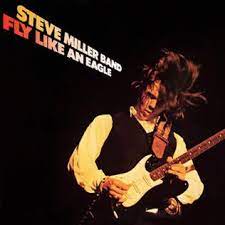
Take The Money And Run became one of the Steve Miller Band's signature hits after appearing on the hugely successful 1976 album Fly Like an Eagle. Miller has connected the song's road-going imagery to the long family car trips of his childhood and his fascination with radio.
Released as a single, it reached #11 on the Billboard Hot 100 and #8 in Canada. The song later crossed into other genres, with Canadian country singer Julian Austin recording a version in 2000 and Run-D.M.C., featuring Everlast, revisiting it the following year.
For the 30th-anniversary edition of Fly Like an Eagle, Miller also created “Take the Joker and Run,” a playful mash-up combining elements of “Take the Money and Run” and “The Joker.”
What You'll Learn From This Lesson
“Take The Money And Run” is played in standard tuning using the chords G, F, C and A#. The main rhythm is a repeating down-down-up-down-up-down-up pattern that carries most of the song.
There is also a quick rhythm shuffle introduced in the middle of the arrangement, giving you a short change of feel before returning to the main pattern. There is no lead break in this version, so the focus stays entirely on the chords and rhythm.
Start by getting comfortable with the four chords and the main strumming pattern. Then practice the quick shuffle section separately until you can move into and out of it smoothly. Once those two rhythm elements are comfortable, you have everything you need to play the arrangement.
Guitar Lesson Details - (chords & lyrics sheet incl with lesson)
Back To Song List
The Joker
- Learn To Play
On Acoustic Guitar

The Joker marked a major breakthrough for the Steve Miller Band when it appeared as the title track of their 1973 album. Released as a single, it became Miller's first #1 hit on the Billboard Hot 100 in early 1974 and also enjoyed major international success.
Remarkably, the song received a second life more than 15 years later after being featured in a Levi's television commercial in 1990. The renewed exposure sent “The Joker” all the way to #1 in the UK, as well as Ireland and New Zealand, introducing the song to a new generation.
In 2005, Fatboy Slim featuring Bootsy Collins released their own version, taking Miller's laid-back classic into a very different musical setting.
What You'll Learn From This Lesson
I play “The Joker” with a capo on the 3rd fret to stay in the original key, using Drop D tuning to give the arrangement a deeper bass sound, particularly when playing the D chord. You'll need D, G, A and Asus4, along with a few hammer-ons and a lead section.
The main rhythm uses a repeating down-down-down-up-down-up pattern, but you'll also need to switch into a shuffle rhythm in parts of the song. Several hammer-ons are blended directly into the rhythm, adding some of the recognizable character without interrupting the flow of the arrangement.
Start by learning the chords and getting comfortable with the main rhythm and shuffle rhythm. Once those are flowing smoothly, begin adding the hammer-ons while maintaining the rhythm underneath them. Finally, work through the lead section and bring all of those pieces together for the complete arrangement.
Guitar Lesson Details - (chords & lyrics sheet incl with lesson)
Back To Song List
True Fine Love
- Learn To Play
On Acoustic Guitar

True Fine Love first appeared on the Steve Miller Band's 1977 album Book of Dreams, during the group's enormously successful run of the mid-to-late 1970s.
Unlike “Jet Airliner,” “Jungle Love” and “Swingtown,” it wasn't promoted as one of the album's major singles, although it later became familiar to an even wider audience through the blockbuster Greatest Hits 1974–78 collection.
The song resurfaced on a single in 1981, when Capitol selected it as the B-side to “Heart Like a Wheel,” the lead single from Miller's Circle of Love album. Its compact rock-and-roll feel makes it one of the lighter, more straightforward cuts from Book of Dreams.
What You'll Learn From This Lesson
I play “True Fine Love” in Drop D tuning with a capo on the 2nd fret to stay in the original key. The Drop D tuning gives the acoustic arrangement a fuller sound, and you'll use the chords G, Em, C and D.
The main rhythm is a repeating down-up-down-down-up pattern with a somewhat chopped feel. In other sections I switch to downstrokes combined with hammer-ons, which helps bring some of the song's rock-and-roll character into the acoustic arrangement.
There is also a lead break, with some of the lead playing blended directly into the rhythm rather than treated as a completely separate guitar part.
Start by getting comfortable with the four chords in Drop D tuning, then work on the chopped main rhythm. From there, add the downstroke sections and hammer-ons until you can move naturally between the different rhythm approaches. Finally, turn your attention to the lead section and practice blending those notes with the rhythm to complete the arrangement.
Guitar Lesson Details - (chords & lyrics sheet incl with lesson)
Back To Song List
Winter Time
- Learn To Play
On Acoustic Guitar

Winter Time is a deeper cut from the Steve Miller Band's 1977 album Book of Dreams, written by Steve Miller during one of the band's most commercially successful periods.
Although it wasn't released as a single, the song appeared on an album that produced the hits “Jet Airliner,” “Jungle Love” and “Swingtown.” With its slower, more atmospheric feel, “Winter Time” provides a contrast to the more radio-oriented tracks surrounding it.
The album itself followed closely behind Fly Like an Eagle, with much of the material for the two records coming from the same highly productive period of recording sessions.
What You'll Learn From This Lesson
I play “Winter Time” in standard tuning, with arpeggio picking carrying most of the arrangement. The chords are Am, Am/G (G), Fmaj7 and E7, and there is also an intro riff and picking section that establishes the feel of the song.
As the arrangement develops, it moves into a fuller rhythm section using a repeating down-down-up-down-up-down-up pattern. There is also some lead work near the middle of the song, giving you another element to add once the picking and rhythm sections are comfortable.
Start by learning the chords and getting the arpeggio pattern flowing smoothly. Then work on the second rhythm pattern and practice moving naturally between the picked and strummed sections. Finally, turn your attention to the lead section and bring all three elements together for the complete arrangement.
Guitar Lesson Details - (chords & lyrics sheet incl with lesson)
Back To Song List
Steve Miller Guitar Lessons FAQ
Do I need alternate tunings to play these Steve Miller songs?
Not for every song. Several arrangements use standard tuning, while others use Drop D to add a deeper bass sound and make certain parts of the arrangement work better on one acoustic guitar. Each lesson explains the tuning used before you begin.
Do I need a capo for these Steve Miller guitar lessons?
It depends on the song and your vocal range. In some arrangements I use a capo to stay in the original recorded key, while in others I change the capo position—or leave it off—to put the vocal in a more comfortable range. Feel free to experiment with capo placement to find what works best for your voice.
Are these Steve Miller songs mostly strumming?
No. There's quite a bit of variety across the collection. Some songs are built mainly around rhythm and shuffle patterns, while others combine bass runs, hammer-ons, riffs and lead work with the rhythm. Winter Time, for example, uses arpeggio picking for much of the arrangement before moving into a fuller strumming section.
Do the lessons include Steve Miller's guitar riffs and lead parts?
Where they are important to the acoustic arrangement, yes. Some songs include intro riffs, hammer-ons, bass movement or lead sections, while others work perfectly well as rhythm arrangements without a dedicated lead break. The goal is to include the guitar parts that help make each song recognizable on one acoustic guitar.
What's the best way to learn these arrangements?
Start with the chords and main rhythm or picking pattern before adding the extra details. Once that foundation feels comfortable, work in the riffs, bass runs, hammer-ons or other embellishments, followed by any lead section. Building the arrangement in layers makes it much easier to keep the rhythm flowing as the additional parts are added.
These 11 Steve Miller guitar lessons cover quite a range of acoustic playing styles, from straightforward rhythm arrangements to shuffle grooves, arpeggio picking, Drop D tuning, riffs, hammer-ons, bass movement and lead work.
Start with whichever song catches your ear, learn the chords and main rhythm or picking pattern first, and then add the extra guitar parts as you become comfortable with the arrangement. Whether it's the groove of The Joker, the driving rhythm of Jet Airliner or the picking in Winter Time, there's plenty here to explore on one acoustic guitar.
If you liked this best Steve Miller guitar songs page you might also like ... (click images)


Acoustic Versions Of Rock Songs

Kirby Swinemar is an acoustic guitar instructor, performer and song arranger who has taught online for 21 years and created more than 4,000 original acoustic guitar lessons. He specialises in song-based acoustic guitar instruction, rhythm guitar techniques, and creating full-sounding solo arrangements that help beginner and intermediate players move beyond basic strumming.
Explore his work at Kirby's Guitar Lessons and on social media on his social media YouTube Channel and his Facebook Page. Learn more about Kirby on his About Me page.
Latest 100 Tutorials
© 2019–2026 KirbysGuitarLessons.com — All Rights Reserved