Randy Travis Guitar Lessons – 16 Acoustic Songs
(Page Updates Coming)
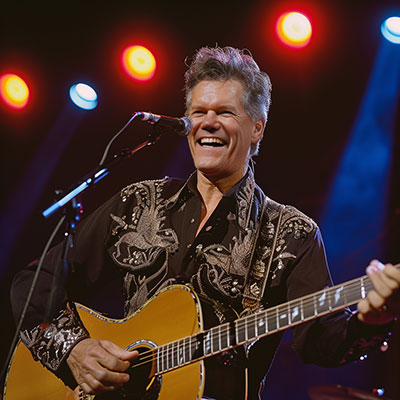
Explore 16 Randy Travis guitar lessons featuring acoustic arrangements of Forever and Ever, Amen, Diggin' Up Bones, On the Other Hand, Hard Rock Bottom of Your Heart and more.
Each lesson includes an HD video and a chords and lyrics sheet, sold together as one download, so you can watch the song played through and keep the chart in front of you while you practise.
The selection runs from his 1980s neotraditional hits through 1990s No. 1s like Whisper My Name to gospel recordings such as Above All and Pray for the Fish.
🎸 Randy Travis Guitar Lessons — Video Previews
performance clips taken directly from the complete lesson videos.
Click Play, then drag the timeline to quickly preview any Randy Travis lesson featured on this page.
Note: Every arrangement has been personally created, recorded and taught by Kirby
using teaching methods refined through decades of acoustic guitar instruction.
What's Included With Every Lesson
📦 Your Lesson Package Includes
✓ 8–12 minute HD video lesson so you can learn each song step-by-step.
✓ Printable chords & lyrics PDF for easy practice away from the screen.
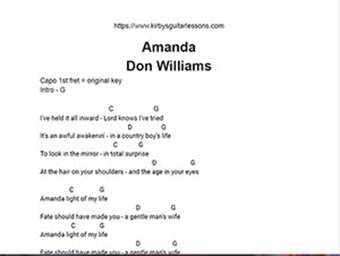
✓ Instant download—start playing in minutes.
✓ Learn at your own pace on any device.
Randy Travis Guitar Lesson Titles
Overview Video 1 — Songs 1–8Above All Guitar Lesson
Diggin' Up Bones Guitar Lesson
Forever And Ever Amen Guitar Lesson
Hard Rock Bottom Of My Heart Guitar Lesson
Honky Tonk Moon Guitar Lesson
If I Didn't Have You Guitar Lesson
Look Heart No Hands Guitar Lesson
Overview Video 2 — Songs 9–16
My Greatest Fear Guitar Lesson
My House Guitar Lesson
On The Other Hand Guitar Lesson
Out Of My Bones Guitar Lesson
Pray For The Fish Guitar Lesson
The Heart Of Worship Guitar Lesson
Whisper My Name Guitar Lesson
White Christmas Makes Me Blue Guitar Lesson
1982 - Learn To Play On Acoustic Guitar
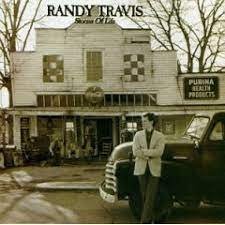
1982 was the song that finally got Randy Travis noticed. Written by Buddy Blackmon and Vip Vipperman, it was released in December 1985 as the second single from Storms of Life, after "On the Other Hand" had stalled at No. 67 on its first run.
The narrator looks back on a love he let slip away and wishes he could return to the year when she was still his. "1982" climbed to No. 6 on Billboard's Hot Country Singles chart and No. 5 in Canada, giving Travis his first top 10 hit.
That success convinced Warner Bros. to reissue "On the Other Hand," which went to No. 1, and Storms of Life arrived in June 1986 as one of the defining records of the neotraditional movement.
What You'll Learn From This Lesson
Soon.
Guitar Lesson Details - (chords & lyrics sheet incl with lesson)
Back To Song List
Above All - Learn To Play On Acoustic Guitar
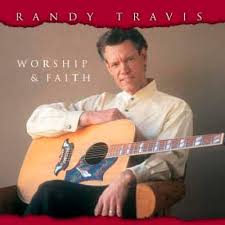
Above All began as a contemporary worship song by Paul Baloche and Lenny LeBlanc, usually dated to 1995. It reached a much wider audience after Michael W. Smith recorded it for his 2001 live album Worship, and Smith also sang it at the prayer service held for George W. Bush's inauguration that January.
The song was nominated for Song of the Year at the GMA Dove Awards in both 2002 and 2003, and Smith's recording won Inspirational Recorded Song of the Year in 2002. Randy Travis cut his version for Worship & Faith, a 20-song gospel set recorded live in Orlando in July 2003 and released that November on Word Records. "Above All" was the album's only single.
It didn't chart, but the album went on to be certified gold.
What You'll Learn From This Lesson
Soon.
Guitar Lesson Details - (chords & lyrics sheet incl with lesson)
Back To Song List
Diggin' Up Bones - Learn To Play On Acoustic Guitar
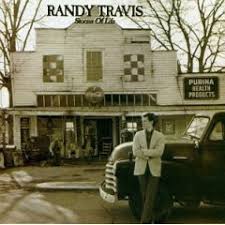
Diggin Up Bones gave Randy Travis his second straight No. 1, right after the reissued "On the Other Hand."
Paul Overstreet, Al Gore and Nat Stuckey wrote it, and according to Songfacts, Overstreet and Gore worked on it at Gore's house on Thanksgiving Day in 1983. The setting is a man alone in the house after a breakup, going through drawers and closets and turning up reminders of the marriage, wedding rings included. Instead of taking his sorrow to a bar, he spends the night with the memories.
Released in August 1986 as the third single from Storms of Life, it reached No. 1 on Billboard's Hot Country Singles chart in November and topped the Canadian country chart too. It also brought Travis some of his first award nominations.
What You'll Learn From This Lesson
Soon.
Guitar Lesson Details - (chords & lyrics sheet incl with lesson)
Back To Song List
Forever And Ever Amen - Learn To Play On Acoustic Guitar
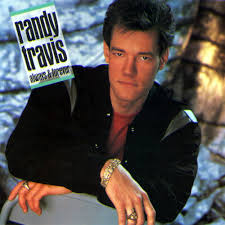
Forever And Ever Amen is the song most people hear when they think of Randy Travis. Paul Overstreet and Don Schlitz, the team behind "On the Other Hand," built it around a phrase a little boy in Schlitz's family used to tack onto his bedtime prayers.
Overstreet later said he wanted to pitch it to George Jones, but their publisher sent it to Travis instead. Released in March 1987 as the lead single from Always & Forever, it spent three weeks at No. 1 on Billboard's Hot Country Singles chart, the only multi-week country No. 1 of that year.
It won the Grammy for Best Country Song and the ACM awards for Song and Single of the Year, and both Overstreet and Travis later used its title for their memoirs.
What You'll Learn From This Lesson
Soon.
Guitar Lesson Details - (chords & lyrics sheet incl with lesson)
Back To Song List
Hard Rock Bottom Of Your Heart - Learn To Play On Acoustic Guitar
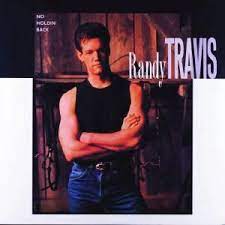
Hard Rock Bottom Of Your Heart was written by Hugh Prestwood and released in January 1990 as the second single from No Holdin' Back.
The narrator has been unfaithful and keeps waiting for forgiveness his wife can't bring herself to give, and he pictures himself as a stone she has thrown away and let sink. Kyle Lehning's production rides a shuffle groove, with Béla Fleck on banjo and an unusual rhythm harmonica part in the last 40 seconds.
The single spent four weeks at No. 1 on Billboard's Hot Country Singles & Tracks chart in the spring of 1990. American Songwriter notes that no country song had held the top spot that long since 1978. Billboard ranked it No. 2 for the year, behind only Clint Black's "Nobody's Home."
What You'll Learn From This Lesson
Soon.
Guitar Lesson Details - (chords & lyrics sheet incl with lesson)
Back To Song List
Honky Tonk Moon - Learn To Play On Acoustic Guitar
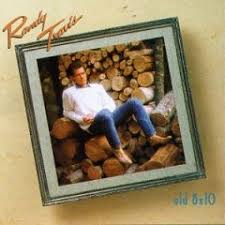
Honky Tonk Moon came from an unlikely place: songwriter Dennis O'Rourke was from Boston, a city not known for its honky-tonks, and he told the Billboard Book of Number One Country Hits that he wanted to paint a quiet evening in the country without leaning on beer-drinking clichés.
The picture is simple: a dirt road at twilight, neon up ahead and a moon shining down on the singer and his girl. Released in June 1988 as the lead single from Old 8×10, Travis's third studio album, it spent one week at No. 1 on Billboard's Hot Country Singles chart in October 1988.
Because it landed between "I Told You So" and "Deeper Than the Holler," it often gets overlooked, but it's one of his most relaxed records.
What You'll Learn From This Lesson
Soon.
Guitar Lesson Details - (chords & lyrics sheet incl with lesson)
Back To Song List
If I Didn't Have You - Learn To Play On Acoustic Guitar
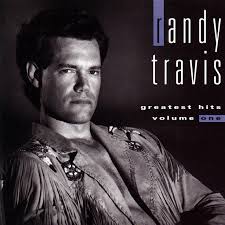
If I Didn't Have You was one of two new songs recorded for Greatest Hits, Volume One, released the same day as a second volume in September 1992. Skip Ewing and Max D. Barnes wrote it, and Ewing also played acoustic guitar on the session.
The lyric is a plain-spoken thank-you to a wife, listing all the ways the singer would be lost without her, from a feather in the wind to a ship at sea. It's trickier to play than it sounds: the verses are usually described as being in 7/4 time before the chorus settles into 4/4.
Released in August, ahead of the album, it debuted at No. 65 and reached No. 1 on Billboard's Hot Country Singles & Tracks chart that October.
What You'll Learn From This Lesson
Soon.
Guitar Lesson Details - (chords & lyrics sheet incl with lesson)
Back To Song List
Look Heart No Hands - Learn To Play On Acoustic Guitar
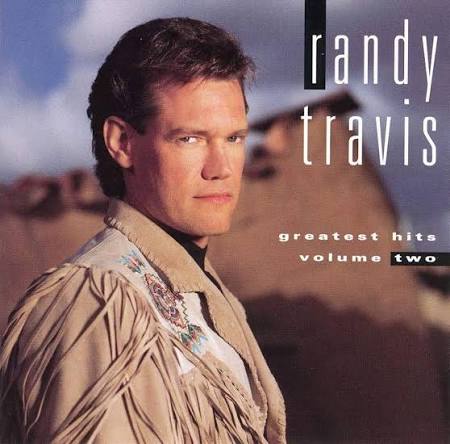
Look Heart No Hands was the only new single from Greatest Hits, Volume Two. Trey Bruce wrote it with Russell Smith, formerly of the Amazing Rhythm Aces, and the central image comes straight from childhood: falling in love feels like coasting a bicycle downhill without holding the handlebars.
Kyle Lehning produced it, and Jim Shea directed the video, just as he had for "If I Didn't Have You." Released in November 1992, the single debuted at No. 56 on Billboard's Hot Country Singles & Tracks chart and reached No. 1 early in 1993, where it stayed for two weeks.
It also topped Canada's RPM country chart. Coming right after "If I Didn't Have You," it gave Travis a No. 1 from each of his two hits collections.
What You'll Learn From This Lesson
Soon.
Guitar Lesson Details - (chords & lyrics sheet incl with lesson)
Back To Song List
My Greatest Fear - Learn To Play On Acoustic Guitar
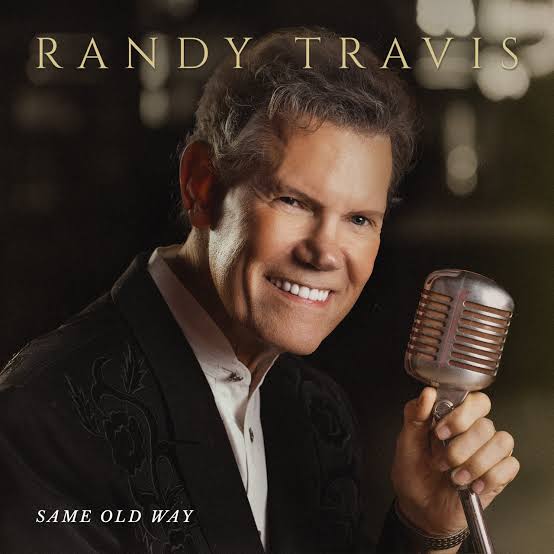
My Greatest Fear was written for Black Dog, the 1998 trucking action film starring Patrick Swayze, in which Randy Travis had a supporting role. Travis wrote the song with Brian Vincent, another member of the cast, and it appeared on the film's country soundtrack, released by Decca in April 1998 alongside tracks by Lee Ann Womack, Patty Loveless and Steve Earle.
It's a ballad from a man whose work keeps him on the road, telling the woman at home that losing her is the one thing he truly fears. AllMusic's review singled out Travis's performance as one of the soundtrack's highlights.
The song resurfaced in November 2026 as track 11 on Same Old Way, a collection of vault recordings from across his career.
What You'll Learn From This Lesson
Soon.
Guitar Lesson Details - (chords & lyrics sheet incl with lesson)
Back To Song List
My House - Learn To Play On Acoustic Guitar
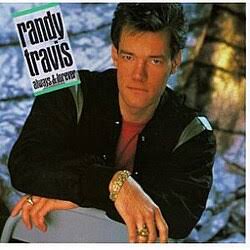
My House is a deep cut from Always & Forever, Travis's second studio album, released in April 1987. Paul Overstreet wrote it with Al Gore, two of the three writers behind "Diggin' Up Bones."
It sits right after "Too Gone Too Long" on the track list, and when that song came out as a single in November 1987,
"My House" was chosen as its B-side. It was never a single itself, so its story is thinly documented, but it belongs to one of the strongest country albums of the decade: all four singles from Always & Forever went to No. 1, including "Forever and Ever, Amen" and "I Told You So."
What You'll Learn From This Lesson
Soon.
Guitar Lesson Details - (chords & lyrics sheet incl with lesson)
Back To Song List
On The Other Hand - Learn To Play On Acoustic Guitar
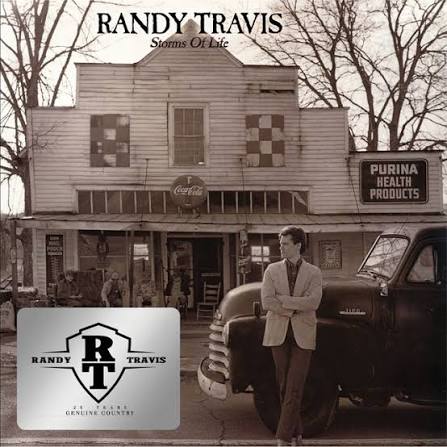
On The Other Hand had to fail before it could succeed. Paul Overstreet came up with the idea during a session with Don Schlitz, turning an everyday expression into a cheating song: one hand counts the reasons to stay with a new flame, and the other wears a wedding band.
Travis cut it in January 1985 at his first Warner Bros. session, but its July 1985 release stalled at No. 67. After "1982" became a hit, the label reissued it in April 1986, and this time it went to No. 1, his first chart-topper.
Overstreet and Schlitz won Song of the Year from the CMA and the ACM. Keith Whitley also cut it on his 1985 album L.A. to Miami but never released it as a single.
What You'll Learn From This Lesson
This song was recorded in the key of F, but my version here is a bit higher and played in standard tuning using the chords G, G7, C, D, D7 and an A7. No lead work but a few riffs and player either as a root down up root up down up for rhythm, or add in some bass notes and play a root down up bass up down up.
Learn the chords and rhythm of your choice and then work in a few riffs.
Guitar Lesson Details - (chords & lyrics sheet incl with lesson)
Back To Song List
Out Of My Bones - Learn To Play On Acoustic Guitar
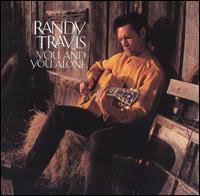
Out Of My Bones marked a fresh start. After more than a decade at Warner Bros., Travis signed with DreamWorks Records, and this was the lead single from You and You Alone, his first album for the label. Gary Burr, Robin Lerner and Sharon Vaughn wrote it about a man who can't shake the memory of a lost love, one so deep in him that he'd almost welcome amnesia.
Released in March 1998, the single debuted at No. 39 and climbed to No. 2 on Billboard's Hot Country Singles & Tracks chart that May. Billboard's reviewer said it should remind radio programmers how precious the warmth in Travis's baritone still was.
The album followed it with "Spirit of a Boy, Wisdom of a Man," which also reached No. 2.
What You'll Learn From This Lesson
Soon.
Guitar Lesson Details - (chords & lyrics sheet incl with lesson)
Back To Song List
Pray For The Fish - Learn To Play On Acoustic Guitar
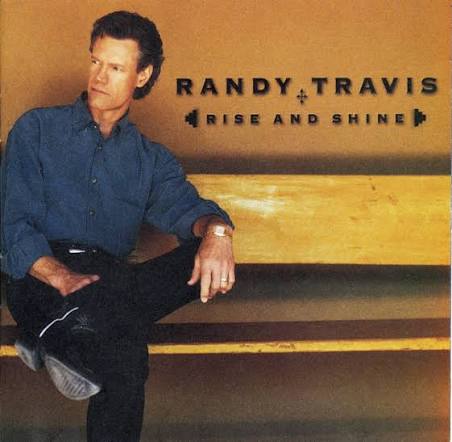
Pray For The Fish is the comic relief on Rise and Shine, the 2002 gospel album that also produced "Three Wooden Crosses."
Written by Phillip Moore, Dan Murph and Ray Scott, it tells of a whole town gathering at the river to watch the baptism of Eddie, a man with a long and colourful list of sins. The preacher asks everyone to pray for Eddie, then adds a request for the fish, who will have to live with all that sin once it washes off into the water. Kyle Lehning produced the album for Word Records.
Released as the follow-up single in July 2003, "Pray for the Fish" reached No. 48 on Billboard's Hot Country Singles & Tracks chart, a modest showing next to the success of "Three Wooden Crosses."
What You'll Learn From This Lesson
Soon.
Guitar Lesson Details - (chords & lyrics sheet incl with lesson)
Back To Song List
The Heart Of Worship - Learn To Play On Acoustic Guitar

The Heart Of Worship came out of Soul Survivor Church in Watford, England, where Matt Redman led worship in the late 1990s. The congregation had grown comfortable with the music, so the church's leadership took away the sound system and band for a season and asked people to bring their own voices and prayers instead.
Redman wrote the song from that experience, a confession that worship is about more than the songs themselves. It became the title track of his 1999 album and spread to churches worldwide.
Randy Travis recorded it for Glory Train: Songs of Faith, Worship, and Praise, a 19-track gospel set released in October 2005 on Word Records. No singles were issued, but Glory Train won the Dove Award for Country Album of the Year.
What You'll Learn From This Lesson
Soon.
Guitar Lesson Details - (chords & lyrics sheet incl with lesson)
Back To Song List
Whisper My Name - Learn To Play On Acoustic Guitar
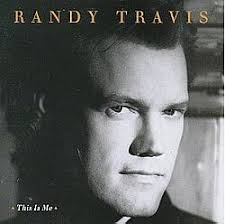
Whisper My Name leans into the spiritual side of Randy Travis that would grow larger in his later career.
Trey Bruce wrote it on his own, and Travis released it in June 1994 as the second single from This Is Me, an album chosen from more than 1,000 songs that Travis and Warner A&R executive Martha Sharp considered. The narrator describes how hearing his name whispered changes everything around him, using images of rain, thunder and music that give the lyric a gospel feel.
The single debuted at No. 67 on Billboard's Hot Country Singles & Tracks chart and reached No. 1 in September 1994, and it topped the Canadian country chart as well. American Songwriter counts it as the 15th No. 1 of his career.
What You'll Learn From This Lesson
Soon
Guitar Lesson Details - (chords & lyrics sheet incl with lesson)
Back To Song List
White Christmas Makes Be Blue - Learn To Play On Acoustic Guitar
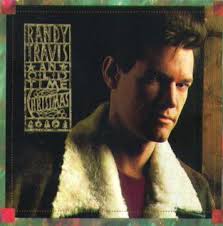
White Christmas Makes Be Blue was Randy Travis's first Christmas release, and it came out nearly three years before his holiday album.
Written by Rich Grissom and Neil Patton Rogers, it borrows its title from the famous Irving Berlin standard and gives it a country heartache twist. Warner Bros. issued it as a single in December 1986, closing out his breakthrough year with Storms of Life.
It was then included on An Old Time Christmas, released in August 1989 and produced by Kyle Lehning, which was later certified gold. In 2021 Travis released a remastered deluxe edition of that album with three previously unheard tracks.
What You'll Learn From This Lesson
Soon
Guitar Lesson Details - (chords & lyrics sheet incl with lesson)
Back To Song List
From 1982 and Honky Tonk Moon to The Heart of Worship and White Christmas Makes Me Blue, there are 16 Randy Travis songs to choose from, with something for every stage of your playing.
Pick one that suits your hands and your voice, and work through it at your own pace. If there's a Randy Travis song you'd like to see added, send me a request through my contact page.
If you liked this Randy Travis greatest hits page you might also like ... (click images)
Home Page
Very Easy Country Guitar Songs

Kirby Swinemar is an acoustic guitar instructor, performer and song arranger who has taught online for 21 years and created more than 4,000 original acoustic guitar lessons. He specialises in song-based acoustic guitar instruction, rhythm guitar techniques, and creating full-sounding solo arrangements that help beginner and intermediate players move beyond basic strumming.
Explore more of Kirby's work at Kirby's Guitar Lessons, watch his performances and tutorials on his YouTube Channel or follow him on Facebook. You can also learn more about his teaching background on the About Me page.
Latest 100 Tutorials
© 2019–2026 KirbysGuitarLessons.com — All Rights Reserved