Ringo Starr Guitar Lessons – 6 Acoustic Songs

Welcome to my Ringo Starr guitar lessons page, featuring six of my own acoustic arrangements of songs Ringo wrote or made famous. From his Beatles classic Octopus's Garden on the 1969 Abbey Road album to his popular 1970s solo recordings, including the US No. 1 hits Photograph and You're Sixteen, these lessons capture the cheerful melodies and memorable rhythms that helped define his musical career.
Each lesson walks you through the chords, strumming patterns and acoustic guitar techniques needed to play the song, including recognizable intro riffs, hammer-ons, bass runs and melodic picking. Whether you're looking for a straightforward rhythm arrangement or something with a little more lead guitar, there's plenty here to explore.
Start with the video previews to hear a short clip from every lesson, then check out the free demos for Photograph and You're Sixteen. Each full lesson includes an 8–12 minute HD video and a printable chords and lyrics PDF, and every purchase helps support the channel.
Ringo Starr Guitar Lessons — Video Previews
performance clips taken directly from the complete lesson videos.
Click Play, then drag the timeline to quickly preview any Ringo Starr lesson featured on this page.
Note: Every arrangement has been personally created, recorded and taught by Kirby
using teaching methods refined through decades of acoustic guitar instruction.
What's Included With Every Lesson
📦 Your Lesson Package Includes
✓ 8–12 minute HD video lesson so you can learn each song step-by-step.
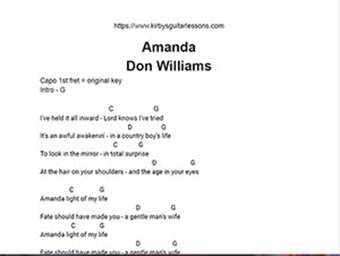
✓ Printable chords & lyrics PDF for easy practice away from the screen.
✓ Instant download—start playing in minutes.
✓ Learn at your own pace on any device.
New to Ringo Starr? Start Here
If you're new to these Ringo Starr guitar lessons, start with The No No Song. It uses just three chords (C, F and G) and a repeating down-up-stop-up rhythm, making it a good introduction to playing his songs on acoustic guitar. There's also an optional lead break you can add once you're comfortable with the rhythm.
For your next step, try Photograph or It Don't Come Easy. Photograph uses one steady strumming pattern with an intro riff and melody-line picking, while It Don't Come Easy introduces two rhythm patterns and a recurring guitar riff.
Once you're comfortable combining rhythm and picking, move on to Octopus's Garden, where you'll work with changing strumming patterns, an intro riff, a lead break and an ending riff.
For a little more variety, try You're Sixteen to practice hammer-ons, bass runs, quick shuffle rhythms and melody picking. Then tackle Oh My My, which uses Drop D tuning, chord hammer-ons and an improvised guitar lead section in place of the original saxophone break.
Suggested learning path: The No No Song → Photograph → It Don't Come Easy → Octopus's Garden → You're Sixteen → Oh My My.
Take your time with each arrangement. Learn the chords and rhythm first, then add the picking and lead guitar parts as your confidence grows.
Ringo Starr Guitar Lessons Included On This Page
Octopus's Garden Guitar Lesson
Oh My My Guitar Lesson
Photograph Guitar Lesson
The No No Song Guitar Lesson
You're Sixteen Guitar Lesson
🎁 Free Demo Preview
Scroll down to check out a completely free demo on Ringo Starr's “Photograph” and "You're Sixteen".It Don't Come Easy - Learn To Play On Acoustic Guitar

It Don't Come Easy was Ringo Starr’s first rock record as a solo artist, released as a standalone single on 9 April 1971 with “Early 1970” on the B-side.
He started writing it in late 1968, soon after finishing “Don’t Pass Me By,” his first song for the Beatles. Ringo got sole writing credit, but he had a lot of help from George Harrison, which he later acknowledged. Harrison also produced the sessions and played guitar. Badfinger’s Pete Ham and Tom Evans sang the backing vocals.
The single reached No. 1 in Canada and No. 4 in both the US and the UK, and it went gold. That August, Ringo and Harrison performed it together at the Concert for Bangladesh in New York.
What You'll Learn From This Lesson
This acoustic guitar lesson for It Don't Come Easy follows the lower-key version Ringo Starr performed live, using the chords A, Em, G, D/Gb, C and E in standard tuning.
The arrangement combines two rhythm patterns. The main pattern uses a root-up-down-up, root-up-down-up sequence, giving the song its steady, flowing rhythm. A second down-up-down-up pattern appears briefly at different points before returning to the main pattern. Learning how these two rhythms work together will help you maintain the song's natural groove.
You'll also learn the recognizable intro riff, which returns later in the arrangement. There is no separate lead guitar break, so the focus is on combining the chord progression, alternating rhythm patterns and recurring riff into a complete acoustic performance.
Playing Tip: Start by getting comfortable with the chords and both rhythm patterns. Once the transitions feel natural, work on the intro riff and practice bringing it back into the song at the appropriate places.
Guitar Lesson Details - (chords & lyrics sheet incl with lesson)
Back To Song List
Octopus's Garden - Learn To Play On Acoustic Guitar

Octopus's Garden was released on the Beatles’ Abbey Road on 26 September 1969, and it was Ringo’s second song for the group. He got the idea in August 1968, after he temporarily walked out of the sessions for the White Album and took his family on a boating holiday.
On Peter Sellers’ boat off Sardinia, the captain told him that octopuses travel the sea bed collecting stones and shiny objects to build gardens. George Harrison rearranged the chord progression and helped him finish the song.
At Ringo’s request, Harrison made the bubbling sound by blowing through a straw into a glass of milk. It was the last song the Beatles released with Ringo singing lead.
What You'll Learn From This Lesson
This Octopus's Garden acoustic guitar lesson uses standard tuning and the chords E, Dbm, A, B7, B, Gbm and D to capture the cheerful, upbeat feel of this Beatles classic written and sung by Ringo Starr.
The arrangement opens with a recognizable picking riff before moving into the main root-up-root-up-down-up strumming pattern. As the song progresses, the rhythm changes to a series of downstrokes, giving the arrangement a different feel while maintaining its steady momentum.
You'll also learn a main lead picking break and a separate ending picking riff, adding melodic detail to the rhythm guitar accompaniment and helping create a complete solo acoustic performance.
Playing Tip: Begin by learning the chords and getting comfortable switching between the two rhythm patterns. Once those feel natural, work separately on the intro picking riff, the main lead break and the ending riff before bringing everything together.
Guitar Lesson Details - (chords & lyrics sheet incl with lesson)
Back To Song List
Oh My My - Learn To Play On Acoustic Guitar
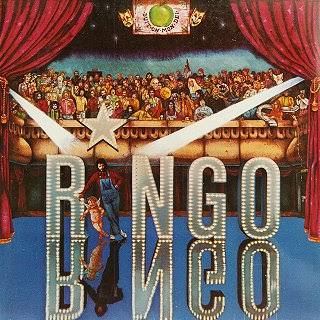
Oh My My was written by Ringo, credited under his real name Richard Starkey, with Vini Poncia, a frequent collaborator of his in the 1970s. It appeared on the 1973 album Ringo, and on 18 February 1974 it was released in the US as the album’s third single.
Producer Richard Perry built a lively dance track around Billy Preston on piano and organ, Jim Keltner on a second drum kit, and a sax solo from Tom Scott. Martha Reeves and Merry Clayton sang backing vocals. It reached No. 5 on the Billboard Hot 100 and No. 3 in Canada.
Ringo didn’t play it live until 2008, with his All-Starr Band, and Bette Midler later covered it.
What You'll Learn From This Lesson
This Oh My My acoustic guitar lesson follows Ringo Starr's upbeat, early-'70s rock-and-roll feel, but uses the key of D with Drop D tuning rather than the original recording's key of G. The chords you'll learn are D, C, G, A, Bm and E.
The arrangement opens with a recognizable riff moving between the D and C chords before settling into a steady downstroke rhythm throughout the verses. During the chorus, you'll continue using downstrokes while adding hammer-ons within the chords to create a stronger rock-and-roll groove and give the rhythm guitar more character.
The original recording also features a saxophone break, which I've adapted into an improvised acoustic guitar lead section. This gives you an opportunity to add some melodic playing while keeping the song's lively feel.
Playing Tip: Start by learning the chords and establishing a consistent downstroke rhythm. Next, practice adding the hammer-ons during the chorus without interrupting the beat. Once the rhythm feels comfortable, work on the opening riff and finish by learning the improvised lead section.
Guitar Lesson Details - (chords & lyrics sheet incl with lesson)
Back To Song List
Photograph - Learn To Play On Acoustic Guitar

Photograph was the first song Ringo and George Harrison were credited with writing together. They started it on a luxury yacht in the south of France. The sailing holiday, in May 1971, also included their wives and Cilla Black.
The finished track was produced by Richard Perry. Harrison played 12-string acoustic guitar and sang harmony, Nicky Hopkins played piano and Jim Keltner played drums. Bobby Keys added a sax solo, and Jack Nitzsche arranged the orchestra. Released on 24 September 1973 as the lead single from Ringo, it reached No. 1 on the Billboard Hot 100 on 24 November and No. 8 in the UK.
A year after Harrison’s death, Ringo sang it at the 2002 Concert for George and said its meaning had changed.
What You'll Learn From This Lesson
This Photograph acoustic guitar lesson by Ringo Starr is played in standard tuning using the chords A, D, G, Gb and Bm. The arrangement combines a steady pop-rock rhythm with recognizable melodic picking to capture the warm, nostalgic feel of this classic song.
You'll begin with an intro riff blended into the rhythm guitar, using a consistent down-down-up-down-up-down-up strumming pattern that continues throughout the song. Portions of the opening riff return at different points, adding familiar melodic touches without interrupting the rhythm.
The lesson also includes a main melody-line picking section, giving you an opportunity to move beyond the chord progression and incorporate some recognizable lead guitar into your acoustic performance.
Playing Tip: Start by learning the five chords and getting comfortable with the main strumming pattern. Next, practice the opening riff and work on bringing portions of it back into the arrangement where demonstrated. Finally, learn the main melody-line picking section and combine everything into a smooth, complete performance.
Guitar Lesson Details - (chords & lyrics sheet incl with lesson)
Back To Song List
The No No Song - Learn To Play On Acoustic Guitar

The No No Song was written by country singer Hoyt Axton and bassist David Jackson, and it appeared on Ringo’s 1974 album Goodnight Vienna. In the song, the narrator turns down one offer of drugs or drink after another, saying each would be bad for his health.
Axton was poking fun at his own drug problems. Ringo, on the other hand, was still drinking and doing drugs at the time, so the joke ran the other way for him. Harry Nilsson sang backing vocals, with Jesse Ed Davis on electric guitar and Nicky Hopkins on electric piano.
It was released as a US single on 27 January 1975, reached No. 3 on the Hot 100, and spent two weeks at No. 1 in Canada. Axton released his own version that year, with Cheech and Chong.
What You'll Learn From This Lesson
This The No No Song acoustic guitar lesson by Ringo Starr is played in standard tuning using just three chords: C, F and G. The arrangement captures the song's relaxed, country-rock feel with a simple, repeating rhythm that works well for accompanying its humorous, storytelling lyrics.
You'll learn a down-up-stop-up strumming pattern that repeats throughout the song. The brief stop creates a rhythmic break that helps give the accompaniment its playful, bouncy character. Once you're comfortable with the chord changes and rhythm, you can concentrate on maintaining a steady groove while singing along.
Although the original recording doesn't feature a lead guitar break, I've included an optional lead section in this acoustic arrangement. It adds a little extra musical interest for players who want to move beyond basic rhythm guitar.
Playing Tip: Begin by learning the three chords and practicing the down-up-stop-up pattern until the stops feel natural. Work on keeping the rhythm relaxed and consistent through the chord changes. Once you can play the song comfortably, add the optional lead break if you'd like to expand the arrangement.
Guitar Lesson Details - (chords & lyrics sheet incl with lesson)
Back To Song List
You're Sixteen - Learn To Play On Acoustic Guitar

You're Sixteen was written by Robert and Richard Sherman, the brothers behind Disney songs such as “Supercalifragilisticexpialidocious.” Johnny Burnette had the original hit, reaching No. 8 in the US in December 1960 and No. 3 in the UK in 1961.
His version was used in the 1973 film American Graffiti, the same year Ringo recorded his own for the Ringo album. Paul McCartney supplied the kazoo-sounding solo, which was actually his own voice.
Harry Nilsson sang backing vocals and Nicky Hopkins played piano. Released in the US on 3 December 1973, it reached No. 1 on 26 January 1974, Ringo’s second and final US No. 1. It also reached No. 4 in the UK. It’s the only Sherman Brothers song ever to reach No. 1.
What You'll Learn From This Lesson
This You're Sixteen acoustic guitar lesson by Ringo Starr is played in standard tuning using the chords G, C/G, D7, B7, C, A, D and E7. The arrangement captures the song's cheerful, bouncy oldies feel by combining steady rhythm guitar with hammer-ons, bass notes and melodic picking.
You'll learn a down-up-down-up strumming pattern with hammer-ons added to the chords to create that lively, early rock-and-roll sound. Bass notes and short bass runs are worked into the accompaniment, while certain sections switch to a quick shuffle rhythm, adding variety and helping maintain the song's playful groove.
The lesson also includes a main melody-line picking section, giving you an opportunity to incorporate recognizable melodic guitar work into your solo acoustic performance.
Playing Tip: Start by learning the chords and practicing the down-up-down-up rhythm with the hammer-ons. Once the groove feels natural, gradually blend in the bass notes and runs, paying attention to the sections that switch to a quicker shuffle. Finish by learning the main melody-line picking section and bringing everything together into a complete arrangement.
Guitar Lesson Details - (chords & lyrics sheet incl with lesson)
Back To Song List
Ringo Starr Guitar Lessons – Frequently Asked Questions
1. Which Ringo Starr song is easiest to learn on acoustic guitar?
The No No Song is a good starting point for beginners. It uses just three chords (C, F and G) and a repeating down-up-stop-up strumming pattern. You can learn the complete rhythm arrangement first and add the optional lead guitar break when you're ready.
2. Do I need a capo or special tuning for these Ringo Starr guitar lessons?
Five of the six arrangements use standard tuning, so you can play them without changing your guitar's tuning. Oh My My is the exception, using Drop D tuning and a lower key than the original recording. No capo is required for these arrangements.
3. Do these lessons include guitar riffs and lead picking?
Yes. Several lessons combine rhythm guitar with recognizable riffs and melodic picking. Photograph includes a recurring intro riff and melody-line picking, while Octopus's Garden features intro and ending riffs along with a main lead break. You're Sixteen includes melody picking, and Oh My My features an improvised guitar lead section that replaces the original saxophone break.
4. What strumming patterns will I learn in these songs?
These lessons cover several rhythm styles, from the steady down-down-up-down-up-down-up pattern in Photograph to the down-up-stop-up rhythm in The No No Song. It Don't Come Easy and Octopus's Garden use changing rhythm patterns, while You're Sixteen introduces hammer-ons, bass runs and a quick shuffle feel. Each arrangement focuses on developing the rhythm needed to capture the character of the song.
5. Are these Ringo Starr guitar lessons suitable for beginners?
Yes, although some arrangements are more involved than others. The No No Song is a good choice for newer players, while Photograph and It Don't Come Easy provide opportunities to develop steady rhythm and basic picking skills. More experienced players can explore the additional riffs, hammer-ons, bass runs and lead guitar sections in Octopus's Garden, You're Sixteen and Oh My My. Each lesson lets you build the arrangement gradually, beginning with the chords and rhythm.
Thanks for visiting my Ringo Starr guitar lessons page. These six songs offer a fun mix of classic pop, rock-and-roll and country-influenced rhythms that work especially well on acoustic guitar. Start by getting comfortable with the chords and strumming patterns, then gradually add the riffs, hammer-ons, bass runs and lead picking to bring each arrangement to life.
If there's another Ringo Starr song you'd like to learn, feel free to send me a request through my contact page. And if you enjoy these classic songs, be sure to explore my John Lennon, Nick Lowe and David Bowie guitar lessons below for more acoustic arrangements from some familiar names.
More Classic Pop & Rock Guitar Lessons You Might Enjoy, you might also like ... (click images)


Classic Pop Songs

Kirby Swinemar is an acoustic guitar instructor, performer and song arranger who has taught online for 21 years and created more than 4,000 original acoustic guitar lessons. He specialises in song-based acoustic guitar instruction, rhythm guitar techniques, and creating full-sounding solo arrangements that help beginner and intermediate players move beyond basic strumming.
Explore more of Kirby's work at Kirby's Guitar Lessons, watch his performances and tutorials on his YouTube Channel or follow him on Facebook. You can also learn more about his teaching background on the About Me page.
Latest 100 Tutorials
© 2019–2026 KirbysGuitarLessons.com — All Rights Reserved