Arlo Guthrie Guitar Lessons
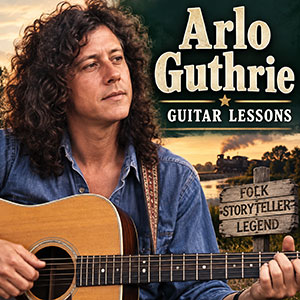
Explore these Arlo Guthrie guitar lessons and learn six songs that move through folk, folk-rock, country and blues influences on acoustic guitar.
The arrangements cover steady rhythm patterns, bass movement, hammer-ons, riffs, melody picking and lead work, with several options for adjusting the key or capo position to better suit your vocal range.
From City Of New Orleans and Coming Into Los Angeles to the folk-blues feel of St James Infirmary, each lesson offers something a little different to work into your acoustic playing.
🎸 Watch the Arlo Guthrie Guitar Lessons Overview
performance clips taken directly from the complete lesson videos.
Click Play, then drag the timeline to quickly preview any Arlo Guthrie lesson featured on this page.
Note: Every arrangement has been personally created, recorded and taught by Kirby
using teaching methods refined through decades of acoustic guitar instruction.
What's Included With Every Lesson
📦 Your Lesson Package Includes
✓ 8–12 minute HD video lesson so you can learn each song step-by-step.
✓ Printable chords & lyrics PDF for easy practice away from the screen.

✓ Instant download—start playing in minutes.
✓ Learn at your own pace on any device.
New To Arlo Guthrie?
If you're new to playing Arlo Guthrie songs on acoustic guitar, these six lessons offer a good mix of steady folk rhythms, bass movement, riffs and melody picking. You don't need to work through them in any particular order, but the paths below can help you choose a place to begin.
Start With The Rhythm
Begin with Last To Leave if you want to concentrate mainly on chords and a steady repeating strumming pattern. There is no lead break to learn, just a few hammer-ons that can be added once the rhythm is comfortable.
From there, try Oklahoma Hills, where a root-and-bass rhythm pattern and several bass runs introduce more movement into the accompaniment. An optional melody picking break is there if you want to take the arrangement further.
Add Some Melody Picking
City Of New Orleans is a good next step if you want to combine folk rhythm with melody playing. You can choose between two rhythm patterns and play the song entirely as an accompaniment before adding the optional melody-line picking break.
Then move into Last Train, which adds more guitar detail with an intro riff, ending riff and a melody picking break. This makes it a good choice once you're comfortable moving between rhythm playing and individual guitar parts.
Explore The Different Sides Of Arlo
For something with a little more folk-rock energy, try Coming Into Los Angeles. You'll have two rhythm options along with an improvised lead section that keeps the rhythm wrapped around the lead work.
For a completely different feel, St James Infirmary moves into folk-blues territory with its choppy, galloping rhythm and a lead section that blends melody notes and chords together.
Arlo Guthrie Guitar Lessons Included On This Page
City Of New Orleans Guitar Lesson
Coming Into Los Angeles Guitar Lesson
Last To Leave Guitar Lesson
Last Train Guitar Lesson
Oklahoma Hills Guitar Lesson
St James Infirmary Guitar Lesson
City Of New Orleans - Learn To Play On Acoustic Guitar
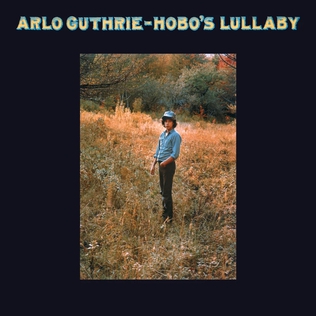
City Of New Orleans gave Arlo Guthrie the biggest chart hit of his career in 1972, but the song came from Chicago singer-songwriter Steve Goodman. According to the story that has followed the song for decades, Goodman approached Guthrie at Chicago's Quiet Knight club and persuaded him to listen by buying him a beer. Guthrie liked what he heard enough to record it for his album Hobo's Lullaby.
Arlo's version climbed to No. 18 on the Billboard Hot 100 and No. 4 on the Easy Listening chart, becoming his only Top 40 pop hit. The song's portrait of an American passenger train and the people encountered along the route became one of the enduring railroad songs of the modern folk era.
Decades later, Guthrie returned to the train itself for a 2005 benefit tour following Hurricane Katrina, and his recording was inducted into the Grammy Hall of Fame in 2017.
What You'll Learn From This Lesson
For my version of City Of New Orleans, I play in the key of A with a capo on the 2nd fret, using the chords G, D, Em, C, Bm, D7, Em/D, Asus2/Db and F.
For the rhythm, you can use a root-down-up-down-up-down-up pattern, or try a root-down-up-root-up-down-up pattern if you prefer a little more bass movement in the accompaniment. There is also a melody-line picking break in my arrangement, but it's optional and isn't required to play the song.
Start by learning the chords and choose whichever rhythm pattern feels best for you. Once you have the chord changes and rhythm flowing smoothly, come back and add the melody-line picking break if you'd like to include it in your arrangement.
Guitar Lesson Details - (chords & lyrics sheet incl with lesson)
Back To Song List
Coming Into Los Angeles - Learn To Play On Acoustic Guitar
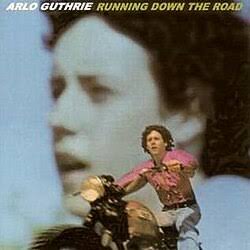
Coming Into Los Angeles became permanently linked with the Woodstock generation after Arlo Guthrie performed it at the festival in August 1969. The song was still new at the time and appeared later that year on Running Down the Road. Its Woodstock exposure—particularly through the subsequent movie—helped turn it into one of Guthrie's signature numbers.
The inspiration came from a real flight home from London. Guthrie discovered that friends had slipped some contraband into his belongings, leaving him understandably nervous about what might happen when he reached customs in Los Angeles. He later admitted that the song greatly exaggerated the quantity involved, describing himself as a teller of tall tales.
Its combination of humor, counterculture imagery and a driving folk-rock rhythm made “Coming Into Los Angeles” one of the songs most closely associated with Arlo beyond “Alice's Restaurant” and “City Of New Orleans.”
What You'll Learn From This Lesson
For my version of Coming Into Los Angeles, I play in the key of A using the six chords Am, Am/G, D/Gb, F, C and E7. For the rhythm, you can use a steady down-up-down-up pattern, or play a root-up-down-up pattern if you prefer more bass-note movement in the accompaniment.
There is also a lead break in my arrangement. The original section is more of a stand-alone acoustic guitar part picking through a series of notes, so I've improvised my own version while keeping the rhythm wrapped around the lead work.
Start by learning the six chords and choose whichever rhythm pattern works best for you. Once the chord changes and rhythm are comfortable, come back and work through the lead section. The key of A sits a little high for my vocal range, so you may also want to adjust the key if it doesn't sit comfortably for your voice.
Guitar Lesson Details - (chords & lyrics sheet incl with lesson)
Back To Song List
Last To Leave - Learn To Play On Acoustic Guitar
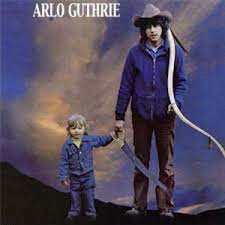
Last To Leave comes from Arlo Guthrie's self-titled 1974 album, a period when his songwriting was moving well beyond the comic storytelling that had first brought him widespread attention. The album also included songs such as “Presidential Rag,” “Won't Be Long” and “Me and My Goose.” Arlo's own retrospective collection First 50 Years identifies “Last To Leave” with that 1974 album.
The song shows the more reflective side of Guthrie's writing, using the idea of being the last person left behind as the foundation for a thoughtful singer-songwriter performance rather than one of his extended humorous narratives.
Although it never became a major chart single, “Last To Leave” remained significant enough in Guthrie's catalog to appear alongside “Coming Into Los Angeles,” “Last Train” and “City Of New Orleans” on his 1977 Best Of Arlo Guthrie collection.
What You'll Learn From This Lesson
For my version of Last To Leave, I play in the key of D because the original key of E sits a little high for my vocal range. To return to the original key, simply place a capo on the 2nd fret while using the same chord shapes in standard tuning. The chords are D, G, A, Em, Gbm, Bm, D/Gb, Ddim and Adim.
For the rhythm, I use a steady down-down-up-down-down-up pattern that repeats throughout the song. There are also a few hammer-ons worked into the arrangement, but there is no lead section to learn.
Start by finding the capo position or key that works best for your vocal range, then learn the chords and get comfortable with the one rhythm pattern. Once those are in place, add the occasional hammer-on to complete the arrangement.
Guitar Lesson Details - (chords & lyrics sheet incl with lesson)
Back To Song List
Last Train - Learn To Play On Acoustic Guitar
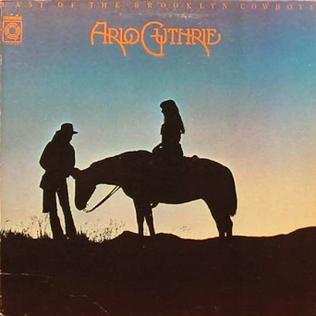
Last Train appeared during another productive stretch of Arlo Guthrie's career, turning up on his 1973 album Last of the Brooklyn Cowboys. By then Guthrie had established himself as much more than the performer behind “Alice's Restaurant,” particularly following the success of “City Of New Orleans” the previous year.
The railroad imagery also sits naturally within Guthrie's broader folk tradition. Trains had long been recurring characters in American folk, blues and country music, and Guthrie's own catalog already had an especially strong association with rail travel through “City Of New Orleans.”
“Last Train” never became a major pop hit, but Guthrie clearly regarded it as an important part of his catalog. It was selected for 1977's The Best Of Arlo Guthrie and decades later for his career-spanning First 50 Years collection.
What You'll Learn From This Lesson
For my version of Last Train, I play in standard tuning without a capo. The original version uses a capo on the 4th fret, but that puts the song much too high for my vocal range. The chords I'm using are D, A7, G, Bm, E7, D7 and D/Gb.
For the rhythm, I use a steady down-down-up-down-down-up pattern that repeats throughout the song. There is also an intro riff and ending riff, along with a melody-line picking break that adds another dimension to the acoustic arrangement.
Start by learning the chords and getting comfortable with the rhythm pattern. Next, work through the intro and ending riffs, and once those are in place, come back and learn the melody-line picking break to complete the arrangement.
Guitar Lesson Details - (chords & lyrics sheet incl with lesson)
Back To Song List
Oklahoma Hills - Learn To Play On Acoustic Guitar
Oklahoma Hills gave Arlo Guthrie an opportunity to reach directly back into his own family's musical history. His father, Woody Guthrie, developed the song in the 1930s, and Woody's cousin Jack Guthrie later adapted it and recorded a Western-swing version in 1945. Jack's recording became a No. 1 country hit and the biggest success of his short career.
Arlo brought “Oklahoma Hills” to a new generation when he included it as the opening track of his 1969 album Running Down the Road. That record surrounded him with an extraordinary group of musicians that included Ry Cooder, Clarence White and James Burton.
The song's connection to Oklahoma has endured far beyond the Guthrie family. In 2001, “Oklahoma Hills” was designated Oklahoma's official state folk song, giving this family composition a permanent place in the state's musical heritage.
What You'll Learn From This Lesson
For my version of Oklahoma Hills, I play in standard tuning with a capo on the 2nd fret, using the chords D, A7, D7 and E7. For the rhythm, I use a root-down-up-bass-up-down-up pattern, which gives the arrangement plenty of bass movement as you work through the song.
There are also bass runs between the chords. The original recording doesn't have a picking break, but I've added an optional melody-line picking break to my arrangement for players who want to take the song a little further.
Start by learning the four chords and getting comfortable with the one rhythm pattern. Next, work in the bass runs between the chord changes. Once those pieces are in place, you can decide whether you'd like to add the optional melody-line picking break to complete your arrangement.
Guitar Lesson Details - (chords & lyrics sheet incl with lesson)
Back To Song List
St James Infirmary - Learn To Play On Acoustic Guitar
St. James Infirmary takes Arlo Guthrie considerably deeper into the traditional folk, blues and jazz songbook. Rather than originating with Guthrie, the song evolved from folk tradition and became an American blues and jazz standard during the early twentieth century.
Its dark story of a man viewing the body of his lover at St. James Infirmary has been interpreted by generations of musicians. Louis Armstrong's influential 1928 recording helped establish the song as a jazz standard, although its tangled history stretches farther back and its precise authorship has long been disputed.
Arlo's treatment fits naturally with the traditional side of his repertoire, where older folk, country and blues material frequently sits alongside his own compositions. For an acoustic arrangement, the song's minor-key atmosphere and repeating progression leave plenty of room for the vocal storytelling and rhythmic character to carry the performance.
What You'll Learn From This Lesson
For my version of St James Infirmary, I play in standard tuning with a capo on the 2nd fret, using the chords Am, E7, F, C and Am/G. The rhythm has a choppy, galloping and slightly dragging feel, which I create with a down-up-mute-up, down-up-mute-up pattern, muting the strings on those designated strokes as the pattern repeats throughout the song.
There is also a picking break that combines individual melody notes with chords. Rather than treating the lead as a separate series of notes, the melody and chord shapes work together through this section to create the complete lead part.
Start by learning the five chords and getting comfortable with the muted rhythm pattern. Once you have that feel working smoothly, move into the lead section and practice blending the picking notes and chords together as one part.
Guitar Lesson Details - (chords & lyrics sheet incl with lesson)
Back To Song List
Arlo Guthrie Guitar Lessons FAQ
Do I need a capo to play these Arlo Guthrie songs?
It depends on the song and your vocal range. Several of these arrangements use a capo, while others have been moved from the original position to make the vocals more comfortable. Oklahoma Hills and St James Infirmary use a capo on the 2nd fret, while Last Train is played without the original 4th-fret capo in my version. The important thing is to find a position that lets you play the arrangement comfortably while keeping the song in a suitable range for your voice.
What should I focus on first when learning an Arlo Guthrie song?
Start with the chords and rhythm before adding the smaller guitar details. These songs depend heavily on keeping the accompaniment flowing underneath the vocal. Once the basic rhythm is comfortable, you can begin adding bass runs, hammer-ons, riffs and melody picking where the arrangement calls for them.
Are there picking and lead parts in these Arlo Guthrie arrangements?
Yes. Several of the lessons include additional guitar work beyond the basic rhythm. City Of New Orleans and Oklahoma Hills have optional melody picking breaks, while Last Train includes intro and ending riffs along with a melody break. Coming Into Los Angeles has an improvised lead section, and St James Infirmary combines individual melody notes with chords during its picking break. Last To Leave is the exception, using just a few hammer-ons with no lead section.
How important are bass notes and bass runs in these songs?
Bass movement is an important part of several arrangements. City Of New Orleans offers rhythm patterns that incorporate root notes, while Oklahoma Hills uses a root-and-bass rhythm along with bass runs between chords. These bass notes help give a single acoustic guitar more movement without requiring a separate lead part.
What if the original Arlo Guthrie key is too high for me to sing?
Move the song into a range that suits your voice. That's exactly what I've done with some of these arrangements. Last To Leave, for example, is originally in E but I demonstrate it in D, while Last Train normally uses a capo on the 4th fret but I play it without the capo because the original position is too high for me. You can use the same approach and adjust the capo or key to suit your own vocal range.
These six Arlo Guthrie guitar lessons give you a good cross-section of rhythm and picking techniques while keeping the focus on practical one-guitar arrangements. Start with the chords and rhythm, then gradually add the bass runs, hammer-ons, riffs and melody picking found throughout the lessons.
You can also experiment with capo positions and keys to find a comfortable vocal range, giving you six Arlo Guthrie songs that can be adapted to fit your own acoustic playing style.
If you liked this Arlo Guthrie guitar lessons page, you might also like ... (click images)

Fun Folk Songs To Sing
Latest 100 Tutorials
© 2019–2026 KirbysGuitarLessons.com — All Rights Reserved