Best Keb Mo Guitar Songs – 5 Acoustic Blues Lessons

If you enjoy relaxed blues grooves, soulful storytelling, and roots-inspired acoustic guitar, Keb' Mo' brings all three together with a style that's both expressive and engaging. His music blends traditional blues influences with contemporary songwriting, offering guitarists plenty of opportunities to explore rhythm, chord movement, and tasteful embellishments.
On this page, you'll find five Keb' Mo' guitar lessons, including America the Beautiful, Grandma's Hands, Hand It Over, Life Is Beautiful, and Love Blues. Each song is arranged for solo acoustic guitar, with chord and lyrics sheets, rhythm instruction, and video demonstrations to help you follow along.
From the soulful character of Grandma's Hands to the uplifting message of Life Is Beautiful and the bluesy rhythms of Hand It Over, these lessons explore a variety of strumming patterns, bass runs, hammer-ons, and lead guitar passages that bring each arrangement to life.
🎸 Watch Keb Mo Guitar Lessons Overview
performance clips taken directly from the complete lesson videos.
Click Play, then drag the timeline to quickly preview any Keb Mo lesson featured on this page.
Note: Every arrangement has been personally created, recorded and taught by Kirby
using teaching methods refined through decades of acoustic guitar instruction.
What's Included With Every Lesson
📦 Your Lesson Package Includes
✓ 8–12 minute HD video lesson so you can learn each song step-by-step.
✓ Printable chords & lyrics PDF for easy practice away from the screen.

✓ Instant download—start playing in minutes.
✓ Learn at your own pace on any device.
New to Keb' Mo'? Start Here
If you're new to Keb' Mo's acoustic blues style, these five lessons offer a great introduction to his relaxed rhythms, soulful melodies, and expressive guitar playing. My arrangements focus primarily on rhythm-based accompaniment, with bass runs, hammer-ons, riffs, and lead passages added as you progress.
Start with Love Blues to establish a steady blues rhythm using familiar chord shapes. From there, move to Grandma's Hands to explore hammer-ons and changes in strumming patterns.
Next, try America the Beautiful, where drop D tuning and a slower rhythm provide an opportunity to work on melody playing. Life Is Beautiful builds on your rhythm skills with bass runs, slides, and connecting guitar phrases.
Finally, explore Hand It Over, bringing together walking bass movement, shuffle rhythms, chord variations, and lead guitar.
You don't have to follow this order exactly. Choose a song you enjoy, establish the chords and rhythm first, and gradually add the extra guitar techniques that give each arrangement its distinctive blues character.
Keb Mo Guitar Lessons Included On This Page
Grandma's Hands Guitar Lesson
Hand It Over Guitar Lesson
Life Is Beautiful Guitar Lesson
Love Blues Guitar Lesson
🎁 Free Demo Preview
Scroll down to check out a completely free demo on Keb Mo's “Hand It Over”as part of my free demos series on YouTube.
America The Beautiful
- Learn To Play On Acoustic Guitar

America The Beautiful appears on Keb' Mo's 2001 album Big Wide Grin, where he offers his own blues-influenced interpretation of one of America's best-known patriotic songs.
The lyrics originated as a poem written by Katharine Lee Bates, inspired by the breathtaking view from Pikes Peak in Colorado during an 1893 visit. Her poem was first published in 1895, while the familiar melody had been composed in 1882 by church organist Samuel A. Ward for a different hymn.
Interestingly, Bates and Ward never met, and their words and music weren't published together until 1910. Keb' Mo' later brought his distinctive acoustic-blues style to the classic, introducing its timeless melody to another generation of listeners.
What You'll Learn From This Lesson
I play America the Beautiful in drop D tuning, using a slow, bluesy rock-and-roll rhythm with hammer-ons to create that relaxed, swaying feel. The arrangement features a steady down-stroke strumming pattern, along with some melody-based lead guitar to bring out the familiar tune.
The chords I use are D, A, D7, G, E7, A7/E+, and A7.
I recommend learning the chord progression and rhythm pattern first, paying particular attention to the hammer-ons that give the arrangement its character. Once you're comfortable with those elements, go back and work on the melody lead break, bringing everything together for a complete acoustic performance.
Guitar Lesson Details - (chords & lyrics sheet incl with lesson)
Back To Song List
Grandma's Hands
- Learn To Play On Acoustic Guitar

Grandma's Hands can be found on Keb' Mo's 2001 album Big Wide Grin, where he delivers a warm, blues-influenced interpretation of the Bill Withers classic.
Originally written and recorded by Bill Withers for his 1971 debut album Just as I Am, the song was inspired by memories of his grandmother and the love, comfort, and guidance she provided throughout his childhood. With its gospel influences and heartfelt lyrics, it became one of Withers' most personal recordings.
Released as a single in 1971, the original reached No. 42 on the Billboard Hot 100 and No. 18 on the R&B chart. Thirty years later, Keb' Mo' revisited the song on Big Wide Grin, preserving its emotional warmth while adding his own relaxed acoustic-blues character.
What You'll Learn From This Lesson
I play Grandma's Hands in standard tuning, using two rhythm patterns to capture the song's relaxed, soulful acoustic-blues feel. The first pattern is down, down – down, down – down, up, down, up, with a series of hammer-ons woven into the rhythm. These hammer-ons also feature in the song's introduction, helping establish the groove right from the start.
Near the end of the verse, the rhythm changes slightly to down, down, up, down, up, giving the arrangement a subtle change in feel. The chords I use are Em, A7, B7, Am, and Gb, with additional lead guitar passages near the middle and end of the song.
I recommend learning the chords first, then working through both rhythm patterns, paying particular attention to the timing of the hammer-ons. Once you're comfortable with the accompaniment, move on to the lead breaks to complete the arrangement.
Guitar Lesson Details - (chords & lyrics sheet incl with lesson)
Back To Song List
Hand It Over
- Learn To Play On Acoustic Guitar
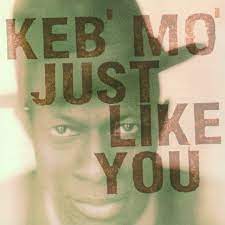
Hand It Over is the ninth track on Keb' Mo's 1996 album Just Like You, released on June 18, 1996. Written by Keb' Mo' himself, whose real name is Kevin Moore, the song features a lively blues groove that reflects his ability to blend traditional influences with a more contemporary sound.
The album was produced by John Porter and marked an important milestone in Keb' Mo's career, expanding his acoustic blues roots with elements of blues-rock and fuller band arrangements.
Just Like You earned Keb' Mo' his first Grammy Award for Best Contemporary Blues Album, presented in 1997. Although Hand It Over wasn't a major charting single, it remains an enjoyable example of his playful rhythm guitar style and songwriting.
What You'll Learn From This Lesson
I play Hand It Over in standard tuning, using a repeating down, up, down, up, down, up strumming pattern, along with some walking bass movement to give the song its bouncy, bluesy feel. The arrangement opens with an important intro riff that establishes the groove, and there's some additional lead guitar work along the way.
The chords I use are E, Db7, Gb, B7, A7, Edim, A, and Abm, with bluesy chord variations and touches of shuffle rhythm in certain sections to add character to the accompaniment.
I recommend learning the chords first, then working on the repeating down-up rhythm while making the necessary chord-shape adjustments to capture the song's feel. Once you're comfortable with that foundation, introduce the shuffle rhythm where needed before tackling the intro riff and lead guitar section to complete the arrangement.
Guitar Lesson Details - (chords & lyrics sheet incl with lesson)
Back To Song List
Life Is Beautiful
- Learn To Play On Acoustic Guitar

Life Is Beautiful is the closing track on Keb' Mo's 2006 album Suitcase, released on June 13, 2006. Co-written by Keb' Mo' and Canadian blues musician Colin Linden, the song celebrates life's everyday blessings and the importance of appreciating what we have.
With its gentle acoustic arrangement and uplifting message, the recording reflects Keb' Mo's talent for combining blues traditions with thoughtful, optimistic songwriting.
Produced by John Porter, Suitcase reached No. 1 on Billboard's Blues Albums chart and No. 176 on the Billboard 200. It also earned a 2007 Grammy nomination for Best Contemporary Blues Album. As the album's final track, Life Is Beautiful provides a fitting conclusion, leaving listeners with a warm and hopeful message.
What You'll Learn From This Lesson
I play Life Is Beautiful with a capo on the 2nd fret to maintain the original key of D. While Keb' Mo' uses a fingerpicked approach in his recording, my version features a rhythm-based acoustic arrangement with a steady, toe-tapping feel.
The chords I use are C, Am, G, Fm, C7, Ab, A7, and G7, played with a repeating root, down, root, up, down, up rhythm pattern. I also incorporate bass notes, connecting runs, and occasional slides to add movement and character throughout the song. There's an intro riff, an exit riff, and a lead break that blends picking with the rhythm accompaniment.
I recommend learning the chords and rhythm pattern first, then gradually adding the bass notes, runs, and slides. Once the accompaniment feels comfortable, work on the intro and exit riffs before tackling the main lead section, where the picking is woven into the rhythm.
Guitar Lesson Details - (chords & lyrics sheet incl with lesson)
Back To Song List
Love Blues - Learn To Play On Acoustic Guitar

Love Blues originally appeared on Keb' Mo's 1994 self-titled debut album, rather than making its first appearance on the 2003 compilation Martin Scorsese Presents the Blues: Keb' Mo'. Written by Keb' Mo' and Eugene Powell, the song was produced by John Porter and features a stripped-down blues sound rooted in traditional American music.
The recording showcases Keb' Mo's expressive vocals and guitar playing, reflecting the influence of earlier blues performers while developing his own contemporary style.
Nearly a decade later, Love Blues was selected as the fifteenth track on the 2003 Martin Scorsese compilation, which accompanied the filmmaker's larger project celebrating the history and influence of the blues.
What You'll Learn From This Lesson
I play Love Blues in standard tuning, using a rhythm-based acoustic arrangement rather than the fingerpicked approach heard in Keb' Mo's original version. My arrangement follows a repeating root, down, root, up, down, up rhythm pattern, with short bluesy riffs after each vocal line to give the song its character.
The chords I use are G, G7, C, C7, and D7. I also incorporate bass runs throughout the arrangement to create a fuller sound on one guitar, along with a main lead picking section in the middle of the song.
I recommend learning the chords and rhythm pattern first, concentrating on keeping that relaxed acoustic-blues groove steady. Once you're comfortable with the accompaniment, gradually add the riffs and bass runs, then finish by learning the main picking sequence to bring the entire arrangement together.
Guitar Lesson Details - (chords & lyrics sheet incl with lesson)
Back To Song List
Frequently Asked Questions About Keb' Mo' Guitar Lessons
1. Can I play Keb' Mo' songs without fingerpicking?
Yes. Although Keb' Mo' uses fingerpicking in several of his original recordings, my arrangements focus primarily on rhythm-based acoustic guitar playing. You'll use strumming patterns, bass notes, hammer-ons, and short melodic riffs to create a full sound on one guitar.
2. What tuning do I need for these Keb' Mo' guitar lessons?
Four of the five arrangements use standard guitar tuning, while America the Beautiful uses drop D tuning. For Life Is Beautiful, I also use a capo on the 2nd fret to maintain the original key of D.
3. Which Keb' Mo' song should I learn first?
I recommend starting with Love Blues to develop a steady root-note rhythm and become familiar with blues chord changes. From there, Grandma's Hands introduces hammer-ons and rhythm variations, while the remaining songs offer opportunities to explore bass runs, slides, and lead guitar.
4. What blues guitar techniques will I learn?
Across these five lessons, you'll work with alternating bass notes, walking bass lines, hammer-ons, slides, shuffle rhythms, and melodic guitar fills. These techniques help connect the chords and create the relaxed, expressive sound associated with acoustic blues.
5. Can I perform these songs on one acoustic guitar?
Absolutely. All five arrangements are designed for solo acoustic guitar, combining chord accompaniment with bass movement and lead passages where appropriate. You can use them for singing along, personal practice, or building an acoustic blues setlist.
Keb' Mo's music brings together traditional blues, contemporary acoustic rhythms, and soulful songwriting, and these five arrangements offer a chance to explore those influences on a single guitar.
Each lesson includes a chord and lyrics sheet, detailed rhythm instruction, and a full video demonstration so you can hear how the arrangement comes together. While several of Keb' Mo's original recordings feature fingerpicking, my versions focus primarily on rhythm-based acoustic playing, incorporating techniques such as walking bass, hammer-ons, slides, shuffle patterns, and melodic lead breaks.
Whether you're building a solo acoustic repertoire or looking for new songs to share at a jam session, start with the chord progressions and rhythm patterns, then gradually work in the additional guitar techniques. Explore the five lessons above and enjoy bringing a little more blues into your playing.
Explore More Blues and Soul Guitar Lessons



Motown Rhythm And Blues
Latest 100 Tutorials
© 2019–2026 KirbysGuitarLessons.com — All Rights Reserved