Best Nat King Cole Guitar Songs
Chords, Demos, and Tutorials
(Page Updates Coming)

If you’re a fan of timeless love songs and smooth jazz vocals, you’ll enjoy this collection of Nat King Cole’s best tunes arranged for acoustic guitar.
Each lesson on this page comes with a free chord sheet, a demo video, and the option to grab the full tutorial.
Whether you're strumming "Unforgettable" or grooving to "L.O.V.E.", these songs are perfect for both beginners and experienced players alike.
🎸 Watch the Nat King Cole Guitar Lessons Overview
performance clips taken directly from the complete lesson videos.
Click Play, then drag the timeline to preview any song featured below.
Note: Every arrangement has been personally created, recorded and taught by Kirby
using teaching methods refined through decades of acoustic guitar instruction.
What's Included With Every Lesson
📦 Your Lesson Package Includes
✓ 8–12 minute HD video lesson
✓ Printable chords & lyrics PDF

✓ Instant download after purchase
✓ Learn at your own pace on any device
Nat King Cole Guitar Lessons Included On This Page
L.O.V.E. Guitar Lesson
Mona Lisa Guitar Lesson
My Baby Just Cares For Me Guitar Lesson
Nature Boy Guitar Lesson
Save The Bones For Henry Jones Guitar Lesson
The Christmas Song Guitar Lesson
Unforgettable Guitar Lesson
L.O.V.E. - Learn To Play On Acoustic Guitar
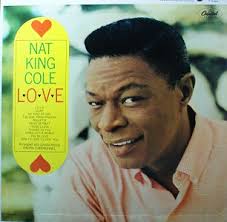
"L-O-V-E" was written by Bert Kaempfert with English lyrics by Milt Gabler, and became one of Nat King Cole's final and most enduring recordings. Cole recorded the song in June 1964, releasing it later that year before it became the title track of his 1965 album L-O-V-E.
To help the recording reach an international audience, he also recorded the song in Spanish, Italian, German, Japanese, and French, even though he learned the foreign-language lyrics phonetically. The warm orchestral arrangement and Cole's unmistakable vocal style helped make L-O-V-E one of his signature songs, and it has since been recorded by countless artists while remaining a favourite for weddings, films, television commercials and romantic occasions.
As Cole's final studio album before his death in 1965, L-O-V-E remains one of the defining recordings of his remarkable career and musical legacy.
L.O.V.E. Chords And Strumming
I play this one in G with the chords G, D, D7, C, A7, Am7, Edim and then with a key change to A using the additional chords E7, A, E, Bm and an Adim. Use a root down root up down up and play a melody lead break in the middle of the song.
Back To Song List
Guitar Lesson Details - (chords & lyrics sheet incl with lesson)
Mona Lisa - Learn To Play On Acoustic Guitar
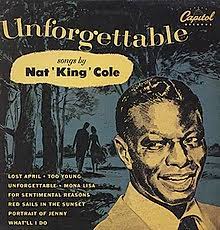
Mona Lisa was written by the Academy Award-winning songwriting team of Jay Livingston and Ray Evans for the 1950 film Captain Carey, U.S.A. Although it was originally featured in the movie, it was Nat King Cole's recording that transformed the song into an international classic.
Released as a single in 1950, Cole's elegant interpretation reached No. 1 on the Billboard charts, sold more than one million copies, and earned the Academy Award for Best Original Song for its composers. Inspired by Leonardo da Vinci's famous painting, the lyrics reflect on the mystery behind Mona Lisa's unforgettable smile, perfectly complemented by Cole's warm vocals and lush orchestral arrangement.
Over the decades, the song has become one of the defining standards of the Great American Songbook, recorded by artists including Elvis Presley, Andy Williams, and Harry Connick Jr. In 1991, Mona Lisa was inducted into the Grammy Hall of Fame, cementing its place among the greatest recordings of the twentieth century.
Mona Lisa Chords And Strumming
Played with a capo 1st fret in standard tuning, this one only has a few chords which are G7, C, F, Fm and Cdim. The rhythm pattern I use is a root up down up bass up down up and repeat.
Guitar Lesson Details - (chords & lyrics sheet incl with lesson)
Back To Song List
My Baby Just Cares For Me - Learn To Play On Acoustic Guitar

My Baby Just Cares For Me was written by Walter Donaldson with lyrics by Gus Kahn for the 1928 Broadway-inspired musical film Whoopee!, starring Eddie Cantor.
The charming jazz standard quickly became a favourite among singers and big bands, thanks to its playful lyrics and memorable melody. Nat King Cole recorded his smooth interpretation in 1949, although it was never released as a commercial single and remained one of the lesser-known recordings in his catalogue. Despite that, Cole's relaxed vocal style and elegant piano accompaniment made the song a natural fit for his early jazz repertoire.
Over the years, My Baby Just Cares for Me has been recorded by numerous artists, most famously Nina Simone, whose 1958 version became an unexpected international hit when it was reissued three decades later. Today the song remains one of the enduring standards of the American songbook.
My Baby Just Cares For Me Chords And Strumming
I play this one in standard tuning with a down up down up with walking bass rhythm pattern. There is some lead in here with the chords G, Am7, D7, B7, Em, A7, D7, C, Adim and E7.
Guitar Lesson Details - (chords & lyrics sheet incl with lesson)
Back To Song List
Nature Boy - Learn To Play On Acoustic Guitar
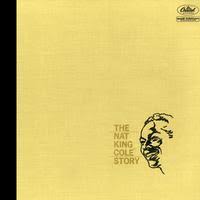
Nature Boy was written by the mysterious songwriter eden ahbez, whose unconventional lifestyle and philosophical outlook inspired one of popular music's most memorable ballads. In 1948, just before Nat King Cole was due to perform at the Lincoln Theatre in Los Angeles, someone handed him a copy of the song.
After listening to it later, Cole was captivated by its haunting melody and thoughtful lyrics, prompting him to track down the elusive songwriter and secure the rights to record it. Released that same year, Nature Boy became a sensational success, spending eight weeks at No. 1 on the Billboard chart and selling more than one million copies.
Its unforgettable closing line, "The greatest thing you'll ever learn is just to love and be loved in return," has since become one of the most quoted lyrics in popular music, helping establish the song as one of Nat King Cole's finest and most enduring recordings.
Nature Boy Chords And Strumming
There is lead in here while playing in standard tuning with the chords Dm, Em, A7, Dm, Dmaug7, E7sus4, A7sus, Dm Bb-5. The rhythm pattern is mainly down strokes with some arpeggio blended into the pattern.
Guitar Lesson Details - (chords & lyrics sheet incl with lesson)
Back To Song List
Save The Bones For Henry Jones - Learn To Play On Acoustic Guitar
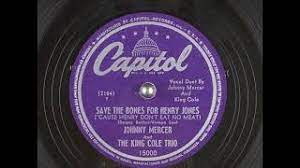
Save The Bones For Henry Jones is one of the more obscure recordings from Nat King Cole's early career, capturing the playful jazz style that helped establish him as one of America's most versatile entertainers. Recorded in 1947, the song blended Cole's relaxed vocal delivery with the light-hearted swing arrangements that were popular during the post-war era.
Although it was never included on one of his original studio albums, the recording performed well enough to reach No. 12 on the U.S. Pop Chart, demonstrating Cole's growing popularity before his transition into the sophisticated ballads that would later define his career.
Today, Save the Bones for Henry Jones remains a favourite among dedicated collectors and longtime fans, offering an enjoyable glimpse into the energetic jazz and novelty recordings that showcased another side of Nat King Cole's remarkable musical talent.
Save The Bones For Henry Jones Chords And Strumming
Played in standard tuning with the chords G, C, D7, A7, D, E7 and Edim, there is some picking in this one. You'll need a down up down up down up down up and repeat rhythm pattern.
Guitar Lesson Details - (chords & lyrics sheet incl with lesson)
Back To Song List
The Christmas Song - Learn To Play On Acoustic Guitar
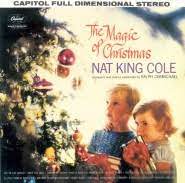
The Christmas Song was written in the summer of 1945 by Mel Tormé and Bob Wells, who reportedly composed it during a sweltering California heatwave simply to help themselves think cooler thoughts.
Officially titled The Christmas Song, it soon became so closely associated with its opening line that many listeners came to know it as "Chestnuts Roasting on an Open Fire." Nat King Cole first recorded the song in 1946, and the recording quickly became a Christmas classic, reaching No. 3 on the charts. Never completely satisfied, Cole returned to the studio to record new versions in 1953 and again in 1961, with the final orchestral recording arranged by Ralph Carmichael becoming the timeless interpretation heard on radio stations around the world every holiday season.
Today, it remains one of the most beloved Christmas recordings ever made and is considered an essential part of Nat King Cole's musical legacy.
The Christmas Song Chords And Strumming
Lots of chords here including G, Am, Bm, Cmaj7, Dm, G7, B7, Em, Em/Eb, Em/D, Gb, Bmaj7, F, D7, Cm, A#, A7sus and A7 while played in standard tuning and a capo 2nd fret. No lead as you play a down down up down up and repeat rhythm pattern.
Guitar Lesson Details - (chords & lyrics sheet incl with lesson)
Back To Song List
Unforgettable
- Learn To Play On Acoustic Guitar
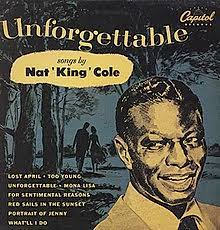
Unforgettable was written by Irving Gordon, who originally gave the song the working title "Uncomparable." His music publisher suggested the more memorable title "Unforgettable," a change that proved remarkably fitting for one of the greatest standards of the twentieth century.
Nat King Cole recorded the song in 1951, and it quickly became one of his signature recordings, reaching No. 14 on the U.S. Pop Chart and showcasing the smooth, intimate vocal style that made him one of popular music's most beloved performers. Four decades later, in 1991, his daughter Natalie Cole created a groundbreaking virtual duet by combining her newly recorded vocal with her father's original performance. The recording became an international success, once again reaching No. 14 on the Billboard Hot 100, while winning three Grammy Awards, including Record of the Year and Song of the Year.
Today, Unforgettable remains one of the most cherished father-daughter collaborations ever recorded and a fitting tribute to Nat King Cole's enduring musical legacy.
Unforgettable Chords And Strumming
Play this one in standard tuning with a down down up down up down up and repeat rhythm pattern. There is some lead here with the chords Fmaj7, E, Bbmaj7, Gbdim, Eb6, Ebm, A#, G#7, G7, C9, F, Abdim, C7, G#, (Db m maj7 (13).
Guitar Lesson Details - (chords & lyrics sheet incl with lesson)
Back To Song List
About These Arrangements
- Every lesson features Kirby's own acoustic arrangement.
- Lessons are designed for solo acoustic guitar.
- Each download includes an HD MP4 lesson and printable PDF.
- All preview videos on this page demonstrate the actual arrangement taught in the lesson.
FAQ
1. What is included?
Each purchase includes a zip file
containing an .mp4 video file approx (8-12 min) depending on the song
... Intro to the song, the lesson of my arrangement and a demo of me
playing the song from start to finish)
2. Can I watch on iPad?
Yes all videos are .mp4 video format which can be played universally on most devices including IPads.
3. Can I print the PDF?
Yes
4. Instant download?
Yes
links are automatically sent to your email after purchase ... download
the file within 24hrs of receiving as the download link expires after
that time ... one you have the file download, it never expires.
Nat King Cole’s music has stood the test of time. His warm voice and romantic melodies still connect with audiences today. If you liked learning these Nat King Cole classics, you might also enjoy our Frank Sinatra guitar songs or other great artists from the same era.
Explore More Vegas & Showroom Legends ... (click image)
Las Vegas Guitar Songs
Latest 100 Tutorials
© 2019–2026 KirbysGuitarLessons.com — All Rights Reserved