Christmas Songs on the Guitar: 38 Easy Acoustic Lessons

Few things make the holidays feel more complete than a guitar and a familiar song.
On this page you’ll find 38 Christmas songs for acoustic guitar, from timeless classics like “White Christmas,” “Blue Christmas” and “Have Yourself A Merry Little Christmas” to country favorites by Alabama, George Strait and Brooks & Dunn, and a few surprises, including a Kinks protest song and an Irish carol of the 1915 Christmas truce.
Each lesson includes a video lesson, demo, easy chords and the strumming pattern, plus a printable chords and lyrics sheet. Pick a song from the list below and start playing.
Christmas Guitar Lessons — Video Previews
The first 18 videos are in this embedded video and the second set are available from the clickable button below.
performance clips taken directly from the complete lesson videos.
Click Play, then drag the timeline to quickly preview any Christmas lesson featured on this page.
Note: Every arrangement has been personally created, recorded and taught by Kirby
using teaching methods refined through decades of acoustic guitar instruction.
What's Included With Every Lesson
📦 Your Lesson Package Includes
✓ 8–12 minute HD video lesson so you can learn each song step-by-step.
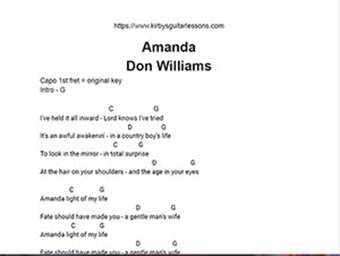
✓ Printable chords & lyrics PDF for easy practice away from the screen.
✓ Instant download—start playing in minutes.
✓ Learn at your own pace on any device.
36 Easy Christmas Songs On Guitar --->
Overview Video 1 — Songs 1–18
A Christmas Card - Doug Stone
All I Want For Christmas Is A Real Good Tan - Kenny Chesney
All Wrapped Up In Christmas - Tracy Lawrence
An Angel Like You - Doug Stone
Away In A Manger - Anne Murray
Blue Christmas - Elvis Presley
Camouflage And Christmas Lights - Rodney Carrington
Christmas Baby Please Come Home - Dion
Christmas Cookies - George Strait
Christmas Day 1915 - Daniel O'Donnell
Christmas Eve - Blake Shelton
Christmas In Dixie - Alabama
Christmas In Heaven - Scotty McCreery
Christmas In Killarney - The Irish Rovers
Christmas Is The Time To Say I Love you - Billy Squier
Christmas Time In Arkansas - Ned Perme
Colorado Christmas - The Nitty Gritty Dirt Band
Father Christmas - The Kinks
Overview Video 2 — Songs 19–38
Frosty The Snowman - Jimmy Durante
Hangin Round The Mistletoe - Brooks & Dunn
Happy Christmas - John Lennon
Hark The Herald Angels Sing - Anne Murray
Have A Holly Jolly Christmas - Burl Ives
Have Yourself A Merry Little Christmas - Judy Garland
Here Comes Santa Claus - Gene Autry
I Saw Mommy Kissing Santa Claus - Dion
I'd Be Jolly Too - Wynn Varble
I'll Be Home For Christmas - Bing Crosby
In The Bleak Midwinter - Christina Rossetti
It's The Most Wonderful Time Of The Year - Andy Williams
Jingle Bell Rock - Bobby Helms
Mamacita Donde Esta Santa Claus - Augie Rios
Old Time Christmas - Randy Travis
Santa's Comin Over To Your House - Brooks & Dunn
The First Christmas - Doug Stone
This Season Will Never Grow Old - Anne Murray
White Christmas - Bing Crosby
A Christmas Card - (Doug Stone) - Learn To Play On Acoustic Guitar

A Christmas Card is the closing track on Doug Stone’s 1992 album The First Christmas, the only holiday record of his career. Mike Dyche wrote the song, and Doug Johnson produced the album for Epic Records, which released it on September 15, 1992. It came just after Stone underwent quadruple bypass surgery, and he recovered in time to issue the holiday record by year’s end.
No singles came from the album, though “Sailing Home for Christmas” was turned into a music video. The First Christmas peaked at No. 53 on Billboard’s Top Country Albums chart and No. 186 on the Billboard 200, and “A Christmas Card” runs 3 minutes and 51 seconds.
Back To Song List
Video lesson, demo and chord sheet contained in the zips file below.
All I Want For Christmas - (Kenny Chesney) - Learn To Play On Acoustic Guitar

All I Want For Christmas Is A Real Good Tan swaps snow for sand, and it fits Kenny Chesney’s island persona perfectly. Paul Overstreet wrote it, and Chesney made it the title track of his first Christmas album, released October 7, 2003, on BNA Records. Buddy Cannon, Norro Wilson and Chesney produced the record, which reached No. 4 on Billboard’s Top Country Albums chart.
The song itself was released as a single, charting in December 2003 and peaking at No. 30 on Hot Country Songs in January 2004. Chesney’s mother and her twin sister, credited as the Grigsby Twins, sing on the album’s “Silent Night.” Overstreet’s son Chord later recorded the song too.
Back To Song List
All Wrapped Up In Christmas - (Tracy Lawrence) - Learn To Play On Acoustic Guitar

All Wrapped Up In Christmas is the title song of Tracy Lawrence’s first Christmas album, and it was a seasonal hit he made on his own terms. Flip Anderson and Kenny Beard wrote it, and Lawrence released the album on October 23, 2007, on his own Rocky Comfort Records, producing it with Julian King.
The 10-track set mixes seven Christmas classics with three new songs. The title track runs just over two minutes, and it charted at No. 57 on Billboard’s Hot Country Songs in January 2008, based largely on holiday airplay.
Lawrence had just returned to the top of the country chart with his 2007 No. 1, “Find Out Who Your Friends Are.”
Back To Song List
An Angel Like You - (Doug Stone) - Learn To Play On Acoustic Guitar

An Angel Like You is the kind of tender ballad that fit Doug Stone’s romantic-balladeer image, and it appears on his 1992 Epic album The First Christmas. Pam Belford wrote the song, and Doug Johnson produced the album, which was released on September 15, 1992.
The song runs 4 minutes and 7 seconds and was never released as a single; in fact, no singles came from the record. AllMusic’s reviewer singled it out as an example of how the album plays off Stone’s image, alongside “When December Comes Around.” Stone was a major star at the time, with a string of Top Five hits including “In a Different Light,” his first No. 1, and “A Jukebox with a Country Song.”
Back To Song List
Away In A Manger - (Anne Murray) - Learn To Play On Acoustic Guitar

Away In A Manger is a children’s carol with a surprisingly tangled past. Its two verses first appeared in the Lutheran Sunday school collection Little Children’s Book for Schools and Families, published in Philadelphia in 1885, where it was labeled “Luther’s Cradle Hymn,” a claim now thought to be a myth.
William J. Kirkpatrick’s 1895 melody, adapted from an 1837 tune called “Flow Gently, Sweet Afton,” is the one most Americans know. Anne Murray included it on Christmas Wishes (Capitol, 1981), her first holiday album, which earned double platinum certification in the US.
A later re-recording appears on What a Wonderful Christmas, where she reportedly sings the verses to different melodies.
Back To Song List
Blue Christmas - (Elvis Presley) - Learn To Play On Acoustic Guitar

Blue Christmas was written in 1948 by Jay W. Johnson, a radio and advertising writer, and Billy Hayes, who supplied the music. Doye O’Dell recorded it first that year, but it was the 1949 versions by Ernest Tubb, Hugo Winterhalter and Russ Morgan that made it a standard, and Tubb’s topped the country chart.
Elvis Presley recorded it on September 5, 1957, at Radio Recorders in Hollywood for Elvis’ Christmas Album, and he reportedly thought it a dumb song. It wasn’t released as a single until 1964, when it reached No. 11 in the UK, though it didn’t chart in the US that year.
The Beach Boys also recorded it in 1964.
Back To Song List
Camouflage And Christmas Lights - (Rodney Carrington) - Learn To Play On Acoustic Guitar

Camouflage And Christmas Lights is a rare serious moment from comedian Rodney Carrington, a non-comedy tribute to soldiers stationed far from home at Christmas.
It was the first single from his 2009 album Make It Christmas, his first holiday record, which Capitol Nashville released on August 11, 2009. The single became Carrington’s first Top 40 country hit, reaching No. 31 in December 2009. Country Aircheck’s holiday airplay list that month ranked it fifth, behind George Strait’s “Christmas Cookies” and Burl Ives’ “Have a Holly Jolly Christmas.”
Born in Longview, Texas, Carrington is best known for his comedy albums, beginning with Hangin’ with Rodney in 1998, and this song showed a different side.
Back To Song List
Christmas Baby Please Come Home - (Dion) - Learn To Play On Acoustic Guitar

Christmas Baby Please Come Home was written by Jeff Barry, Ellie Greenwich and Phil Spector, and it began as a song meant for Ronnie Spector.
When she couldn’t deliver the emotion Spector wanted, Darlene Love stepped in and recorded it for the 1963 holiday album A Christmas Gift for You from Philles Records, produced by Spector. It wasn’t an instant hit, but it slowly became one of the most beloved rock-and-roll Christmas songs; Rolling Stone ranked it first on its 2010 list of the greatest rock and roll Christmas songs.
U2 recorded it in 1987, and Dion’s version appears on his 1993 album Rock ’n’ Roll Christmas. Love has performed it for years on David Letterman’s late-night shows.
Back To Song List
Christmas Cookies - (George Strait) - Learn To Play On Acoustic Guitar

Christmas Cookies is a lighthearted holiday song about enjoying someone’s baking, and Aaron Barker is the writer. George Strait’s recording first appeared on a 1999 holiday compilation titled A Country Christmas, not on one of his own holiday albums, and it was included again on A Country Superstar Christmas III in 2000.
MCA sent it to radio on a promotional CD in 2001, and it finally climbed to No. 33 on Billboard’s Hot Country Songs during the 2002 Christmas season.
Strait has said he recorded it because it sounded fun and fit him. It has since become one of the most-played original country Christmas songs and also appears on the 2-disc collection Strait for the Holidays.
Back To Song List
Christmas Day 1915 - (Daniel O'Donnell) - Learn To Play On Acoustic Guitar

Christmas Day 1915 was written by Irish songwriter Cormac McConnell, and it’s a song inspired by the Christmas truces of the First World War, when soldiers on opposite sides briefly laid down their weapons to sing carols.
In the lyrics a soldier remembers a truce on the front line, a request for one more song before dawn, and “Silent Night” ringing out with no cannons roaring, before the fighting resumed and peace was paid for in blood.
Daniel O’Donnell recorded it for O’ Holy Night – The Christmas Album, his 30th studio album, released November 30, 2010. The track runs 4 minutes and 27 seconds and doesn’t appear to have been a single.
Back To Song List
Christmas Eve - (Blake Shelton) - Learn To Play On Acoustic Guitar

Christmas Eve isn’t a cover in the usual sense: Blake Shelton co-wrote it with Gwen Stefani, Justin Tranter and Mike Busbee, and Stefani recorded her version first for her 2017 holiday album You Make It Feel Like Christmas.
Shelton then added his own recording to the 2017 re-release of his first Christmas album, Cheers, It’s Christmas, which grew to 17 tracks with the new songs “Christmas Eve” and “Two Step ‘Round the Christmas Tree.” The original album came out October 2, 2012, on Warner Bros. Nashville.
The song later opened the 2019 compilation Now That’s What I Call Country Christmas. The two were dating when the song came out, and Shelton’s version runs about 3 minutes and 42 seconds.
Back To Song List
Christmas In Dixie - (Alabama) - Learn To Play On Acoustic Guitar

Christmas In Dixie is the only song credited solely to all four members of Alabama, Randy Owen, Jeff Cook, Teddy Gentry and drummer Mark Herndon, and it’s one of just two with a Herndon writing credit.
RCA released it as a single on December 6, 1982, from the compilation A Country Christmas, with Harold Shedd and the band producing. It peaked at No. 35 on Billboard’s Hot Country Singles chart in January 1983, reached the top five on Billboard’s Christmas singles chart, and has re-entered the country chart several times since.
Alabama included it on their 1985 album Alabama Christmas, which went multi-platinum, and Kenny Chesney recorded it in 2003 with Randy Owen.
Back To Song List
Christmas In Heaven - (Scotty McCreery) - Learn To Play On Acoustic Guitar

Christmas In Heaven is one of just two original songs on Scotty McCreery’s first holiday album, Christmas with Scotty McCreery, and he has called it his favorite track on the record.
The other original is “Christmas Comin’ Round Again.” Mark Bright produced the 11-song collection, recorded at Starstruck Studios and Sound Stage Studios in Nashville and released by Mercury Nashville and 19 Recordings on October 16, 2012. The album peaked at No. 4 on the Billboard 200 and No. 2 on the Top Country Albums chart, and it was certified gold on November 26, 2012.
McCreery, the 2011 American Idol winner, was still a teenager when he made it, and the song doesn’t appear to have been released as a single.
Christmas In Killarney - (Irish Rovers) - Learn To Play On Acoustic Guitar

Christmas In Killarney sounds like a centuries-old Irish ballad, but it was written in 1950 by three American songwriters, John Redmond, James Cavanaugh and Frank Weldon, and published that year by Remick Music.
Dennis Day’s recording reached No. 10 on Billboard’s retail chart in 1950, Percy Faith’s reached No. 28, and Bing Crosby recorded it on October 1, 1951, for the Merry Christmas LP. The song paints a cozy holiday picture of Killarney, in County Kerry, with holly, ivy and Father John. It also featured in Rankin/Bass’s 1981 special The Leprechauns’ Christmas Gold.
The Irish Rovers, the Canadian-based Irish folk group, recorded it for their 1999 album Songs of Christmas on Rover Records, and the track runs about three minutes.
Back To Song List
Christmas Is The Time To Say I Love You - (Billy Squier) - Learn To Play On Acoustic Guitar

Christmas Is The Time To Say I Love You is Billy Squier’s holiday rock song, written by Squier and produced by him with Reinhold Mack. Capitol paired it with his single “My Kinda Lover” in 1981, the year of his breakthrough album Don’t Say No.
The song is best remembered for its video, filmed in 1981 just after MTV launched, with the network’s VJs and staff singing along to Squier’s live performance. VJ Martha Quinn has called it her number-one moment at MTV.
The record runs 2 minutes and 52 seconds. Katharine McPhee covered it and named her 2010 Christmas album after it. Her version runs 3 minutes and 12 second
Back To Song List
Christmas Time In Arkansas Again - (Ned Perme) - Learn To Play On Acoustic Guitar

Christmas Time In Arkansas Again was written by Ned Perme, the longtime chief meteorologist at KATV in Little Rock, who began his television career in Mobile, Alabama, in 1977 and joined KATV in 1984. The idea came on a cold, gray day in 1987 while he was playing around at the piano at home beside a fire, and he hadn’t set out to write a Christmas song at all.
He and singer Terry Rose, his close friend, recorded it in a single day. KATV’s general manager loved it and put it on the air, and it became a Christmas Eve tradition for Arkansas families and earned an Emmy nomination. Perme retired from KATV in December 2018 after 34 years.
Back To Song List
Colorado Christmas - (The Nitty Gritty Dirt Band) - Learn To Play On Acoustic Guitar

Colorado Christmas was written by Steve Goodman, the Chicago folk singer best known for “City of New Orleans,” and was first released in 1987, three years after his death.
The Nitty Gritty Dirt Band recorded it as the opening track of The Christmas Album, their first Christmas record, released by Rising Tide in October 1997 and produced by the band. Alison Krauss sings on the track,
John McEuen plays banjo and mandolin, and the song blends into the hymn “Joy to the World,” ending with a few instrumental measures of it. The album reached No. 93 on the country albums chart, and the track runs about 3 minutes and 39 seconds
Back To Song List
Father Christmas - (The Kinks) - Learn To Play On Acoustic Guitar
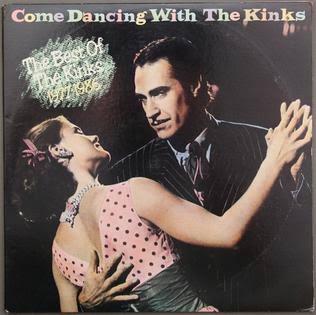
Father Christmas is a Christmas song with a sting. Ray Davies wrote and produced it for the Kinks, and Arista released it as a single on November 25, 1977, with “Prince of the Punks” on the B-side.
It’s sung by a department-store Santa who gets mugged by a gang of poor kids demanding money instead of toys, telling him to give the toys “to the little rich boys.” The music is festive, with sleigh bells.
The single failed to chart in the UK, but it has become a cult holiday favorite and has been heard in the film Unaccompanied Minors and on That ’70s Show. It first appeared only on the single, later joining the compilation Come Dancing with the Kinks.
Back To Song List
Frosty The Snowman - (Jimmy Durante) - Learn To Play On Acoustic Guitar

Frosty The Snowman was written in 1950 by Walter “Jack” Rollins and Steve Nelson, the pair behind “Here Comes Peter Cottontail,” after Gene Autry’s success with “Rudolph the Red-Nosed Reindeer” made him the obvious singer to pitch it to.
Autry and the Cass County Boys recorded it first in 1950 and took it to No. 7 on the pop chart, and Jimmy Durante, with comedian Jackie Vernon opening his version with a shout of “Happy birthday!”, recorded it later that year and also reached No. 7. Nat King Cole’s version hit No. 9.
The song got a second life when Durante narrated and sang it for the 1969 animated special Frosty the Snowman, which first aired on CBS on December 7, 1969.
Back To Song List
Hangin Round The Mistletoe - (Brooks & Dunn) - Learn To Play On Acoustic Guitar

Hangin Round The Mistletoe is a flirty holiday honky-tonker from Brooks & Dunn’s first Christmas album, It Won’t Be Christmas Without You, released by Arista on October 8, 2002.
The narrator waits under the mistletoe for a kiss, promising three kisses back for every one he gets. Four songs from the album drew enough radio airplay to chart on their own, and “Hangin’ ‘Round the Mistletoe” was one of them, reaching No. 47 on Billboard’s Hot Country Songs in 2002.
It is track two on the album, which was the duo’s eighth studio album, peaked at No. 12 on Top Country Albums, and was praised for sticking to the honky-tonk sound that made the duo famous.
Video lesson, demo and chord sheet contained in the zip file below.
Back To Song List
Happy Christmas - (John Lennon) - Learn To Play On Acoustic Guitar

Happy Christmas (War Is Over) grew out of John Lennon and Yoko Ono’s 1969 “War Is Over! If You Want It” billboard campaign against the Vietnam War.
Lennon and Ono set the lyrics to the melody of the old folk ballad “Skewball,” and recorded it on October 28 and 31, 1971, at the Record Plant East with Phil Spector, the Plastic Ono Band and 30 children from the Harlem Community Choir.
Apple released it in the US on December 1, 1971, where it barely registered, and a publishing dispute delayed the UK release until November 1972, when it reached No. 4. It hit No. 2 in the UK after Lennon’s death in 1980, and it first appeared on an album on the 1975 compilation Shaved Fish.
Back To Song List
Hark The Herald Angel Sing - (Anne Murray) - Learn To Play On Acoustic Guitar

Hark The Herald Angel Sing began as a poem. Charles Wesley published it in 1739 as “Hymn for Christmas-Day,” and in the 1850s William H. Cummings fitted the words to a tune from Felix Mendelssohn’s 1840 Gutenberg festival cantata, creating the carol we know today.
Cummings had sung as an alto choirboy in the London premiere of Mendelssohn’s Elijah in 1847, and Mendelssohn never imagined the melody would end up in a Christmas hymn. Anne Murray’s recording appears on her 2001 collection What a Wonderful Christmas, a 28-song set released in September 2001 that gathers tracks recorded in 1981, 1988, 1993 and 2001.
The album reached No. 4 on Billboard’s Christian Albums chart.
Back To Song List
Have A Holly Jolly Christmas - (Burl Ives) - Learn To Play On Acoustic Guitar

Have A Holly Jolly Christmas was written by Johnny Marks in 1962, the same songwriter behind “Rudolph the Red-Nosed Reindeer” and “Rockin’ Around the Christmas Tree.”
The Quinto Sisters recorded it first, in June 1964, but it became a standard when Burl Ives, as the voice of Sam the Snowman, sang it in the Rankin/Bass special Rudolph the Red-Nosed Reindeer. Ives then cut a slower studio version with an acoustic guitar intro, released as a Decca single in November 1964 with “Snow for Johnny” on the B-side, and included it on his 1965 album Have a Holly Jolly Christmas.
The single has surged back in recent years, reaching No. 4 on the Billboard Hot 100.
Back To Song List
Have Yourself A Merry Little Christmas - (Judy Garland) - Learn To Play On Acoustic Guitar

Have Yourself A Merry Little Christmas was written in 1943 by Hugh Martin and Ralph Blane for the MGM musical Meet Me in St. Louis, where Judy Garland sings it to her little sister Tootie as the family faces a move away from their home.
The first draft was gloomy, with a line about this being your last Christmas, and Garland, co-star Tom Drake and director Vincente Minnelli asked Martin to lighten it. Decca released Garland’s recording with Georgie Stoll’s orchestra in November 1944, and it reached No. 27 on the Billboard charts and became a hit among troops overseas.
In 1957, Frank Sinatra asked for a brighter line for his album A Jolly Christmas, giving us “hang a shining star upon the highest bough.”
Back To Song List
Here Come Santa Claus - (Gene Autry) - Learn To Play On Acoustic Guitar

Here Comes Santa Claus (Down Santa Claus Lane) was inspired by a parade. According to Autry, he was riding his horse in a Hollywood Christmas parade in 1946 when he heard children shouting “Here comes Santa Claus,” and he turned the cry into lyrics, with Oakley Haldeman writing the music.
Autry recorded it for Columbia in 1947, and it became a Top 10 hit in both 1947 and 1948, his first big Christmas hit, two years before “Rudolph the Red-Nosed Reindeer.”
It was one of several holiday hits that made the singing cowboy a Christmas fixture, alongside “Rudolph” and “Frosty the Snowman.” Elvis Presley recorded it in 1957, and it has been covered by many artists since.
Back To Song List
I Saw Mommy Kissing Santa Claus - (Dion) - Learn To Play On Acoustic Guitar

I Saw Mommy Kissing Santa Claus was written by British lyricist Tommie Connor, who also wrote the English words to “Lili Marlene.”
Thirteen-year-old Jimmy Boyd recorded it on July 15, 1952, and it became a million-seller and a No. 1 hit that holiday season. The Catholic Church in Boston condemned it for its association with kissing at Christmas, though the joke is that the “Santa” is really Dad in a costume. Spike Jones, the Beverley Sisters, the Jackson 5 and John Mellencamp have all recorded it since.
The Jackson 5’s version, from their 1970 Christmas album, helped keep it alive for a new generation. Dion’s rock-and-roll version appears on his album Rock ’n’ Roll Christmas.
Back To Song List
Id Be Jolly Too - (Wynn Varble) - Learn To Play On Acoustic Guitar

Id Be Jolly Too was written by Wynn Varble, the Georgia-born Nashville songwriter whose credits include Darryl Worley’s No. 1 “Have You Forgotten?” and Brad Paisley’s No. 1 “Waitin’ on a Woman.”
It doesn’t appear on his albums Freak Show (2013) or Portrait of My Father (2017), and it doesn’t appear to have been commercially released, which makes it one of the rarest songs in this collection. Varble, who competed on CMT’s Next Superstar in 2010 and 2011, has also had songs recorded by Kellie Pickler and Sammy Kershaw.
He was born George Edwin Varble in Ellenwood, Georgia, in 1960, and he co-wrote “AA Meeting Gone Bad” with Don Poythress.
Back To Song List
I'll Be Home For Christmas - (Bing Crosby) - Learn To Play On Acoustic Guitar

I'll Be Home For Christmas was written in 1943 to honor soldiers overseas during World War II, with music by Walter Kent and lyrics by Kim Gannon. Songwriter Buck Ram reportedly wrote a poem with a similar idea in 1922, and after a legal dispute he was added to the credits.
Bing Crosby recorded it on October 1, 1943, with the John Scott Trotter Orchestra for Decca, and Decca released it on October 26, 1943, as a 78 rpm single titled “I’ll Be Home for Christmas (If Only in My Dreams).”
It became a top 10 hit, and its closing line gave it a bittersweet edge that spoke to families separated by war.
Back To Song List
In The Bleak Midwinter - (Christina Rossetti) - Learn To Play On Acoustic Guitar

In The Bleak Midwinter began as a poem. Christina Rossetti wrote it in response to a request for a Christmas poem from the American magazine Scribner’s Monthly, which published it as “A Christmas Carol” in January 1872.
Its first verse paints a frozen Bethlehem, with frosty wind, iron-hard earth and snow on snow, and the final verse has the speaker offering her heart as her only gift. It became a carol in 1906, when Gustav Holst set it to the hymn tune “Cranham,” named for a village in Gloucestershire, for The English Hymnal. Harold Darke’s choral setting, composed in the early 1900s, is another popular version and omits the fourth verse.
Back To Song List
It's The Most Wonderful Time Of The Year - (Andy Williams) - Learn To Play On Acoustic Guitar

It's The Most Wonderful Time Of The Year was written in 1963 by lyricist Edward Pola and composer George Wyle, who was the vocal director for The Andy Williams Show and also co-wrote the Gilligan’s Island theme.
Wyle wrote it specifically for Williams’ Christmas television special, and Williams then recorded it for The Andy Williams Christmas Album, released by Columbia in October 1963. Columbia didn’t release the song as a single, choosing his “White Christmas” instead, and it wasn’t issued as a single in the UK until 2007.
It’s now a streaming-era giant: in 2018 it reached the Billboard Hot 100 top 10 for the first time, giving Williams his first top-10 appearance since 1971, and it peaked at No. 5 in 2020 and 2024.
Back To Song List
Jingle Bell Rock - (Bobby Helms) - Learn To Play On Acoustic Guitar

Jingle Bell Rock was written by public relations man Joe Beal and ad writer Jim Boothe, and Bobby Helms made it his signature song.
Helms recorded it on October 29, 1957, at Owen Bradley’s studio in Nashville, with Hank “Sugarfoot” Garland on guitar, and Decca released it on November 28, 1957. It reached No. 6 on Billboard’s pop chart that holiday season and charted again in several later seasons, and it was a No. 13 country hit.
Helms and Garland later claimed they had rewritten parts of it, though that remains disputed. The song has sold more than 10 million copies, and in 2018 it re-entered the Hot 100, reaching No. 3, sixty years after it first charted.
Back To Song List
Mamacita Donde Esta Santa Claus - (Augie Rios) - Learn To Play On Acoustic Guitar

Mamacita Donde Eats Santa Claus Dónde Está Santa Claus?, better known as “Mamacita Donde Esta Santa Claus,” was recorded in 1958 by 12-year-old Augie Rios, a New York kid with Puerto Rican parents who was appearing in the Broadway musical Jamaica at the time.
It was written by Rios’s manager George Scheck with Rod Parker and Al Greiner, and released just before Christmas 1958 on the Metro label, with Mark Jeffrey arranging the orchestra.
The novelty song mixes Spanish and English as a boy asks his mother where Santa is, and the single’s B-side was “Ol’ Fatso.” Charo recorded it in 1978, and Guster, Straight No Chaser and Kumbia All Starz have covered it too.
Video lesson, demo and chord sheet contained in the zip file below.
Back To Song List
Old Time Christmas - (Randy Travis) - Learn To Play On Acoustic Guitar

Old Time Christmas is the title track and opening song of Randy Travis’s first Christmas album, released by Warner Bros. Nashville on August 14, 1989, and produced by Kyle Lehning.
It was his fourth studio album. Songwriter Stewart Harris wrote it, not Travis, and it runs 3 minutes and 13 seconds. The album was certified gold, reached No. 13 on Top Country Albums, No. 70 on the Billboard 200 and No. 5 on Billboard’s Top Holiday Albums chart, and kicked off Travis’s long association with the holiday season.
Its other tracks include “Winter Wonderland” and “Meet Me Under the Mistletoe.” A 2021 deluxe edition added three previously unreleased songs, including “Little Toy Trains.”
Back To Song List
Santa's Coming Over To Your House - (Brooks & Dunn) - Learn To Play On Acoustic Guitar

Santa's Coming Over To Your House was written by Kix Brooks and Don Cook, and Brooks sings lead on it, a change from the duo’s usual setup, where Ronnie Dunn handles most lead vocals. It’s track six on It Won’t Be Christmas Without You,
Brooks & Dunn’s first Christmas album, released by Arista on October 8, 2002, and the song runs 2 minutes and 31 seconds. Voice of America’s English-learning broadcast singled it out as one of the album’s new songs, while Country Standard Time’s reviewer preferred the title track and found Brooks’s delivery overbearing.
It wasn’t among the four album tracks that charted. The album peaked at No. 12 on Top Country Albums.
Video lesson, demo and chord sheet contained in the zip file below.
Back To Song List
The First Christmas - (Doug Stone) - Learn To Play On Acoustic Guitar

The First Christmas is the title song of Doug Stone’s 1992 Epic album, written by Stone with Phyllis Bennett and Lonnie Williams, and it opens the record. Doug Johnson produced the 10-song collection, released September 15, 1992, which remains Stone’s only Christmas album and was his fourth overall.
It peaked at No. 53 on Billboard’s Top Country Albums chart and No. 186 on the Billboard 200, and no singles came from it.
The record arrived just after Stone’s quadruple bypass surgery, and it mixes seasonal standards with new songs such as “An Angel Like You” and “A Christmas Card.” “Sailing Home for Christmas” was filmed as a music video.
Back To Song List
This Season Will Never Grow Old - (Anne Murray) - Learn To Play On Acoustic Guitar

This Season Will Never Grow Old was written by Nova Scotia singer-songwriter Rita MacNeil, best known for “Working Man,” and she first released it in 1988.
Fellow Nova Scotian Anne Murray recorded her own version with the London Symphony Orchestra and the Ambrosian Singers, and it first appeared on a 1993 Hallmark cassette titled The Season Will Never Grow Old. It later opened her 2001 collection What a Wonderful Christmas, a 28-song set that reached No. 4 on Billboard’s Christian Albums chart.
Murray’s recording runs about 3 minutes and 10 seconds. The song’s message, as the title says, is that the joy of the season never fades.
Back To Song List
White Christmas - (Bing Crosby) - Learn To Play On Acoustic Guitar

White Christmas was written by Irving Berlin for the 1942 film Holiday Inn, though Bing Crosby first sang it on his radio show The Kraft Music Hall on Christmas Day 1941.
He recorded it on May 29, 1942, with the John Scott Trotter Orchestra and the Ken Darby Singers in just 18 minutes, and Decca released it in July 1942 as part of a six-record 78 rpm album from the film. It spent 11 weeks at No. 1 in 1942, won the Oscar for Best Original Song and has sold an estimated 50 million copies, the best-selling single of all time.
The version most people hear today is a 1947 re-recording, made because the original master had worn out.
Back To Song List
36 Easy Christmas Songs On Guitar --->
Thank you for spending part of your holiday season with these songs. Whether you’re learning a carol for church, a country favorite for the family gathering or a rock-and-roll tune just for fun,
I hope these lessons help you play with confidence. Start with the chords, add the rhythm, and take your time. If you need even more material, my companion page, Easy Christmas Songs for the Guitar, has 36 more lessons, so you’ll have close to 75 songs to choose from. I add new lessons every season, and if there’s a Christmas song you’d like to see, send me a note through the Contact page. Merry Christmas and happy playing.

Kirby Swinemar is an acoustic guitar instructor, performer and song arranger who has taught online for 21 years and created more than 4,000 original acoustic guitar lessons. He specialises in song-based acoustic guitar instruction, rhythm guitar techniques, and creating full-sounding solo arrangements that help beginner and intermediate players move beyond basic strumming.
Explore more of Kirby's work at Kirby's Guitar Lessons, watch his performances and tutorials on his YouTube Channel or follow him on Facebook. You can also learn more about his teaching background on the About Me page.
Latest 100 Tutorials
© 2019–2026 KirbysGuitarLessons.com — All Rights Reserved