Easy Christmas Songs for Guitar: 36 Acoustic Lessons

If you’d like to play Christmas songs without a lot of fuss, you’re in the right place.
This page has 36 holiday favorites for acoustic guitar, from gentle carols like “Silent Night” and swinging standards like “Sleigh Ride” to country picks from Alan Jackson, Randy Travis and Travis Tritt, rock-and-roll hits like Brenda Lee’s “Rockin’ Around the Christmas Tree” and newer songs from Gwen Stefani, Darius Rucker and John Legend.
Each lesson includes a video lesson, demo, easy chords and the strumming pattern, plus a printable chords and lyrics sheet, so you can learn quickly and sound good on your acoustic guitar. Pick a song from the list below and start playing.
More Christmas Guitar Lessons — Video Previews
The first 17 videos are in this embedded video and the second set are available from the clickable button below.
performance clips taken directly from the complete lesson videos.
Click Play, then drag the timeline to quickly preview any Christmas Holiday lesson featured on this page.
Note: Every arrangement has been personally created, recorded and taught by Kirby
using teaching methods refined through decades of acoustic guitar instruction.
What's Included With Every Lesson
📦 Your Lesson Package Includes
✓ 8–12 minute HD video lesson so you can learn each song step-by-step.
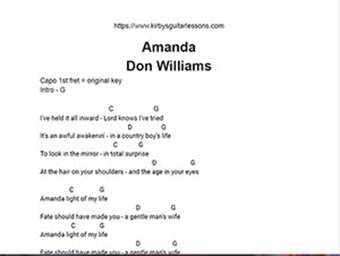
✓ Printable chords & lyrics PDF for easy practice away from the screen.
✓ Instant download—start playing in minutes.
✓ Learn at your own pace on any device.
Overview Video 1 — Songs 1–17
It's Christmas Time - Joey & Rory
Jingle Bells - Bing Crosby
Joy To The World - JT Hodges
Last Christmas - WHAM
Let It Be Christmas - Alan Jackson
Let It Snow - Vaughn Monroe
Little Folks - Charlie Daniels
Little Saint Nick - The Beach Boys
Little Toy Trains - Roger Miller
Loving Time Of The Year - Travis Tritt
Mary It's Christmas - Toby Keith
Milk And Cookies - Clint Black
Mississippi Christmas Eve - Charlie Daniels
My Name Is Christmas Carol - Skip Ewing
Please Come Home For Christmas - The Eagles
Rockin Around The Christmas Tree - Brenda Lee
Run Rudolph Run - Chuck Berry
Overview Video 2 — Songs 18–36
Santa Claus Is Coming To Town - Jazz
Santa Looked A Lot Like Daddy - Travis Tritt
Silent Night - Alan Jackson
Silver Bells - Bing Crosby
Sleigh Ride - Johnny Mathis
Someone Else's Star - Skip Ewing
The Chipmunk Song - Alvin And The Chipmunks
The Christmas Song - Nat King Cole
The Cowboy Christmas Ball - Michael Martin Murphey
The First Christmas Morn - Charley Pride
The Gift - Joey & Rory
There's A New Kid In Town - Alan Jackson
There's No Place Like Home For The Holidays - Perry Como
Under The Christmas Lights - Gwen Stefani
What God Wants For Christmas - Darius Rucker
White Christmas Makes Me Blue - Randy Travis
Winter Wonderland - Tony Bennett
You Deserve It All - John Legend
You Make It Feel Like Christmas - Gwen Stefani
< --- 38 Christmas Songs On Guitar
It's Christmas Time - (Joey & Rory) - Learn To Play On Acoustic Guitar

It's Christmas Time was Joey + Rory’s first holiday single, written by Rory Lee Feek and produced by Carl Jackson. It went to country radio on November 16, 2009, and to digital stores on November 24, with a portion of the proceeds reportedly going to charity.
The song later became the opening track of their only Christmas album, A Farmhouse Christmas, released by Sugar Hill Records on October 11, 2011. The 12-song collection also includes “The Gift,”
Merle Haggard’s “If We Make It Through December” and “Blue Christmas.” The opening track runs about 3 minutes and 37 seconds. Joey + Rory first met the public as contestants on CMT’s Can You Duet in 2008.
Video lesson, demo and chord sheet contained in the zips file below.
Back To Song List
Jingle Bells - (Bing Crosby) - Learn To Play On Acoustic Guitar

Jingle Bells was copyrighted on September 16, 1857, by James Lord Pierpont under the title “The One Horse Open Sleigh,” and it may have been written for a Thanksgiving celebration; both Medford, Massachusetts, and Savannah, Georgia, claim it.
Oliver Ditson republished it in 1859 as “Jingle Bells, or The One Horse Open Sleigh.” Glenn Miller took it to No. 5 in 1941. Bing Crosby and the Andrews Sisters recorded their swinging version in 1943 for Decca, which reached No. 19 on the charts and sold over a million copies.
On December 16, 1965, Gemini 6 astronauts Wally Schirra and Tom Stafford made it the first song broadcast from space, playing it on a smuggled harmonica and bells.
Back To Song List
Joy To The World - (JT Hodges) - Learn To Play On Acoustic Guitar

Joy To The World is one of the oldest carols on this page: Isaac Watts wrote the words in 1719 as a hymn based on Psalm 98, and the familiar tune is credited to Lowell Mason in the 1830s, adapted from themes by Handel.
JT Hodges recorded his own modern country arrangement for the Hallmark Channel movie Finding Christmas, which premiered on December 15, 2013, and in which he made his acting debut as a musician who sings it at an open-mic night in New York.
Hodges released the song digitally on iTunes on November 5, 2013, the first time he had put out a holiday song to coincide with a network film. It isn’t on his 2019 EP All Through the Night.
Back To Song List
Last Christmas - (WHAM) - Learn To Play On Acoustic Guitar

Last Christmas was written by George Michael in about an hour in his childhood bedroom in February 1984, and he recorded and produced it entirely himself at Advision Studios in London that August, playing every instrument.
Released on December 3, 1984, as a double A-side with “Everything She Wants,” it spent five weeks at No. 2 on the UK chart, kept from the top by Band Aid’s “Do They Know It’s Christmas?”, on which Michael also sang. All proceeds from the single went to charity.
It didn’t appear on Wham!’s album Make It Big, but it later joined Music from the Edge of Heaven in North America and Japan. After 39 years of trying, it finally became the UK Christmas No. 1 in December 2023.
Back To Song List
Let It Be Christmas - (Alan Jackson) - Learn To Play On Acoustic Guitar

Let It Be Christmas is the title track of Alan Jackson’s second Christmas album, released in 2002 on Arista, and it’s one of two Christmas songs on the record that Jackson wrote himself.
Unlike his first holiday album, 1993’s Honky Tonk Christmas, which was mostly new songs, Let It Be Christmas is built mainly on traditional carols, with Jackson’s own song as the centerpiece. The title track runs 4 minutes and 11 seconds and became a top 40 hit on Billboard’s Hot Country Songs chart, and the album peaked at No. 6 on Top Country Albums.
Let It Be Christmas is Jackson’s eleventh studio album, and it also includes his version of “Silent Night,” which is on this page too.
Back To Song List
Let It Snow - (Vaughn Monroe) - Learn To Play On Acoustic Guitar

Let It Snow! Let It Snow! Let It Snow! was written in July 1945 during a Hollywood heat wave, when lyricist Sammy Cahn and composer Jule Styne decided it would be more fun to write a winter song than to go to the beach.
Vaughn Monroe recorded it that fall, it was released just after Thanksgiving, and it was a hit by Christmas. Despite never mentioning Christmas, the song has become a holiday standard, thanks to its cozy picture of a fire, popcorn and a long goodnight while a storm rages outside.
Lena Horne, Rod Stewart, Michael Bublé and many others have recorded it, and Stewart’s version reached No. 1 on the adult contemporary chart.
Back To Song List
Little Folks - (Charlie Daniels) - Learn To Play On Acoustic Guitar

Little Folks is an original song by Charlie Daniels about the joy kids bring to a grown-up’s day, and it shows up on two of his albums.
Its message is that the little things children say and do can make a day. It first appeared as track three on his 1990 Epic holiday album Christmas Time Down South, running 3 minutes and 27 seconds. Daniels then included a 3-minute, 14-second version on Renegade, released April 23, 1991, and issued it as a single that reached No. 47 on Billboard’s country chart and No. 69 in Canada, following “Honky Tonk Life.”
Renegade peaked at No. 25 on Top Country Albums. Daniels is the sole writer credited on the Renegade track.
Video lesson, demo and chord sheet contained in the zip file below.
Back To Song List
Little Saint Nick - (The Beach Boys) - Learn To Play On Acoustic Guitar

Little Saint Nick gave Santa’s sleigh a hot-rod makeover: a candy-apple-red ride with a four-speed stick. Brian Wilson wrote it, with Mike Love later credited as co-writer after winning a 1994 lawsuit, and the song borrows its rhythm and structure from the group’s own “Little Deuce Coupe.”
The Beach Boys recorded it on October 20, 1963, at Western Studio in Hollywood, and Capitol released it on December 9, 1963, with an a cappella “The Lord’s Prayer” on the B-side.
It reached No. 3 on Billboard’s Christmas Singles chart, and its success convinced the band to make The Beach Boys’ Christmas Album, released November 9, 1964, which opens with a remixed version of the song.
Back To Song List
Little Toy Trains - (Roger Miller) - Learn To Play On Acoustic Guitar

Little Toy Trains, usually titled “Old Toy Trains,” was written and first recorded by Roger Miller in 1967 for his young son, Dean.
Miller recorded it on October 17, 1967, with producer Jerry Kennedy, and Smash Records released it as a single in late 1967, backed with “Silent Night,” ending an eight-year ban on the label’s Christmas singles.
It runs just over two minutes. Raffi recorded it in 1983, Dean Miller later released a version with his father’s vocals dubbed in, and Toby Keith and Nana Mouskouri have covered it. Randy Travis’s own recording, titled “Little Toy Trains,” stayed in the vault until the 2021 deluxe edition of An Old Time Christmas.
Back To Song List
Loving Time Of The Year - (Travis Tritt) - Learn To Play On Acoustic Guitar

Loving Time Of The Year is the title song of Travis Tritt’s only Christmas album, A Travis Tritt Christmas: Loving Time of the Year, which Warner Bros. Nashville released on September 29, 1992, just a month after his album T-R-O-U-B-L-E.
Tritt wrote it himself, and in it he wishes he could bottle up the feeling of the season and pass it out a little every day, since it feels like the “most loving time of the year.”
The 10-song set mixes new material with songs like “Winter Wonderland,” “Christmas in My Hometown” and “Santa Looked a Lot Like Daddy.” It peaked at No. 23 on Top Country Albums and No. 75 on the Billboard 200.
Video lesson, demo and chord sheet included in the zip file below.
Back To Song List
Mary It's Christmas - (Toby Keith) - Learn To Play On Acoustic Guitar

Mary It's Christmas was written by Toby Keith with Ron Reynolds, and it’s track 10 on Keith’s first Christmas album, Christmas to Christmas, released by Mercury on October 17, 1995.
The song runs 3 minutes and 19 seconds. The album, produced by Nelson Larkin and Harold Shedd and recorded at Scruggs Sound in Nashville, avoided traditional carols and used original songs that range from humorous to serious, such as “Hot Rod Sleigh” and “Jesus Gets Jealous of Santa Claus.”
Only one song from it charted: “Santa, I’m Right Here” reached No. 50 on Christmas airplay. After Keith’s death in 2024, the album was remastered and reissued on vinyl for the first time, with a bonus cover of “Old Toy Trains.”
Back To Song List
Milk And Cookies - (Clint Black) - Learn To Play On Acoustic Guitar

Milk And Cookies was written by Clint Black with Hayden Nicholas and Shake Russell, and it’s track seven on Black’s first Christmas album, Looking for Christmas, released by RCA on October 17, 1995.
It’s a kid’s-eye view of Christmas, one of several songs on the record that look at the holiday through children’s eyes, and Black plays harmonica on it while Jeff Huskins adds steel guitar. The song charted on Hot Country Songs several times from Christmas airplay, peaking at No. 34.
Looking for Christmas, produced by James Stroud and Black, peaked at No. 25 on Top Country Albums, and it was reissued in 2004 as Christmas with You with two new songs.
Video lesson, demo and chord sheets is included in the zip file below.
Back To Song List
Mississippi Christmas Eve - (Charlie Daniels) - Learn To Play On Acoustic Guitar

Mississippi Christmas Eve is track six on Christmas Time Down South, the Christmas album Charlie Daniels made for Epic Records in 1990. The ten-song collection also includes “Little Folks,” “Hallelujah,” “Cowboy’s Christmas Gift” and a version of “The Christmas Song.”
Daniels, the North Carolina-born fiddler best known for “The Devil Went Down to Georgia,” built the album around Southern Christmas themes, as its title suggests. The song runs 2 minutes and 38 seconds, and Daniels brought it back for later holiday albums, including A Merry Christmas to All and the bluegrass-flavored Joy to the World: A Bluegrass Christmas.
The 1990 album was released on Epic, the same label as his 1991 album Renegade. can be found on Charlie Daniels’ album Christmas Time Down South, which blends traditional Christmas tracks with a few original compositions.
Back To Song List
My Name Is Christmas Carol - (Skip Ewing) - Learn To Play On Acoustic Guitar

My Name Is Christmas Carol, listed on the album simply as “Christmas Carol,” is the sixth track on Skip Ewing’s Following Yonder Star, released by MCA Records on October 2, 1990.
It’s a new composition rather than a traditional carol, and one reviewer called it “crushing,” a highlight of an album that blends old favorites with new songs.
The song runs 3 minutes and 14 seconds and charted at No. 68 on the country chart in 1995. The 10-song album also features a medley of “We Three Kings,” “God Rest Ye Merry Gentlemen” and “My Favorite Things,” plus “The Little Drummer Boy” and “Mrs. Santa Claus.” Ewing is also the co-writer of Bryan White’s “Someone Else’s Star,” which is on this page.
Back To Song List
Please Come Home For Christmas - (The Eagles) - Learn To Play On Acoustic Guitar

Please Come Home For Christmas, was written by bluesman Charles Brown and Gene Redd, and Brown recorded it on September 21, 1960, for King Records; his version reached No. 76 on the Hot 100 in December 1961 and came back around every holiday season.
The Eagles released it on November 27, 1978, as a stand-alone Asylum single, with their own “Funky New Year,” written by Don Henley and Glenn Frey, on the B-side.
Henley sings lead, Bill Szymczyk produced, and it was the first record with new bassist Timothy B. Schmit. It reached No. 18 on the Hot 100, and it is the only Christmas song the group released. It later appeared on the deluxe edition of Long Road Out of Eden.
Back To Song List
Rockin Around The Christmas Tree - (Brenda Lee) - Learn To Play On Acoustic Guitar

Rockin' Around the Christmas Tree was written by Johnny Marks, the New Yorker behind “Rudolph the Red-Nosed Reindeer,” who was Jewish and didn’t celebrate Christmas himself.
Brenda Lee, just 13, cut it on October 19, 1958, at Owen Bradley’s Quonset Hut studio in Nashville with Hank Garland, Harold Bradley, Floyd Cramer and Boots Randolph backing her, while Bradley cranked the air conditioning and put up a Christmas tree for atmosphere. Decca released it on November 24, 1958, but it sold only about 5,000 copies at first.
It reached No. 14 on the Hot 100 in December 1960 after Lee became a star, and finally hit No. 1 in December 2023, 65 years after its release. The 1964 album Merry Christmas from Brenda Lee includes it.
Back To Song List
Run Rudolph Run - (Chuck Berry) - Learn To Play On Acoustic Guitar

Run Rudolph Run is a 12-bar blues-rock Christmas hit that Chuck Berry says he wrote himself. Because the name “Rudolph” was trademarked by Johnny Marks, the song’s official credit went to Marks and a “Marvin Brodie,” a name Berry said was a pseudonym.
Berry recorded it on November 19, 1958, at Chess Records in Chicago, and Chess released it as the B-side of “Merry Christmas Baby.” It peaked at No. 69 on the Hot 100 in December 1958 and hit No. 36 in the UK in 1963.
The riff resembles “Johnny B. Goode,” and the melody is nearly identical to Berry’s “Little Queenie.” Streaming has brought it back, and in January 2021 it reached No. 10 on the Hot 100, 62 years after its first chart run.
Back To Song List
Santa Claus Is Coming To Town - Bing Crosby - (Jazz ver) - Learn To Play On Acoustic Guitar

Santa Claus Is Coming To Town has one of the most colorful origin stories of any Christmas song.
Lyricist Haven Gillespie, in grief after the death of his brother, first turned down a request to write a Christmas song for comedian Eddie Cantor, but a subway ride that brought back his mother’s warnings that Santa was watching changed his mind, and he had the lyrics done in about 15 minutes.
Cantor sang it on his radio show in November 1934, and orders for 100,000 copies of sheet music followed the next day, with more than 400,000 sold by Christmas. Harry Reser made the first recording on October 24, 1934, and Bing Crosby and the Andrews Sisters cut their swinging version on September 27, 1943.
Back To Song List
Santa Looked A Lot Like Daddy - (Travis Tritt) - Learn To Play On Acoustic Guitar

Santa Looked a Lot Like Daddy was co-written and first recorded by Buck Owens, who released it on November 8, 1965, with “All I Want for Christmas, Dear, Is You” on the B-side.
It reached No. 2 on Billboard’s yearly Christmas singles chart and comes from his album Christmas with Buck Owens. The song tells of a child who sneaks downstairs to catch Santa and finds he looks a lot like his father. Garth Brooks recorded it for his 1992 album Beyond the Season, produced by Allen Reynolds, and it eventually charted at No. 56 in January 1998.
Travis Tritt covered both sides of Owens’ single on his 1992 album A Travis Tritt Christmas: Loving Time of the Year, and Brad Paisley has recorded it too.
Back To Song List
Silent Night - (Alan Jackson) - Learn To Play On Acoustic Guitar

Silent Night began in 1816 as a poem by Father Joseph Mohr, a young priest in Austria, and was set to music two years later by Franz Xaver Gruber, a schoolteacher and church organist.
On Christmas Eve 1818, with the organ at St. Nicholas Church in Oberndorf possibly damaged by flooding, Mohr asked Gruber for a melody with guitar accompaniment, and the two men sang it for the first time that night, Mohr on tenor and guitar and Gruber on bass.
The carol has been translated into about 300 languages and was named an intangible cultural heritage by UNESCO in 2011. Alan Jackson recorded his version for Let It Be Christmas in 2002.
Back To Song List
Silver Bells - (Bing Crosby) - Learn To Play On Acoustic Guitar

Silver Bells started out as “Tinkle Bells” until songwriter Jay Livingston’s wife pointed out what the word “tinkle” means. Livingston and lyricist Ray Evans wrote it in 1950 for the Bob Hope movie The Lemon Drop Kid, which was released in 1951, though Decca released the first recording before the film.
Bing Crosby and Carol Richards recorded it on September 8, 1950, with John Scott Trotter’s orchestra and the Lee Gordon Singers, and Decca issued it that October. Evans’s hometown of Salamanca, New York, claims to be the city in the lyrics and holds a “Silver Bells in the City” festival each December.
The song was added to Crosby’s Merry Christmas album in its 1955 redesign.
Back To Song List
Sleigh Ride - (Johnny Mathis) - Learn To Play On Acoustic Guitar

Sleigh Ride is a Leroy Anderson orchestral piece that was born in a heat wave: the composer got the idea during a hot July in 1946 and finished it in February 1948.
The Boston Pops, led by Arthur Fiedler, first performed it in 1948 and recorded it for RCA Victor in 1949, and it became a hit and a signature piece for the orchestra. Lyricist Mitchell Parish added the words about sleigh rides and winter fun in 1950.
Johnny Mathis included the vocal version on his 1958 album Merry Christmas, one of the best-selling Christmas albums of all time, and four of its songs, including “Sleigh Ride,” were also released on an EP. The Ronettes covered it for Phil Spector’s A Christmas Gift for You in 1963.
Back To Song List
Someone Else's Star - (Skip Ewing) - Learn To Play On Acoustic Guitar

Someone Else's Star isn’t really a Christmas song, but it’s built on a wish upon a star. Skip Ewing and
Jim Weatherly wrote it after Weatherly came up with the idea of wishing on the wrong star, and Ewing says they quietly hid the melody of “Twinkle, Twinkle, Little Star” beneath the tune, so subtly that many listeners never notice. Davis Daniel recorded it first, on his 1994 album, but Bryan White’s version, released in 1995 as the third single from his debut album, made it a No. 1 country hit and his first chart-topper.
The narrator is a man who figures everyone else is getting the luck he’s wishing for. The album, Bryan White, went platinum.
Back To Song List
The Chipmunk Song a.k.a Hula Hoop - (Alvin & The Chipmunks) - Learn To Play On Acoustic Guitar

The Chipmunk Song (Christmas Don’t Be Late) was written and recorded by Ross Bagdasarian, who performed as David Seville, after his label,
Liberty, asked him for another novelty hit following “Witch Doctor.” He created three singing chipmunks, Alvin, Simon and Theodore, named after Liberty executives, and made their voices by recording at half speed and playing the tape back at normal speed.
Released November 17, 1958, it hit No. 1 on the Hot 100 from December 22, 1958, to January 12, 1959, sold 4.5 million copies in seven weeks, and won three Grammys at the first Grammy Awards. It was the first Christmas song to top the Hot 100, and none repeated it until 2019.
Back To Song List
The Christmas Song - (Nat King Cole) - Learn To Play On Acoustic Guitar
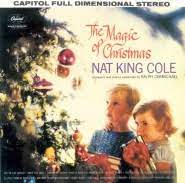
The Christmas Song was written on a sweltering day in July 1945, when Bob Wells decided to cool off by jotting down wintry images and Mel Tormé walked in, found the notes on a pad by the piano and finished the song with him in about 45 minutes.
The two took it to Nat King Cole, who recorded it with the King Cole Trio in June 1946 and again with a string choir later that year.
Cole remade it in 1953 and again in 1961, and the 1961 recording, with its lush orchestra, is the one most people know; the Library of Congress added it to the National Recording Registry in 2022. It’s often listed as “Chestnuts Roasting on an Open Fire” or “Merry Christmas to You.”
Back To Song List
The Cowboy Christmas Ball - (Michael Martin Murphey) - Learn To Play On Acoustic Guitar

The Cowboy Christmas Ball began as a poem by Larry Chittenden, a New York journalist who visited his uncle’s ranch near Anson, Texas, and wrote about a dance he attended at a hotel in 1885, with cowhands dancing in their boots and the ladies in their ball dresses.
A local paper published the poem in 1890, Chittenden included it in his 1893 book Ranch Verse, and cowboys set it to music, a version John Lomax collected for his Cowboy Songs.
Michael Martin Murphey got a book containing the poem from his mother in 1985, recorded it for his 1991 album Cowboy Christmas: Cowboy Songs II on Warner Bros., and has played the annual ball in Anson since 1992.
Back To Song List
The First Christmas Morn - (Charley Pride) - Learn To Play On Acoustic Guitar

The First Christmas Morn is track eight on Charley Pride’s Christmas in My Hometown, his only full-length Christmas album, first recorded on August 27, 1969, at RCA Victor Studio in Nashville and released in November 1970.
Sue Lane wrote the song, which runs 3 minutes and 12 seconds. The album mixes holiday classics with originals, and its title track was one of the top holiday singles of 1970; the album itself was a top-10 seller among Christmas albums of all genres.
By 1970 Pride had become country music’s first commercially successful African American artist, with a string of major hits, and critics praised the album when it appeared. A remastered edition in 2013 added bonus tracks, including “Out of the East” and “Christmas Without Mary.”
Back To Song List
The Gift - (Joey & Rory) - Learn To Play On Acoustic Guitar

The Gift was written by Stephanie Davis and is track two on Joey + Rory’s only Christmas album, A Farmhouse Christmas, released by Sugar Hill Records on October 11, 2011.
At 4 minutes and 18 seconds, it’s one of the longest songs on the album, and it tells of a poor girl named Maria who gives what little she has when everyone else brings grand gifts, revealing the true meaning of the holiday. Davis also wrote the album’s “The Diamond O,” and Rory Feek wrote the opening track, “It’s Christmas Time.”
The duo met the public on CMT’s Can You Duet in 2008, finishing third. The 12-song album also includes Merle Haggard’s “If We Make It Through December,” featuring Haggard himself.
Video lesson, demo and chord sheet contained in the zip file below.
Back To Song List
There's A New Kid In Town - (Alan Jackson) - Learn To Play On Acoustic Guitar

There's A New Kid In Town was written by Don Cook, Curly Putman and Keith Whitley, and it retells the Christmas story as news spreading through Bethlehem about a newborn in a manger.
Whitley recorded a version before his death in 1989, and when Alan Jackson made his first Christmas album, Honky Tonk Christmas, released by Arista on October 12, 1993, he added his voice to Whitley’s earlier recording to create a duet. Honky Tonk Christmas was Jackson’s fourth studio album and first Christmas record.
The song runs about 4 minutes and 9 seconds, and Chris Young recorded it again with Jackson on his 2016 album It Must Be Christmas. Putman also wrote “He Stopped Loving Her Today.”
Video lesson, demo and chord sheet contained in the zip file below.
Back To Song List
There's No Place Like Home For The Holidays - (Perry Como) - Learn To Play On Acoustic Guitar

There's No Place Like Home for the Holidays was written by composer Robert Allen and lyricist Al Stillman, and Perry Como made it a hit in 1954, years before it appeared on any of his Christmas albums.
Como re-recorded it in July 1959 for Season’s Greetings from Perry Como, his first major full-length Christmas album, released in October 1959 by RCA Victor. The warm, relaxed album was his sixth RCA Victor LP and the fourth recorded in stereo. It reached No. 22 on Billboard’s Top LPs chart in 1960 and has charted many times since.
It also features “The Christmas Song” and “Winter Wonderland,” and later Como holiday compilations include the song too.
Back To Song List
Under The Christmas Lights - (Gwen Stefani) - Learn To Play On Acoustic Guitar

Under The Christmas Lights is one of six original songs on Gwen Stefani’s first full-length Christmas album, You Make It Feel Like Christmas, released October 6, 2017, by Interscope.
Stefani wrote it with Justin Tranter and busbee, who also produced it with Eric Valentine, and it’s the eighth track on the standard edition, running about 2 minutes and 50 seconds. The material was written and recorded during the summer of 2017 in joint studio and songwriting sessions.
The song entered Billboard’s Holiday Digital Song Sales chart at No. 16, which was also its peak, and Stefani sang it on her NBC special, Gwen Stefani’s You Make It Feel Like Christmas, on December 12, 2017.
Back To Song List
What God Wants For Christmas - (Darius Rucker) - Learn To Play On Acoustic Guitar

What God Wants for Christmas is one of two original songs on Darius Rucker’s first Christmas album, Home for the Holidays, released October 27, 2014, by Capitol Nashville. Rucker wrote it with producer Frank Rogers and Monty Criswell, and it’s track three, running 3 minutes and 37 seconds.
A music video directed by Jim Wright accompanied its release, and the song reached No. 46 on Country Airplay in 2015. The 12-song album, Rucker’s fifth studio album, reached No. 3 on Top Country Albums and No. 25 on the Billboard 200, and it also includes a duet with Sheryl Crow on “Baby, It’s Cold Outside.” The other original is “Candy Cane Christmas.”
Back To Song List
White Christmas Makes Me Blue - (Randy Travis) - Learn To Play On Acoustic Guitar

White Christmas Makes Me Blue was written by Rich Grissom and Neil Patton Rogers, and Randy Travis first released it as a Christmas single on December 8, 1986, as a follow-up to his breakthrough debut Storms of Life.
The single sold more than 79,000 copies but didn’t chart on Billboard’s country list, and it later found a lasting home on An Old Time Christmas, his first Christmas album, released August 14, 1989, on Warner Bros., where it runs 3 minutes and 25 seconds.
Four songs from the album were issued as singles in all. It also includes Willie Nelson’s “Pretty Paper” and “Oh, What a Silent Night,” co-written by Mark Collie, whose songs are also on this site.
Back To Song List
Winter Wonderland - (Tony Bennett) - Learn To Play On Acoustic Guitar

Winter Wonderland was written in 1934 by composer Felix Bernard and lyricist Richard “Dick” Smith, and it became a holiday favorite through hit recordings in the 1940s, including Johnny Mercer’s with the Pied Pipers and Perry Como’s.
Tony Bennett recorded his swinging version for Snowfall: The Tony Bennett Christmas Album, produced by Jack Gold and arranged and conducted by Robert Farnon, with sessions in London and New York. Columbia released the album in 1968, and it reached No. 10 on Billboard’s Christmas chart but otherwise made little commercial impact at the time.
Bennett’s version runs about 2 minutes and 14 seconds, and he returned to Christmas music with Christmas with Tony Bennett in 2002.
Back To Song List
You Deserve It All - (John Legend) - Learn To Play On Acoustic Guitar

You Deserve It All is a stand-alone Christmas single that John Legend released on November 11, 2021, through Republic Records, his first release after leaving Sony. Legend wrote it with Meghan Trainor, and Raphael Saadiq, a founding member of Tony! Toni! Toné! who also produced Legend’s 2018 holiday album A Legendary Christmas, produced the rhythms.
That album, Legend’s first holiday record, featured duets with Kelly Clarkson, Stevie Wonder and Esperanza Spalding. The heartfelt new track runs about 3 minutes and 19 seconds, and it arrived with a lyric video and a partnership with LG Signature.
It isn’t on an album, and it marked the start of his new deal with Republic.
Back To Song List
You Make It Feel Like Christmas - (Gwen Stefani) - Learn To Play On Acoustic Guitar

You Make It Feel Like Christmas is a duet between Gwen Stefani and Blake Shelton, who were dating when they wrote it with Justin Tranter and busbee in the summer of 2017.
Busbee and Eric Valentine produced it, and Interscope released it on September 22, 2017, as the lead single from Stefani’s first full-length Christmas album of the same name, which followed on October 6, 2017. The song, with sleigh bells and a retro feel, thanks someone for making the season feel special, and it runs about 2 minutes and 37 seconds.
The album has twelve songs, six originals and six Christmas standards, and Stefani followed it with her own NBC special on December 12, 2017.
Back To Song List
< --- 38 Christmas Songs On Guitar
Thank you for stopping by and spending some of your holiday season with these lessons.
Whether you’re playing for family, friends, a church service or just for yourself by the fire, I hope these songs make your Christmas a little brighter. Start with the chords, add the rhythm and take your time. For even more holiday favorites, my companion page, Christmas Songs on the Guitar, has 38 more lessons, which gives you nearly 75 Christmas songs to choose from.
I add new lessons every season, and if there’s a Christmas song you’d like to see, send me a note through the Contact page. Merry Christmas and happy playing.
Best Acoustic Guitar Christmas Songs

Kirby Swinemar is an acoustic guitar instructor, performer and song arranger who has taught online for 21 years and created more than 4,000 original acoustic guitar lessons. He specialises in song-based acoustic guitar instruction, rhythm guitar techniques, and creating full-sounding solo arrangements that help beginner and intermediate players move beyond basic strumming.
Explore more of Kirby's work at Kirby's Guitar Lessons, watch his performances and tutorials on his YouTube Channel or follow him on Facebook. You can also learn more about his teaching background on the About Me page.
Latest 100 Tutorials
© 2019–2026 KirbysGuitarLessons.com — All Rights Reserved