Best Guess Who Guitar Songs to Play on Acoustic Guitar
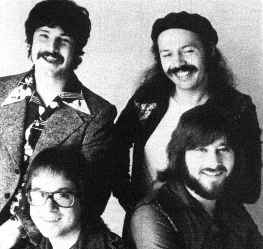
The Guess Who stands as a cornerstone of Canadian rock history, bridging the gap between the British Invasion's melodic sensibilities and the grit of 1970s hard rock. Emerging from Winnipeg, Manitoba, the band transformed from a regional cover group into an international powerhouse, becoming the first Canadian act to truly conquer the American charts.
Led by the powerhouse vocals of Burton Cummings and the intricate guitar work of Randy Bachman, the group’s discography is a masterclass in versatility, shifting effortlessly from psychedelic jazz and soulful ballads to heavy, riff-driven anthems. The following collection explores the definitive tracks that defined their "golden era," detailing the albums, chart successes, and the fascinating behind-the-scenes stories that cemented their place in the Rock & Roll Hall of Fame.
🎁 Free Lesson Preview
Scroll down to check out a completely free demo on Burton Cumming’s “My Own Way To Rock”🎸 Overview Video - “Guess Who Guitar Songs”
The Guess Who Guitar List
American Woman
My Own Way To Rock (Cummings)
No Sugar Tonight No Time
Share The Land
Star Baby
These Eyes
Undun
American Woman - Learn To Play On Guitar
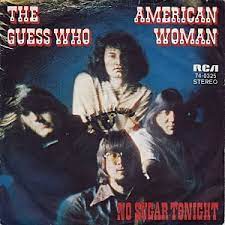
American Woman is probably The Guess Who's most recognizable song, especially to American audiences. It hails from the album of the same name which was released as a single in March 1970.
The song went to #1 on Billboard and one of many great Guess Who hits from the 1970s. While changing a broken string, Randy Bachman was goofing around and came up with a riff.
Others joined in and started jamming. Burton Cummings made up some lyrics on the spot. A kid with a tape recorder was taping and the band asked for the tape. The lyrics were later revised and Volia!
Chords And Strumming
I use Drop D tuning in this one with a capo 2nd fret while playing a down up down up down up down pause-pause-then a riff in the rhythm pattern or you could play down strokes for the rhythm. Only two chords and they are D and C.
Guitar Lesson Details - (chords & lyrics sheet incl with lesson)
Chords & LyricsBack To Song List
My Own Way To Rock - Learn To Play On Guitar
My Own Way To Rock ... info soon.
Chords And Strumming
I play this one with a capo 3rd fret with a steady down up down up rhythm pattern and some lead required. For chords you'll play an A, D, E, G and a D7.
Guitar Lesson Details - (chords & lyrics sheet incl with lesson)
Lesson No Longer Available.Chords & Lyrics
No Time - Learn To Play On Guitar
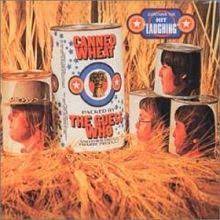
No Time originally appeared on the 1969 album Canned Wheat, but the version most people recognize is the re-recording from the 1970 American Woman LP. Released as a single in late 1969, it peaked at #5 on the Billboard Hot 100.
This version is noticeably faster than the original and features a tighter arrangement suited for radio. Written by Bachman and Cummings, the track is essentially a "reverse Dear John" breakup song. Bachman has noted that the song was their attempt at a "country-rock" vibe, heavily inspired by the style of Neil Young and Stephen Stills.
The signature opening guitar riff was actually inspired by a Buffalo Springfield song called "Hung Upside Down," which Bachman playfully "turned upside down" to create his own melody.
Chords And Strumming
Played in standard tuning and with a down down up down up down up and repeat rhythm pattern, you'll play some lead here. The chords are D, Dm7, G, Am7, Bm, C, D-on5th and D-on7th.
Guitar Lesson Details - (chords & lyrics sheet incl with lesson)
Chords & LyricsBack To Song List
No Sugar Tonight - Learn To Play On Guitar
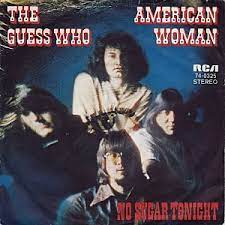
No Sugar Tonight was the B-side of the American Woman single and did reach #1 along with American Woman. That's not very common to have the B-side of a single also hit #1 on the charts.
Randy Bachman got inspiration for the song while in California when he was waling down the street with records under his arm, found himself approaching thre biker looking dudes on the same side of the street.
A car pulled over and out jumped a small woman who started ripping a strip off of one of the men for leaving her all day with the kids while he was out watching strippers.
As they got into the car she remarked there would be no sugar tonight for him.
Chords And Strumming
Drop D tuning and a capo 2nd fret here but no lead work. Just play a steady up and down with a walking bass and in the ch its chopped with the chords C, D, G, A and a Dsus2.
Guitar Lesson Details - (chords & lyrics sheet incl with lesson)
Chords & LyricsBack To Song List
Share The Land - Learn To Play On Guitar
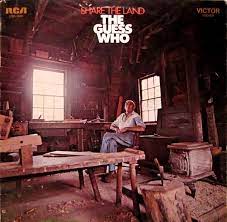
Share The Land is the title track of the band’s seventh studio album, released in October 1970. It served as the follow-up single to "Hand Me Down World" and reached #10 on the Billboard Hot 100. This song marked a pivotal moment for the group, as it was their first major hit following the departure of founding guitarist Randy Bachman.
Written by Burton Cummings, the song is a utopian anthem reflecting the communal and environmental spirit of the era. A persistent piece of trivia involves the album cover, which features a portrait of a Native American man; because of this, many fans at the time mistakenly believed Cummings himself was of Indigenous descent, though the cover was simply intended to reflect the song's "return to the land" theme.
Chords And Strumming
Play this one in standard tuning with a capo 2nd fret with the chords Am, D, F, G, C, E7, A and E. For rhythm play a down down up down up down up and repeat pattern and you'll play some lead in this number.
Guitar Lesson Details - (chords & lyrics sheet incl with lesson)
Chords & LyricsBack To Song List
Star Baby - Learn To Play On Guitar
Star Baby hails from the 1974 album Road Food. It was released as a single in February 1974 and reached #39 on the Billboard Hot 100. While it didn't climb as high as their 1960s hits, it holds a unique record for the band: it remained on the Billboard charts for 19 weeks, which is actually four weeks longer than their #1 hit "American Woman."
Written by Burton Cummings, the song is a high-energy "power pop" track about a flashy, "two-timin' mama" dressed in satin and silk. The song enjoyed massive regional success in Chicago, where it peaked at #3 on the influential WLS radio charts, helping to keep the band relevant in the mid-70s during a period of frequent lineup changes.
Chords And Strumming
Capo 2nd fret is the original key in standard tuning and there is some lead blended into the rhythm. Play a down up down up down up and repeat pattern with the chords A, D, G, F, A#, D#, E and C.
Guitar Lesson Details - (chords & lyrics sheet incl with lesson)
Chords & LyricsBack To Song List
These Eyes - Learn To Play On Guitar
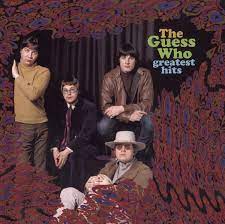
These Eyes was the lead single from the 1969 album Wheatfield Soul. Released in early 1969, it became the band’s international breakthrough, peaking at #6 on the Billboard Hot 100 and selling over one million copies.
Before this hit, the band had struggled for years under the name "Chad Allan & the Expressions." Interestingly, the band initially hated the song; they felt the lush orchestration and romantic balladry were "too pop" and a betrayal of their hard-rock roots. It was only after producer Jack Richardson mortgaged his house to fund the recording that they agreed to release it.
The song's success is often credited to CKLW radio director Rosalie Trombley, who broke the record in the Detroit/Windsor market, proving its massive commercial appeal.
Chords And Strumming
Played in standard tuning with the chords Dm, Cmaj7, Am , C, G, C/G, Fmaj7, D, G, Amaj7, E and a Gb. Just some riffs but no lead work with the rhythm pattern riff down down up up down down - down down down up down up down down. You'll have to watch the demo to see this in action.
Guitar Lesson Details - (chords & lyrics sheet incl with lesson)
Chords & LyricsBack To Song List
Undun - Learn To Play On Guitar
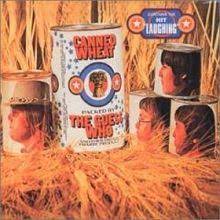
Undun originally appeared on the 1969 album Canned Wheat. It was first released as the B-side to the hit "Laughing," but it became a hit in its own right, peaking at #22 on the Billboard Hot 100. Randy Bachman has frequently cited "Undun" as his favorite song he ever wrote for the band.
The song features a sophisticated, jazz-influenced structure inspired by Bachman's guitar mentor, Lenny Breau, and a famous flute solo performed by Burton Cummings. The lyrics were inspired by Bob Dylan's "Ballad in Plain D" and tell the somber story of a girl Bachman saw at a party who had lost her grip on reality after a bad LSD trip. Its bossa nova rhythm and chromatic bass lines made it one of the most musically complex songs in their catalog.
Chords And Strumming
Play with capo 2nd fret in standard tuning while playing a down up up down up and repeat pattern with some lead required. The chords here are A#, A, A7, Dm, G, F, Em7, Dm/A, Dm/A#, Dm/B and a Dm/A#.
Guitar Lesson Details - (chords & lyrics sheet incl with lesson)
Back To Song List
Decades after their peak, the music of The Guess Who remains a staple of classic rock radio, appearing in countless films and continuing to influence new generations of musicians.
While the band saw numerous lineup changes and internal shifts, the core of their songbook—a blend of high-concept songwriting and undeniable "prairie rock" energy—has proven timeless. From the raw, improvisational energy of their #1 hits to the sophisticated jazz flourishes of their deeper cuts, these tracks represent more than just chart data; they are the soundtrack to a pivotal era in music history.
Whether you are a lifelong fan or a newcomer discovering their "Wheatfield Soul" for the first time, these songs stand as an enduring testament to Canada's greatest musical export of the 1970s.
If you liked this Guess Who guitar songs page you might also like ... (click images)
Home Page
Acoustic Versions Of Rock Songs
Latest 100 Tutorials
© 2019–2026 KirbysGuitarLessons.com — All Rights Reserved