Best Guitar Songs by The Monkees – Acoustic Tutorials
(Page Updates Coming)
The Monkees burst onto the music scene in the mid-1960s with their TV show, catchy songs, and infectious energy.
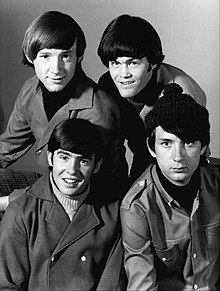
While they were originally assembled for television, their music quickly took on a life of its own – delivering hits like I'm a Believer, Daydream Believer, and Last Train to Clarksville that topped the charts and became part of 60s pop culture.
On this page, you’ll find 6 easy-to-follow acoustic guitar lessons featuring some of their most popular songs. Each tutorial includes chord breakdowns, strumming tips, rhythm guidance, and more to help you capture that jangly, upbeat Monkees sound.
🎸 Overview Video - “The Monkees Guitar Songs”
Watch this short overview to hear snippets from every Monkee's arrangement
featured on this page before exploring the individual lessons below.
The Monkees Guitar List
Daydream Believer
I Wanna Be Free
I'm A Believer
Last Train To Clarksville
Papa Gene’s Blues
Valeri
🎁 Free Demo Preview
Scroll down to check out a completely free demo on The Monkees “I'm A Believer”.A Little Bit Me A Little Bit You - Learn To Play On Guitar
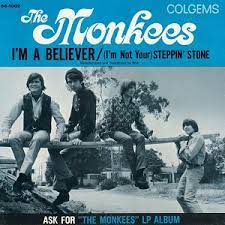
A Little Bit Me, A Little Bit You is a song written by Neil Diamond, which was recorded and released by The Monkees in 1967. The song was produced by Diamond's frequent collaborator, Jeff Barry, and reached No. 2 on the Billboard Hot 100 chart.
It was one of several hits for The Monkees in the mid-1960s, and helped cement their place as one of the most popular bands of the era.
Interestingly, "A Little Bit Me, A Little Bit You" was actually a solo recording by Monkees member Davy Jones, with the other band members providing backing vocals.
Chords And Strumming
I play a capo 3rd fret here in standard tuning with the chords A, D, G, D/Gb and Em. For rhythm play a down down up down up down -- up up up down up down up and repeat pattern.
Guitar Lesson Details - (chords & lyrics sheet incl with lesson)
Back To Song List
Daydream Believer - Learn To Play On Guitar
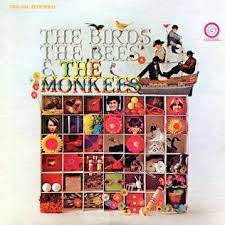
Daydream Believer is the opening track on the 1968 album The Birds, The Bees & The Monkees. Released as a single, it topped the Billboard Hot 100, holding the number 1 spot for four weeks.
Written by John Stewart of The Kingston Trio, the song is instantly recognizable for its piano intro and the spoken word segment where Chip Douglas cues Davy Jones with "7a," to which Jones annoyed replies, "What number is this, Chip?"
This studio banter was intended to be cut but was left in, becoming an iconic part of the song’s charm.
Chords And Strumming
I play mainly down strokes for rhythm in the beginning and then a steady down up down up and repeat pattern and some shuffle drum roll. In standard tuning with the chords G, C, Am7, G6, Em, D, D7, Bm and A7 but no lead.
Guitar Lesson Details - (chords & lyrics sheet incl with lesson)
Back To Song List
I Wanna Be Free - Learn To Play On Guitar
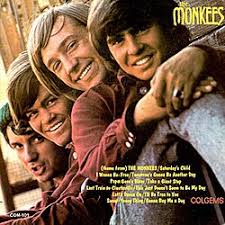
I Wanna Be Free was recorded by The Monkees and appeared on their self-titled debut album, The Monkees, released in 1966. Written by Tommy Boyce and Bobby Hart, the song showcased a softer, more reflective side of the group compared to their upbeat television hits.
Two versions were recorded: a gentle ballad featured on the album and a faster arrangement created for television appearances. Lead vocals were performed by Davy Jones, whose heartfelt delivery helped make the song a fan favorite.
Although not released as a major U.S. single, the song received significant exposure through The Monkees television series and remains one of the group's best-loved early recordings, highlighting their ability to blend pop melodies with emotional storytelling.
Chords And Strumming
This one is played in standard tuning with some arpeggio and rhythm combined. Play a 1-2 up 1-2 up down up and repeat for rhythm as you move through the chords. And for chords you'll play a G, D, Am, C/G, Bm, F, D7 and an Am7.
Guitar Lesson Details - (chords & lyrics sheet incl with lesson)
Back To Song List
I'm A Believer - Learn To Play On Guitar
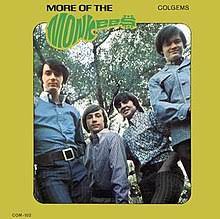
I'm a Believer appears on the band's 1967 smash hit album More of the Monkees. As a single, it was an absolute juggernaut, staying at number 1 on the Billboard Hot 100 for seven weeks and becoming the biggest-selling record of 1967.
The song was penned by Neil Diamond, who had intended to record it himself until the producers convinced him it was perfect for the TV group.
Pre-release orders were so high that it was certified Gold within two days of release, a rare feat that underscored the intense "Monkeemania" gripping the nation at the time.
Chords And Strumming
This one I play with drop D tuning with the chords D7, G, D, C, G/F and F. A bit of lead and a few riffs as you play a down up down up rhythm pattern.
Guitar Lesson Details - (chords & lyrics sheet incl with lesson)
Back To Song List
Last Train To Clarksville - Learn To Play On Guitar
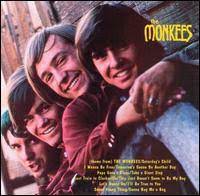
Last Train to Clarksville kicks off the group's self-titled 1966 debut album, The Monkees. It was their debut single and an immediate sensation, rocketing to number 1 on the Billboard Hot 100 shortly after their television show premiered.
While it sounds like a catchy pop tune, writers Tommy Boyce and Bobby Hart actually crafted it as a subtle protest against the Vietnam War.
The lyrics describe a soldier taking a train to an army base—implied to be near Fort Campbell, Kentucky—uncertain if he will ever return home, adding a layer of poignancy to the upbeat "Oh, No-No-No" chorus.
Chords And Strumming
For rhythm play a root down root up down up and repeat with a built in riff but no lead. In standard tuning with the chords G, D7, C7 and F.
Guitar Lesson Details - (chords & lyrics sheet incl with lesson)
Back To Song List
Papa Gene's Blues - Learn To Play On Guitar
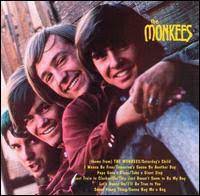
Papa Gene's Blues is a song written by Michael Nesmith of The Monkees, and was included on their 1966 self-titled debut album. The song features Nesmith on lead vocals and acoustic guitar.
Despite not being released as a single, "Papa Gene's Blues" became a fan favorite and has since become a classic of 1960s rock music.
The song's blend of rock, country, and blues influences helped pave the way for the country-rock movement that would emerge in the late 1960s and early 1970s.
Chords And Strumming
I play a capo 2nd fret here in standard tuning and with some lead work. Play a root down up down up down up and repeat rhythm pattern with the chords G, Gb, E7, Am, D7, C and a D#.
Guitar Lesson Details - (chords & lyrics sheet incl with lesson)
Back To Song List
Valeri - Learn To Play On Guitar
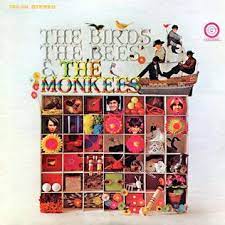
Valeri is featured on the 1968 album The Birds, The Bees & The Monkees. Released as a single, it reached number 3 on the Billboard Hot 100.
The song had actually been written years earlier by Boyce and Hart and was aired on the TV show in 1967, but the label didn't release it until demand from radio DJs became overwhelming.
The track is legendary among musicians for its complex, flamenco-style guitar solo. While often attributed to a band member, that blistering acoustic run was actually played by session virtuoso Louie Shelton, who nailed it in a single take.
Chords And Strumming
A down down up down up down up and repeat rhythm pattern will work for this one in standard tuning and the chords Gm, F, A#, D7, G, C and an Em. Just a few arpeggio riffs.
Guitar Lesson Details - (chords & lyrics sheet incl with lesson)
Back To Song List
Whether you grew up watching The Monkees or you’re just discovering their timeless catalog, learning their songs on acoustic guitar is a fun and nostalgic journey.
Each lesson on this page has been designed to make your learning process smooth and enjoyable. Be sure to check out the overview video, and if you love what you hear, you can grab the full tutorial pack. Relive the golden age of pop-rock – one chord at a time.
If you liked The Monkees guitar songs page you might also like ... (click images)
Popular Songs From The 60s
Latest 100 Tutorials
© 2019–2026 KirbysGuitarLessons.com — All Rights Reserved