Peter & Gordon Guitar Lessons

Peter & Gordon guitar lessons are a great fit for acoustic players who enjoy the melodic side of the British Invasion. Peter Asher and Gordon Waller built much of their sound around close vocal harmonies, memorable melodies and arrangements that translate naturally to one acoustic guitar.
On this page you'll find six Peter & Gordon songs covering some of their best-known recordings, including A World Without Love, I Go To Pieces, Lady Godiva, True Love Ways, Woman and Nobody I Know. The lessons break down the chords, rhythm patterns and acoustic arrangements I use, along with bass runs, riffs or picking where they're part of my version. Several songs also carry an interesting Beatles connection through Paul McCartney, who supplied some of the duo's early material.
🎸 Watch the Peter & Gordon Guitar Lessons Overview
performance clips taken directly from the complete lesson videos.
Click Play, then drag the timeline to quickly preview any Peter & Gordon lesson featured on this page.
Note: Every arrangement has been personally created, recorded and taught by Kirby
using teaching methods refined through decades of acoustic guitar instruction.
What's Included With Every Lesson
📦 Your Lesson Package Includes
✓ 8–12 minute HD video lesson so you can learn each song step-by-step.
✓ Printable chords & lyrics PDF for easy practice away from the screen.

✓ Instant download—start playing in minutes.
✓ Learn at your own pace on any device.
New To Peter & Gordon Guitar Lessons?
If you're new to playing Peter & Gordon songs on acoustic guitar, start with I Go To Pieces or Lady Godiva. Both are beginner-friendly arrangements built around steady rhythm patterns, with only a few bass runs or small picking details to add once you're comfortable with the chords.
From there, try A World Without Love, which introduces two rhythm patterns along with some chord-based picking and riffs. Nobody I Know is another good next step, adding two rhythm patterns, fills between the vocal lines and a main picking break.
For a little more challenge, move into True Love Ways and Woman. These arrangements contain more chord movement and require greater control of the rhythm and transitions, making them good choices once you're comfortable with the more straightforward lessons.
Peter & Gordon Guitar Lessons Included On This Page
A World Without Love Guitar Lesson
I Go To Pieces Guitar Lesson
Lady Godiva Guitar Lesson
Nobody I Know Guitar Lesson
True Love Ways Guitar Lesson
Woman Guitar Lesson
🎁 Free Demo Preview & Free Lesson
Scroll down to check out a completely free demo on Peter & Gordon's “True Love Ways”or view the free lesson for "Nobody I Know", part of my free lesson series on YouTube.
A World Without Love - Learn To Play On Acoustic Guitar

A World Without Love launched Peter & Gordon's recording career in 1964 as their debut single and quickly became their biggest international hit. Written by Paul McCartney and credited to Lennon–McCartney, the song reached No. 1 in both the UK and the United States, helping establish the duo during the height of the British Invasion.
McCartney was dating Peter Asher's sister Jane at the time and had become close to the Asher family. Peter heard the song and eventually recorded it with Gordon Waller after the duo secured a recording contract.
Its close vocal harmonies and gentle acoustic-pop sound became an early signature for Peter & Gordon. The song also became the title track of their 1964 debut album.
What You'll Learn From This Lesson
A World Without Love is played in standard tuning using the chords E, Ab, Dbm, Am, Gbm, B7 and C. There are two rhythm patterns in my arrangement. The first is a root down up root up down up pattern, while the second is a quicker shuffle using root down up down up root up down up. Both should be played with a relaxed feel to capture the smooth 60s pop sound of the song.
There's also some light picking in the arrangement, with many of the notes coming directly from the chord shapes, along with a small riff sequence that adds some extra movement without overpowering the vocal.
I'd rate this one beginner to intermediate. Learn the chords first, then get comfortable switching between the two rhythm patterns. Once those are flowing smoothly, add the chord-based picking and small riffs and you'll have the complete arrangement ready to perform.
Guitar Lesson Details - (chords & lyrics sheet incl with lesson)
Back To Song List
I Go To Pieces - Learn To Play On Acoustic Guitar

I Go To Pieces became one of Peter & Gordon's biggest American hits when it reached No. 9 on the Billboard Hot 100 in early 1965. Written by Del Shannon, the song came to the duo in an unusual way while they were touring Australia with Shannon and The Searchers.
Shannon reportedly played the song for The Searchers in their dressing room, hoping they might record it. They passed, but Peter & Gordon heard the song from nearby and asked Shannon if they could have a crack at it instead.
He agreed, giving the duo their first major hit that wasn't a Lennon–McCartney composition. The track later became the title song of their U.S. album I Go To Pieces.
What You'll Learn From This Lesson
I Go To Pieces is played in standard tuning using the chords E, Abm, A, B7, Dbm, Am, Gb, Esus and Gbm. The song opens with a bass-picking riff before moving into the vocals and a steady root down up down up root up down up rhythm pattern. Keep the strumming relaxed to maintain the laid-back 60s pop feel of the song.
There's no lead work in my arrangement, although I blend in a few bass runs along the way. Near the end you'll also use some down-stroke chops on the E chord to add an accent before resolving the song on the Esus and E.
I'd rate this one beginner-friendly. Once you know the chords, there's only one basic rhythm pattern to master. Learn the opening bass riff, work in the few bass runs and chord accents, and you should find this a relaxed and enjoyable song to play.
Guitar Lesson Details - (chords & lyrics sheet incl with lesson)
Back To Song List
Lady Godiva - Learn To Play On Acoustic Guitar
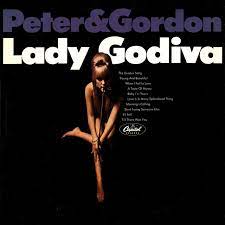
Lady Godiva gave Peter & Gordon another major hit in 1966, reaching No. 6 on the Billboard Hot 100 and No. 16 in the UK. Written by Mike Leander and Charlie Mills, the playful music-hall-style song offered a humorous modern twist on the famous legend of Lady Godiva and became the duo's first U.S. Top 10 hit since I Go to Pieces.
The duo promoted the song with television appearances, including performances on Britain's Top of the Pops. Its cheeky storyline apparently wasn't appreciated everywhere; the mayor of Coventry was reported to have tried to discourage local airplay.
The song was also included on Peter & Gordon's 1966 U.S. album Lady Godiva.
What You'll Learn From This Lesson
Lady Godiva is played in standard tuning using the chords D, A, G, Em, A7, D7, B7, E and E7. For rhythm I use a root down up root up down up pattern, which gives the song that light, bouncy 60s pop feel. I also blend in bass runs throughout the arrangement as the chords change, adding some movement while keeping the rhythm flowing.
There's no lead break in this one. The only picking is a short riff built around the D chord near the end, followed by a quick D, A and D change to finish the song.
I'd rate this one beginner-friendly. Learn the chords first and get comfortable with the one rhythm pattern. Once that's steady, start adding the bass runs between the chord changes and finish by learning the short ending riff.
Guitar Lesson Details - (chords & lyrics sheet incl with lesson)
Back To Song List
Nobody I Know - Learn To Play On Acoustic Guitar
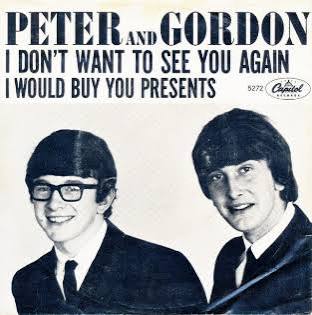
Nobody I Know followed Peter & Gordon's breakthrough hit A World Without Love in 1964. Paul McCartney wrote the song specifically as a follow-up for the duo, although it was credited to Lennon–McCartney. The single continued their early success, reaching No. 10 in the UK and No. 12 on the U.S. Billboard Hot 100.
Like several songs McCartney supplied to other artists during this period,
Nobody I Know was never recorded by The Beatles. In the UK it remained a non-album single at the time, while North American listeners later found it on Peter & Gordon's 1964 Capitol album I Don't Want to See You Again.
What You'll Learn From This Lesson
Nobody I Know is played in standard tuning using the chords C, Dm, F, G, A#, D7, Em, Fm, Am, A and Gsus. There are two rhythm patterns in this arrangement. The main pattern is a steady down up down up, while the bridge changes to a down down up down up down up pattern to give that section a slightly different feel.
There are also several short riffs played throughout the song, including fills after the first and last lines of the verses, along with a main picking break. The original recording changes key by a half-step near the end, but I keep my arrangement in the starting key throughout, making it easier to play without having to learn another group of chord shapes.
I'd rate this one beginner to intermediate. Start by learning the chords and getting comfortable with the two rhythm patterns. Then add the short riffs between the vocal lines before tackling the main picking break. Once those pieces are together, you'll have a complete acoustic arrangement that captures the light 1960s pop feel of the song.
Guitar Lesson Details - (chords & lyrics sheet incl with lesson)
Back To Song List
True Love Ways - Learn To Play On Acoustic Guitar

True Love Ways gave Peter & Gordon another major success in 1965 when they revived the Buddy Holly ballad with their trademark close harmonies. Written by Holly and Norman Petty, the song had originally been recorded by Holly in 1958 with orchestral backing and was released after his death.
Peter & Gordon brought the song to a new generation during the height of the British Invasion, taking their version to No. 2 on the UK Singles Chart and No. 14 on the U.S. Billboard Hot 100. Their recording retained the romantic ballad feel while adding the smooth vocal blend that had become one of the duo’s signatures. The track was also included on their 1965 album True Love Ways.
What You'll Learn From This Lesson
True Love Ways is played in standard tuning, and while the original key can be reached using a capo on the 2nd fret, I play my demo without a capo to keep the song in a more comfortable vocal range. The rhythm combines arpeggio playing with strumming using a 1-2-3 down up down pattern that repeats as you move through the progression.
There isn't any separate lead picking in my arrangement, but there are plenty of chords to work through, including D7, G, Bm, C, D, Em, A7, Am, Cm, Eb, Ab, C#, D#, Fm and Dbm. Much of that expanded chord list comes from the half-step key change near the end of the song.
I'd rate this one beginner to intermediate, mainly because of the number of chord shapes and the late key change. Learn the chords and transitions first, then settle into the repeating arpeggio/rhythm pattern. Once those pieces are comfortable, the arrangement should flow quite naturally.
Guitar Lesson Details - (chords & lyrics sheet incl with lesson)
Back To Song List
Woman - Learn To Play On Acoustic Guitar

Woman gave Peter & Gordon another hit in 1966, but the story behind its songwriting credit made the record particularly unusual. Paul McCartney wrote the song under the pseudonym Bernard Webb, hoping to discover whether one of his compositions could succeed without the famous Lennon–McCartney name attached.
The disguise didn't last very long, as McCartney's involvement was uncovered while the record was still making its way up the charts. Even so, Woman reached No. 14 on the U.S. Billboard Hot 100, No. 28 in the UK and No. 1 in Canada. The experiment also followed three earlier McCartney compositions recorded by Peter & Gordon, including A World Without Love and Nobody I Know.
What You'll Learn From This Lesson
Woman is played with a capo on the 2nd fret using the chords A, D, Dm, A/Ab, Gbm, B7, E, E/C, Bm, F, Esus and Dbm. The rhythm is played primarily with down strokes, with some chord accents added in places to give the arrangement a little more movement and dynamics.
There's no lead or separate picking to worry about in this version, so most of the work comes from learning the chord progression and moving smoothly through the different shapes while maintaining the steady rhythm.
I'd rate this one beginner to intermediate, mainly because of the number of chords. Learn the chord shapes and transitions first, then work through the down-stroke rhythm and accents. Once those are comfortable, add your vocal over the complete arrangement.
Guitar Lesson Details - (chords & lyrics sheet incl with lesson)
Back To Song List
Peter & Gordon Guitar Lessons FAQ
Are Peter & Gordon songs easy to play on acoustic guitar?
Several of these Peter & Gordon lessons are beginner-friendly, particularly I Go To Pieces and Lady Godiva. Other songs move into beginner-to-intermediate territory as additional chords, rhythm patterns, riffs and picking are introduced. This makes the collection a good place to develop your acoustic rhythm skills while gradually adding more technique.
Which Peter & Gordon song should a beginner learn first?
I Go To Pieces or Lady Godiva are good starting points. Both rely primarily on chords and steady rhythm, with only a few additional details to work into the arrangements. From there, A World Without Love is a good next step before moving into lessons with more riffs, picking and chord changes.
Do these Peter & Gordon guitar lessons include picking and riffs?
Yes. While rhythm guitar is an important part of the Peter & Gordon sound, several of these acoustic arrangements include bass runs, connecting riffs and picking. Nobody I Know, for example, includes riffs between the vocal lines as well as a main picking break, while A World Without Love uses smaller picking riffs blended into the arrangement.
Do I need a capo or alternate tuning to play these songs?
The tuning and capo setup varies by lesson, but you won't need unusual alternate tunings to work through this collection. Each lesson explains the setup used in my arrangement, and where a capo is used it can also help place the song in a comfortable key for the vocal.
What guitar skills can I learn from Peter & Gordon songs?
These six lessons are particularly useful for developing steady acoustic rhythm, smooth chord changes and sing-and-play coordination. As you progress through the collection, you'll also encounter bass runs, arpeggio-and-rhythm combinations, multiple strumming patterns, short riffs and picking breaks while learning how to keep the guitar supportive of the vocal.
These Peter & Gordon guitar lessons offer a nice cross-section of the duo's 1960s sound, from the close harmonies of A World Without Love and Nobody I Know to the Buddy Holly ballad True Love Ways and the playful style of Lady Godiva. With only six songs on the page, there's still plenty of room for this collection to grow as I add more of their music.
Whether you're looking for straightforward rhythm playing or an arrangement with a few additional guitar touches, work through the songs that suit your playing level and build from there. Each lesson is designed around playing the song on one acoustic guitar while keeping the arrangement practical enough to sing along with.
If you liked these Peter & Gordon guitar lessons page, you might also like ... (click images)

Popular Songs From The 60s

Kirby Swinemar is an acoustic guitar instructor, performer and song arranger who has taught online for 21 years and created more than 4,000 original acoustic guitar lessons. He specialises in song-based acoustic guitar instruction, rhythm guitar techniques, and creating full-sounding solo arrangements that help beginner and intermediate players move beyond basic strumming.
Explore his work at Kirby's Guitar Lessons and on social media on his social media YouTube Channel and his Facebook Page. Learn more about Kirby on his About Me page.
Latest 100 Tutorials
© 2019–2026 KirbysGuitarLessons.com — All Rights Reserved