Steve Goodman Guitar Lessons: Folk and Country Songs You Can Play
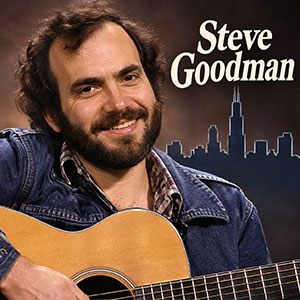
Steve Goodman only lived to be 36, but the Chicago singer-songwriter left behind some of the best-loved folk and country songs of the 1970s.
He wrote “City of New Orleans,” which Arlo Guthrie took onto the pop charts and Willie Nelson carried to No. 1 on the country chart. He also co-wrote songs with his friend John Prine, including “You Never Even Called Me By My Name.”
On this page, you'll find six Steve Goodman guitar lessons I've arranged for acoustic guitar, from the famous train song that helped make his name to Michael Peter Smith's tender ballad “The Dutchman.” Each lesson walks you through the chords, rhythm patterns and the bass runs, riffs or picking touches that help bring these songs to life.
🎸 Watch Steve Goodman Guitar Lessons Overview
performance clips taken directly from the complete lesson videos.
Click Play, then drag the timeline to quickly preview any Steve Goodman lesson featured on this page.
Note: Every arrangement has been personally created, recorded and taught by Kirby
using teaching methods refined through decades of acoustic guitar instruction.
What's Included With Every Lesson
📦 Your Lesson Package Includes
✓ 8–12 minute HD video lesson so you can learn each song step-by-step.
✓ Printable chords & lyrics PDF for easy practice away from the screen.

✓ Instant download—start playing in minutes.
✓ Learn at your own pace on any device.
New to Steve Goodman? Start Here
If you're new to Steve Goodman's music or just getting started with his songs on acoustic guitar, I'd suggest beginning with the simpler rhythm arrangements before moving into the more involved picking sections.
1. Start with the easier rhythm songs: Try The 20th Century Is Almost Over first. It uses just three chords (G, C and D) with a steady country-folk rhythm and a few bass runs. How Much Tequila Did I Drink Last Night is another good starting point, with familiar chords, straightforward strumming and a few optional riffs.
2. Build your country rhythm and bass runs: Move on to You Never Even Called Me By My Name, where you'll work with a root-and-bass strumming pattern, a key change and some country-blues guitar runs. City of New Orleans is another excellent choice for developing a flowing folk rhythm while adding melodic picking.
3. Develop your picking and chord transitions: Try You're the Girl I Love for its opening riff, muted strumming and melodic picking outro. Then tackle The Dutchman, which combines a gentle folk-ballad rhythm with additional chord shapes, bass movement and short picking riffs.
There's no need to master every riff before moving to another song. Get comfortable with the chords and rhythm first, then return to the picking sections as your confidence grows.
Steve Goodman Guitar Lessons Included On This Page
How Much Tequila Did I Drink Last Night Guitar Lesson
The 20th Century Is Almost Over Guitar Lesson
The Dutchman Guitar Lesson
You Never Even Called Me By My Name Guitar Lesson
You're The Girl I Love Guitar Lesson
City Of New Orleans - Learn To Play On Acoustic Guitar
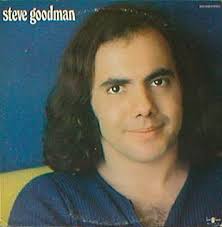
City Of New Orleans was written by Steve Goodman in 1970 after riding the Illinois Central Railroad’s passenger train of the same name, which ran from Chicago to New Orleans.
Goodman recorded it first on his 1971 self-titled debut album, produced by Kris Kristofferson and Norbert Putnam. After Arlo Guthrie heard him play it in a Chicago club, Guthrie recorded it for his 1972 album Hobo’s Lullaby, and it reached No. 18 on the Hot 100 and No. 4 on the adult contemporary chart.
Willie Nelson's 1984 version reached No. 1 on the country chart, introducing Goodman's songwriting to another generation of country music fans.
What You'll Learn From This Lesson
City of New Orleans is one of Steve Goodman's best-known compositions, and his original acoustic approach has a quicker, more energetic folk-country feel than the familiar Arlo Guthrie and Willie Nelson versions.
In this lesson, we're using standard tuning with a capo on the 2nd fret, playing the chord shapes C, F, Am, G and Em. The rhythm follows Goodman's rolling root–down–up–down–up–down–up pattern, giving the song a steady, train-like momentum. His phrasing and chord changes also differ slightly from some of the more commonly played arrangements, so we'll work through those differences as we go.
There's also a lead picking break that combines ideas from an earlier Goodman performance with some of my own improvisation. I recommend learning the chords and rhythm first, then tackling the picking sequence once you're comfortable keeping the accompaniment flowing.
This is a great song for developing smooth chord changes, rhythmic consistency and the ability to combine folk-style strumming with melodic picking on acoustic guitar.
Guitar Lesson Details - (chords & lyrics sheet incl with lesson)
Back To Song List
How Much Tequila Did I Drink Last Night - Learn To Play On Acoustic Guitar
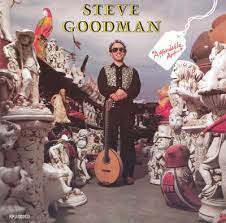
How Much Tequila Did I Drink Last Night is a good-natured morning-after confession that Steve Goodman wrote with his close friend John Prine. It appears on Affordable Art, one of the last albums Goodman made before his death from leukemia in September 1984, released on his own Red Pajamas label.
Prine, who also wrote and sang on the album’s duet “Souvenirs,” shares the writing credit here. DownBeat called the song slight but charming, and Rolling Stone said it makes you wonder whether Goodman could have had a successful career as a Nashville songwriter. Goodman also produced John Prine’s 1978 album Bruised Orange. The track runs about two and a half minutes, and it wasn’t a chart hit.
What You'll Learn From This Lesson
How Much Tequila Did I Drink Last Night showcases Steve Goodman's playful sense of humor and his ability to turn a simple folk-country song into an entertaining acoustic performance. The relaxed, conversational delivery is part of the charm, and the guitar accompaniment works best when it stays steady and lets the lyrics do the talking.
This lesson is played in standard tuning, using the chords G, C, D, D7 and G7. The rhythm follows a repeating down–up–down–up–down–up strumming pattern, with a few hammer-ons adding movement and character to the chord progression. Because it's a relatively short song, there's no extended lead picking break, but I've included some optional riffs at the ends of the verses to dress up the arrangement.
I recommend getting comfortable with the chords, rhythm and hammer-ons first, then returning to the suggested riffs once the accompaniment feels natural. It's a fun song for practicing a consistent strumming groove while adding small melodic touches to a solo acoustic performance.
Guitar Lesson Details - (chords & lyrics sheet incl with lesson)
Back To Song List
The 20th Century Is Almost Over - Learn To Play On Acoustic Guitar
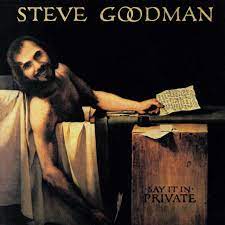
The 20th Century Is Almost Over was co-written by Steve Goodman and his friend John Prine, and it’s a gently funny look at how fast time slips away.
The chorus ends with the reminder that it’s happening “all over this world,” so everyone shares the same ticking clock. Goodman first released it on his 1977 album Say It in Private, produced by Joel Dorn, and Pete Seeger reportedly plays banjo on the recording.
Prine never recorded it himself, but Johnny Cash cut it in 1980, and The Highwaymen, made up of Cash, Waylon Jennings, Kris Kristofferson and Willie Nelson, recorded it in 1985. The song opens in 1899, when everyone sang “Auld Lang Syne,” and asks where the century went.
What You'll Learn From This Lesson
The 20th Century Is Almost Over is another entertaining Steve Goodman song that combines his clever, conversational songwriting with a lively folk-country rhythm. It's a great choice for acoustic guitar players looking for a relatively simple arrangement that still has plenty of personality.
This lesson is played in standard tuning, using just three chords: G, C and D. The accompaniment follows a repeating root–down–up–root–up–down–up rhythm pattern, giving the song a steady, flowing country-folk feel. There are also a few bass runs connecting the chords, which help add movement to the arrangement without making it overly complicated. No separate lead picking is required.
I recommend learning the three chords and getting comfortable with the rhythm pattern first. Once you can move through the progression smoothly, begin adding the bass runs where needed. It's an enjoyable song for developing bass-note strumming, clean chord transitions and a consistent acoustic rhythm while singing.
Guitar Lesson Details - (chords & lyrics sheet incl with lesson)
Back To Song List
The Dutchman - Learn To Play On Acoustic Guitar
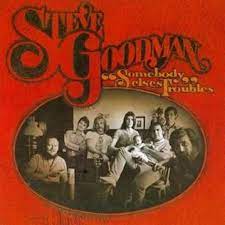
The Dutchman was written in 1968 by Chicago songwriter Michael Peter Smith, who had never visited the Netherlands. The song follows an elderly Amsterdam couple, the gentle Dutchman and his devoted wife Margaret, as he drifts away from her while she tends to him with unconditional love.
Smith’s song reached a wide audience when Steve Goodman made it the opening track of his second album, Somebody Else’s Troubles, released in 1972.
Goodman had been performing it live before he recorded it. Smith later asked Irish singer Liam Clancy to sing it, and Clancy recorded it with Tommy Makem in 1983. Jerry Jeff Walker, Suzy Bogguss and Celtic Thunder have also recorded it. Smith died in 2020 at age 78.
What You'll Learn From This Lesson
The Dutchman, written by Michael Peter Smith and beautifully interpreted by Steve Goodman, is a touching folk ballad that tells a story of love, devotion and growing older. Unlike Goodman's more upbeat and humorous songs, this one calls for a gentle acoustic accompaniment that allows the emotion of the lyrics to come through.
In this lesson, we're playing in standard tuning with a capo on the 5th fret, using the chords G, C/G, Am, D7, Em, Bm, Am7 and A#. There's also an additional chord variation created by sliding the C/G shape up two frets. The accompaniment follows a repeating root–up–down–up–down–up–down–up rhythm pattern, giving the song a soft, flowing folk-ballad feel.
Along with the chord progression, we'll work through one bass run and two short picking riffs that add melodic interest without overpowering the vocal. The moving chord shape is another useful detail to practice, particularly when transitioning between the different sections of the song.
I recommend learning the chords and establishing a comfortable rhythm first, then adding the bass run and two picking riffs once the changes feel natural. This is a rewarding arrangement for developing smooth chord transitions, controlled acoustic strumming and expressive accompaniment while singing.
Guitar Lesson Details - (chords & lyrics sheet incl with lesson)
Back To Song List
You Never Even Called Me By My Name - Learn To Play On Acoustic Guitar
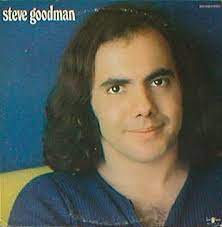
You Never Even Called Me By My Name started as a joke between friends. Steve Goodman wrote it with John Prine in a New York hotel room in 1971, and Prine, thinking it was a goofy novelty, asked to be left off the credits. Goodman put it on his 1971 debut album as a tongue-in-cheek parody of country clichés.
David Allan Coe later told Goodman the song wasn’t truly a country song because it left out mama, trains, trucks, prison and getting drunk, so Goodman added a closing verse that included all five, and Coe called it the “perfect country and western song.” Coe’s recording went to No. 8 on the country chart in 1975, and Doug Supernaw also recorded it in 1994.
What You'll Learn From This Lesson
You Never Even Called Me By My Name is one of Steve Goodman's best-known country compositions, made famous by David Allan Coe. With its humorous storytelling and classic country sound, it's a fun song to play on acoustic guitar, especially when you add some traditional country-blues picking to the arrangement.
This lesson is played in standard tuning, using a repeating root–down–up–bass–up–down–up rhythm pattern. The song begins with the chords G, G7, C and D before changing key and moving into A, A7, D and E. That key change is an important part of the arrangement, so we'll work through both chord progressions and how to make the transition smoothly.
The introduction features a familiar country-blues guitar run, similar to those heard in many traditional country songs. There are also several bass runs connecting the chords, along with some melody-line lead picking that adds interest to the acoustic arrangement.
I recommend learning the chords and rhythm pattern first, paying particular attention to the key change. Once you're comfortable with the accompaniment, begin adding the bass runs, followed by the introductory riff and finally the main melody picking section. It's a rewarding lesson for developing country rhythm guitar, bass-note transitions and the ability to combine strumming with melodic lead work.
Guitar Lesson Details - (chords & lyrics sheet incl with lesson)
Back To Song List
You're The Girl I Love - Learn To Play On Acoustic Guitar
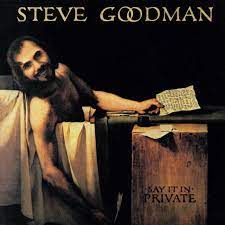
You're The Girl I Love is a sweet, direct love song from Steve Goodman’s 1977 album Say It in Private, where it’s the second track on side one, right after “I’m Attracted to You.”
Joel Dorn produced the album, which Goodman recorded at Regent Sound Studios in New York for Asylum Records, and he plays guitar on all but one of its songs. A contemporary review called the record serious, with lyrics that are direct and to the point, and praised how smoothly the two opening love songs fit together.
The album also includes “My Old Man,” Goodman’s tribute to his father, and “The 20th Century Is Almost Over,” which he co-wrote with John Prine.
What You'll Learn From This Lesson
You're the Girl I Love brings out another side of Steve Goodman's acoustic style, combining a relaxed folk-pop rhythm with some enjoyable melodic guitar work. It's a good song for players who want to move beyond basic strumming and learn how to incorporate short riffs and picking into a complete solo acoustic arrangement.
This lesson is played in standard tuning, using the chords G, C, D and C/G. The accompaniment follows a repeating root–up–down–up rhythm pattern, with a little muted strumming in certain sections to add rhythmic variety. The song also begins with an opening guitar riff, followed by several quick melodic riffs later in the arrangement.
Near the end, there's a main picking sequence that serves as the outro, giving the song a more melodic finish. These additional guitar parts are useful for learning how to move between rhythm playing and individual note picking without interrupting the flow of the song.
I recommend starting with the chords and rhythm pattern, then learning the introductory riff and the shorter riffs that appear throughout the song. Once those are comfortable, return to the main picking sequence near the end. It's a rewarding lesson for developing smooth chord transitions, controlled muted strumming and the ability to blend rhythm and melody on acoustic guitar.
Guitar Lesson Details - (chords & lyrics sheet incl with lesson)
Back To Song List
Steve Goodman Guitar Lessons FAQ
1. What is the easiest Steve Goodman song to learn on guitar?
The 20th Century Is Almost Over is a good starting point because it uses just three chords: G, C and D. The arrangement includes a steady country-folk rhythm and a few bass runs, but no separate lead picking. How Much Tequila Did I Drink Last Night is another approachable choice, with straightforward strumming and optional riffs.
2. Do I need a capo to play Steve Goodman songs?
Not for most of the arrangements taught here. City of New Orleans uses a capo on the 2nd fret but can be played without, while The Dutchman uses one on the 5th fret. The other four lessons are played in standard tuning without a capo. But a capo is used mainly to help find the correct pitch for vocals and songs can be played with one in any position or totally without a capo.
3. What guitar techniques will I learn from these Steve Goodman lessons?
These six lessons cover folk and country strumming patterns, bass-note rhythms, bass runs, hammer-ons, muted strumming, short melodic riffs and lead picking. You'll also practice smooth chord changes, including the key change in You Never Even Called Me By My Name.
4. Did Steve Goodman write City of New Orleans?
Yes. Steve Goodman wrote City of New Orleans, which became a hit for Arlo Guthrie in 1972. Willie Nelson later recorded the song and took it to No. 1 on the Billboard country chart in 1984. Goodman's original acoustic approach has a lively folk-country feel that works particularly well for rhythm guitar and melodic picking.
5. Did Steve Goodman write The Dutchman?
No. The Dutchman was written by Michael Peter Smith, but Steve Goodman's interpretation helped introduce the song to a wider folk audience. The acoustic arrangement taught here combines gentle strumming, moving chord shapes, a bass run and two short picking riffs.
6. Are these Steve Goodman guitar lessons suitable for beginners?
Several of the songs are suitable for beginners who already know a few basic chords. Start by learning the chord progression and rhythm pattern, then add the bass runs, riffs and picking sections as you improve. Songs such as City of New Orleans, You're the Girl I Love and The Dutchman offer additional challenges for players wanting to develop their acoustic picking and accompaniment skills.
Thanks for spending some time with Steve Goodman's music. His humor, warmth and storytelling come through in these songs, and many of the arrangements use familiar open chords that make them enjoyable to learn on acoustic guitar.
Take them one at a time, starting with the chords and rhythm pattern before adding the bass runs, riffs or picking sections where they're included. As you become more comfortable, you'll find that these small touches can make a simple acoustic arrangement sound much fuller and more expressive.
If you liked this Steve Goodman songs page you might also like ... (click images)

Very Easy Country Guitar Songs

Kirby Swinemar is an acoustic guitar instructor, performer and song arranger who has taught online for 21 years and created more than 4,000 original acoustic guitar lessons. He specialises in song-based acoustic guitar instruction, rhythm guitar techniques, and creating full-sounding solo arrangements that help beginner and intermediate players move beyond basic strumming.
Explore more of Kirby's work at Kirby's Guitar Lessons, watch his performances and tutorials on his YouTube Channel or follow him on Facebook. You can also learn more about his teaching background on the About Me page.
Latest 100 Tutorials
© 2019–2026 KirbysGuitarLessons.com — All Rights Reserved