Elvis Presley Movie Guitar Songs | 16 Acoustic Lessons
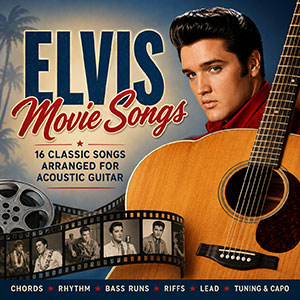
Elvis Presley's movie career produced far more than memorable films and soundtrack albums. It also gave us songs ranging from rock and roll and Latin-flavored numbers to playful duets and slow romantic ballads.
On this page you'll find 16 Elvis movie songs arranged for acoustic guitar, including favorites such as Blue Hawaii, King Creole, Spinout, and Young And Beautiful, along with lesser-known soundtrack songs such as Golden Coins, Marguerita, and Mirage.
The lessons range from simple beginner-friendly rhythm arrangements to songs featuring bass runs, hammer-ons, riffs, walking bass and short picking sections. Each lesson includes the chords, rhythm approach, tuning or capo information where needed, and the guitar techniques I use to play the complete arrangement.
🎸 Watch the Elvis Presley Movie Guitar Lessons Overview
performance clips taken directly from the complete lesson videos.
Click Play, then drag the timeline to quickly preview any Elvis Presley lesson featured on this page.
Note: Every arrangement has been personally created, recorded and taught by Kirby
using teaching methods refined through decades of acoustic guitar instruction.
What's Included With Every Lesson
📦 Your Lesson Package Includes
✓ 8–12 minute HD video lesson so you can learn each song step-by-step.
✓ Printable chords & lyrics PDF for easy practice away from the screen.

✓ Instant download—start playing in minutes.
✓ Learn at your own pace on any device.
Easy Elvis Guitar Songs
Elvis Songs In The 50s
Elvis Guitar Songs From The 70s
Elvis Presley Love Songs
Elvis Gospel & Inspirational Songs
Elvis Country And Blues Songs
More Elvis Resources
10 Elvis Presley Coloring Pages
12 Elvis Presley Wall Art
New to Elvis Movie Songs?
If you're new to playing Elvis movie songs on acoustic guitar, start with lessons such as Blue Hawaii, Crawfish, El Toro, Mirage, or Young And Beautiful. These arrangements keep things fairly simple with manageable chord progressions, straightforward rhythm patterns and little or no lead work.
Once you're comfortable with the basics, move into songs such as Puppet On A String, Shopping Around, or The Lady Loves Me, where you'll begin adding bass runs, hammer-ons, rhythmic stops and other embellishments. More experienced players can tackle songs such as King Creole, Spinout, and Tonight's So Right for Love, where riffs, picking or more involved guitar parts require additional coordination.
Skill Level
Beginner-Friendly:
Blue Hawaii, Crawfish, El Toro, Golden Coins, Mirage, Sing You Children, and Young And Beautiful
Beginner to Intermediate:
Bossa Nova Baby, King Creole, Marguerita, Puppet On A String, Shopping Around, Spinout, The Lady Loves Me, They Remind Me Too Much Of You, and Tonight's So Right for Love
Elvis Presley Guitar Lessons Included On This Page
Bossa Nova Baby Guitar Lesson
Crawfish Guitar Lesson
El Toro Guitar Lesson
Golden Coins Guitar Lesson
I Can't Help Falling In Love With You Guitar Lesson
King Creole Guitar Lesson
Marguerita Guitar Lesson
Mirage Guitar Lesson
Puppet On A String Guitar Lesson
Shopping Around Guitar Lesson
Sing You Children Guitar Lesson
Spinout Guitar Lesson
The Lady Loves Me Guitar Lesson
They Remind Me Too Much Of You Guitar Lesson
Tonight's So Right For Love Guitar Lesson
Young And Beautiful Guitar Lesson
Blue Hawaii
- Learn To Play On Acoustic Guitar
Blue Hawaii
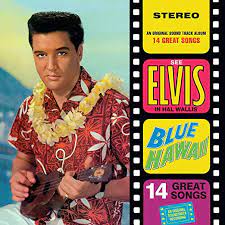
was written by Leo Robin and Ralph Rainger for the 1937 film Waikiki Wedding, where it was performed by Bing Crosby. More than two decades later, Elvis Presley recorded the song for his 1961 movie Blue Hawaii, giving the older Hawaiian standard a new audience.
Elvis recorded Blue Hawaii during the soundtrack sessions for the film, which starred him as Chad Gates, a former serviceman returning home to Hawaii. His relaxed performance fits the tropical setting of the movie and provides a gentler contrast to some of the more upbeat numbers on the soundtrack.
The Blue Hawaii soundtrack became one of the biggest successes of Elvis's career, spending 20 weeks at No. 1 on the Billboard album chart. The title song remains closely associated with both the film and Elvis's hugely successful run of movie soundtracks during the 1960s.
What You'll Learn From This Lesson
Blue Hawaii is played in standard tuning, and I play my arrangement without a capo using the chords G, C, E7, A7, D and Daug. The original recording is one fret higher, so you can place a capo on the 1st fret if you want to play along in the original key.
The song begins with a quick shuffle between the G and C chords, which I play without a pick. Once the progression moves down to E7, I switch to a root-up-down-up, bass-up-down-up rhythm pattern. There are a few bass runs between the chords, and during the second chorus I'll show you a walking bass line that changes the feel of the song and gives that section an almost hop-and-skip quality. There is no lead work required.
I'd rate this lesson beginner-friendly because the chords are manageable and there's no lead guitar to learn. Start with the chords and the two rhythm approaches, then add the bass runs and walking bass once you're comfortable. Bring in the vocals last to complete the arrangement.
Guitar Lesson Details - (chords & lyrics sheet incl with lesson)
Back To Song List
Bossa Nova Baby
- Learn To Play On
Acoustic
Guitar
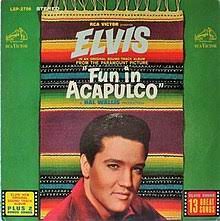
Bossa Nova Baby was written by Jerry Leiber and Mike Stoller and first recorded by Tippie and the Clovers in 1962. Elvis Presley recorded his version the following year for the soundtrack of Fun in Acapulco, where he performs the song during a lively nightclub sequence.
Released as a single in 1963, Bossa Nova Baby blended rock and roll with the Latin-influenced rhythms suggested by its title. Elvis delivers an energetic vocal over a driving arrangement that helped the song stand apart from many of his other movie recordings of the period.
The single became a substantial hit, reaching No. 8 on the Billboard Hot 100. It remains one of the better-known songs from Elvis's 1960s movie years and one of the most recognizable numbers from the Fun in Acapulco soundtrack.
What You'll Learn From This Lesson
Bossa Nova Baby is played in standard tuning with a capo on the 3rd fret using only two chords, A and D7. I found the original key fairly high to sing, so you can lower the capo or remove it altogether if you need a more comfortable vocal range.
The main rhythm is a quick and steady down-up-down-up pattern. While maintaining that groove, you'll blend in several bass riffs around the two chords and mute the strings in places to create the choppy rhythmic feel the song needs. There is also a picking sequence that interrupts the rhythm at several points and adds another recognizable element to the acoustic arrangement.
I'd rate this lesson beginner-to-intermediate. The two chords are easy enough, but keeping the fast rhythm steady while adding the bass runs, muting and picking sequence requires more coordination. Learn the chords and basic rhythm first, then add the bass runs and picking sequence separately before putting everything together. Add the vocals last, and adjust the capo position if the original key sits too high for your voice.
Guitar Lesson Details - (chords & lyrics sheet incl with lesson)
Back To Song List
Crawfish - Learn To Play On Acoustic Guitar
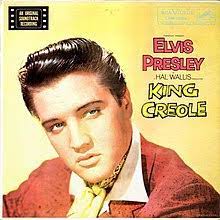
Crawfish was written by Fred Wise and Ben Weisman and recorded by Elvis Presley for his 1958 film King Creole. The recording features jazz and blues singer Kitty White, whose distinctive vocal gives the song its memorable call-and-response quality with Elvis.
The song appears during the opening of King Creole, set against the streets of New Orleans. Kitty White portrays a crawfish vendor calling out her wares as Elvis, playing Danny Fisher, joins in from a nearby balcony. The scene immediately establishes the film's New Orleans atmosphere.
With its bluesy feel and sparse, atmospheric arrangement, Crawfish is quite different from a typical Elvis rock and roll recording. Although it was not released as an Elvis single, it appeared on the King Creole soundtrack album and has become one of the film's most distinctive musical performances.
What You'll Learn From This Lesson
Crawfish is played in standard tuning using only two chords, Dm and Gm. Rather than using a traditional strumming pattern, the arrangement is dominated by a repeating bass riff followed by the chord shape played higher up the neck.
The bass follows a 1-2, 1-2-3-4 pattern before you strike the Dm with an upstroke, and the same idea is then used with the Gm. This bass-driven approach creates the dark, bluesy groove that gives the song its distinctive sound. At the end, you'll play a final 1-2-3-4 count followed by a downstroke on the Dm to finish the song.
I'd rate this lesson beginner-friendly. With only two chords and plenty of time to play the bass runs, the main thing to concentrate on is timing. Get the bass pattern and chord upstrokes comfortable first, then practice singing over the repeating bass movement until everything falls naturally into place.
Guitar Lesson Details - (chords & lyrics sheet incl with lesson)
Back To Song List
El Toro - Learn To Play On Acoustic Guitar
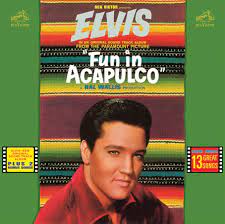
El Toro was recorded by Elvis Presley in 1963 for the soundtrack of his film Fun in Acapulco. Written by Sid Tepper and Roy C. Bennett, the song was one of several numbers created to give the soundtrack a Mexican and Latin-influenced flavor that matched the film's Acapulco setting.
In the movie, Elvis plays Mike Windgren, an American working in Mexico who finds employment as a singer while trying to overcome a troubled past. El Toro reflects the colorful musical setting of the film, with an arrangement designed around its Latin atmosphere rather than Elvis's more familiar rock and roll sound.
The song was not released as an Elvis single, but appeared on the Fun in Acapulco soundtrack album, released in 1963. It remains one of the lesser-known soundtrack recordings from Elvis's prolific movie period.
What You'll Learn From This Lesson
El Toro is played in standard tuning using the chords E, F, G and Am, with no lead or picking break required. The character of the song comes primarily from its Latin-flavored rhythm, which I play using a root-down-up-down-down, root-root-up-down-up-down-down pattern that repeats throughout the song.
The guitar arrangement itself is fairly straightforward, although the vocals climb higher when the progression reaches the G chord. At the end you'll need to hold the higher vocal note over the E chord before finishing with a 1-2-3 downstroke chop on the E.
I'd rate this lesson beginner-friendly. Learn the four chords first and then concentrate on getting the repeating rhythm pattern comfortable and consistent. Once the Latin groove feels natural, add the vocals and work on the higher passages separately if necessary.
Guitar Lesson Details - (chords & lyrics sheet incl with lesson)
Back To Song List
Golden Coins - Learn To Play On Acoustic Guitar
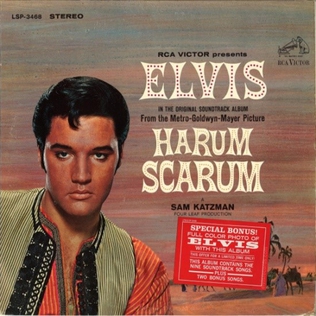
Golden Coins was recorded by Elvis Presley in 1965 for the soundtrack of Harum Scarum. Written by Bernie Baum, Bill Giant and Florence Kaye, the song was created specifically for the film, in which Elvis plays Johnny Tyronne, an American movie star who becomes caught up in an adventure in the Middle East.
The song uses the movie's exotic setting as part of its romantic theme, with Elvis singing about love being more valuable than material riches or “golden coins.” Its Middle Eastern-flavored atmosphere reflects the heavily themed approach used throughout the Harum Scarum soundtrack.
Golden Coins was not released as a single, but appeared on the Harum Scarum soundtrack album later in 1965. Today it remains one of the lesser-known songs from Elvis's extensive collection of movie recordings.
What You'll Learn From This Lesson
Golden Coins is played in standard tuning with a capo on the 2nd fret. The song opens with a faster shuffle rhythm using Dm and E7 before moving into the main progression, where you'll also need Am, Am/Ab, Am7, A7, Cmaj7, D and F.
For the main part of the song, I use a root-down-up-down-up, root-up-down-up rhythm pattern played with a shuffle feel. There are no bass runs or picking sections to learn, so the guitar remains focused entirely on rhythm as you move through the chord progression. At the end of the song, you'll return to the faster steady shuffle used in the introduction.
I'd rate this lesson beginner-friendly because it's strictly a rhythm arrangement with no lead or picking work required. Learn the chord shapes first, particularly the movement between the Am variations, then work on keeping the shuffle rhythm smooth as you move through the progression. Once that's comfortable, add the vocals to complete the song.
Guitar Lesson Details - (chords & lyrics sheet incl with lesson)
Back To Song List
I Can't Help Falling In Love With You - Learn To Play On Acoustic Guitar
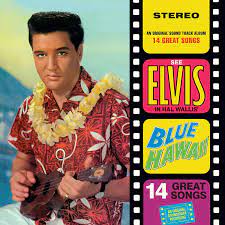
Looking for Can't Help Falling In Love? This classic from Blue Hawaii is now featured on our Elvis Love Songs page.
King Creole - Learn To Play On Acoustic Guitar
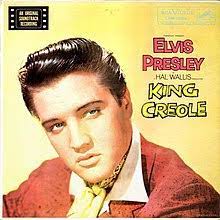
King Creole was written by Jerry Leiber and Mike Stoller and recorded by Elvis Presley for his 1958 film of the same name. The song serves as the title number for the New Orleans-set movie, in which Elvis plays Danny Fisher, a young singer who becomes a performer at the King Creole nightclub.
Musically, King Creole combines rock and roll with a strong New Orleans rhythm and blues influence, fitting both the setting of the film and the tougher musical style of its soundtrack. Elvis recorded the song during the sessions that produced some of his most highly regarded movie material.
The song appeared on the King Creole soundtrack album and was also released as a single in some international markets. It remains one of the best-known title songs from Elvis's film career and a standout recording from his pre-Army years.
What You'll Learn From This Lesson
King Creole is played in standard tuning with a capo on the 1st fret using the chords A, D, A7 and E7. The verse uses a downstroke rhythm combined with some underlying bass movement. Once you reach the chorus, the rhythm changes to a steady down-up-down-up pattern with hammer-ons added to help create that driving rock-and-roll groove.
Later in the song you'll work through a lead guitar picking break that requires some quick movement up and down the neck before returning to the rhythm patterns used in the verse and chorus.
I'd rate this lesson beginner-to-intermediate, mainly because of the lead break and the coordination needed to combine the different parts of the arrangement. Start by learning the four chords and the bass-run/downstroke combination used in the verse. Next, work on the chorus rhythm and hammer-ons before tackling the picking section separately. Once each part feels comfortable, blend everything together and add the vocals last.
Guitar Lesson Details - (chords & lyrics sheet incl with lesson)
Back To Song List
Marguerita - Learn To Play On Acoustic Guitar
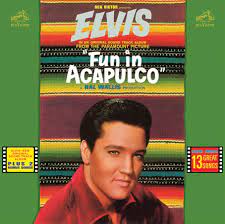
Marguerita was recorded by Elvis Presley in 1963 for the soundtrack of Fun in Acapulco. Written by Sid Tepper and Roy C. Bennett, the song was one of several numbers they contributed to the film and was designed to complement its Mexican setting and romantic storyline.
The song has a gentle Latin-influenced feel, with Elvis singing directly to Marguerita and asking her to return his affection. Its relaxed melody provides a contrast to more energetic songs from the soundtrack such as Bossa Nova Baby, showing the softer side of the music recorded for the film.
Marguerita was not released as a single, but appeared on the Fun in Acapulco soundtrack album in 1963. Although one of Elvis's lesser-known movie recordings, it remains an appealing example of the romantic, location-inspired material created during his Hollywood years.
What You'll Learn From This Lesson
Marguerita is played in standard tuning using the chords Gm, F, D#, D, Cm, Dm, A7, C and A#. There are two different rhythm patterns to learn. The introduction uses a fast shuffle played down-up-down-up-down-down-down as you move through the opening chords.
Once the vocals begin, the rhythm changes to a root-down-up-down-up pattern. On the first downstroke, I use a rake across the chord, dragging the pick across the strings a little slower than a normal strum. This helps create the Latin and Spanish flavor of the arrangement. There is no lead work required, but chord shapes such as D# and A# may take some practice if you're not accustomed to playing them.
I'd rate this lesson beginner-to-intermediate because of the quick shuffle rhythm and some of the less familiar chord shapes. Learn the chords first, then practice each of the two rhythm patterns separately. Once you can move comfortably between the chords while maintaining the different rhythms, blend the sections together and add the vocals to complete the arrangement.
Guitar Lesson Details - (chords & lyrics sheet incl with lesson)
Back To Song List
Mirage - Learn To Play On Acoustic Guitar
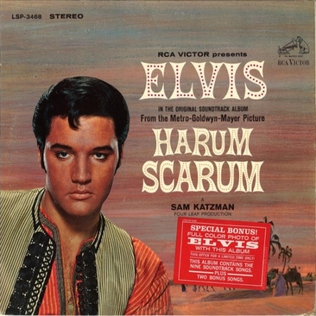
Mirage was recorded by Elvis Presley in 1965 for the soundtrack of Harum Scarum. Written by Bernie Baum, Bill Giant and Florence Kaye, the song was created specifically for the film, which placed Elvis's character, Johnny Tyronne, in a fictional Middle Eastern adventure.
The song uses the idea of a mirage as a romantic metaphor, with Elvis questioning whether the love he has found is real or something that may disappear. Its dreamy, exotic atmosphere fits the Middle Eastern theme used throughout much of the film's soundtrack and offers a softer contrast to some of its more upbeat numbers.
Mirage was not released as a single, but appeared on the Harum Scarum soundtrack album in 1965. It remains one of the lesser-known recordings from Elvis's extensive catalogue of movie songs.
What You'll Learn From This Lesson
Mirage is played in standard tuning and begins immediately with the vocals and strumming. I use one rhythm pattern throughout the entire song, played down-down-up-up-down-up and repeated as you move through the progression. The chords are F, Faug, Dm/F, G, A#m, Dm and Gm. Although some of those chord names may look unfamiliar, the opening F, Faug and Dm/F shapes require only small changes in finger position, making the progression easier than it first appears.
There is no lead picking or bass work required, so once you have the chord progression under your fingers, you can concentrate entirely on maintaining the steady rhythm. The minor chords, along with the augmented chord, help create the distinctive mood and character of the song.
I'd rate this lesson beginner-friendly because you're working with just one rhythm pattern and there are no additional riffs, bass runs or lead sections to learn. Start by getting comfortable with the chord shapes and changes, then add the strumming pattern and work through the complete progression. The vocal range is comfortable in this arrangement, so add the phrasing once the guitar part feels natural.
Guitar Lesson Details - (chords & lyrics sheet incl with lesson)
Back To Song List
Puppet On A String - Learn To Play On Acoustic Guitar
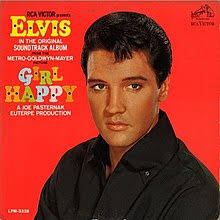
Puppet On A String was recorded by Elvis Presley for the soundtrack of his 1965 film Girl Happy. Written by Sid Tepper and Roy C. Bennett, the song is one of the movie's gentler romantic numbers and provides a contrast to the more upbeat material heard elsewhere in the film.
The lyric finds Elvis comparing himself to a puppet whose emotions are controlled by the woman he loves, giving the song a tender and vulnerable quality. In Girl Happy, it accompanies the developing romance between Elvis's character, Rusty Wells, and Valerie Frank, played by Shelley Fabares.
Puppet On A String appeared on the Girl Happy soundtrack album and was later released as the B-side of Elvis's 1965 single Wooden Heart. It remains one of the softer ballads from his mid-1960s movie period.
What You'll Learn From This Lesson
Puppet On A String is played in standard tuning using the chords G, D, Am, D7, G7, C, Em and A7. I use one relaxed rhythm pattern throughout the song, played root-down-up, root-up-down-up.
There is no lead section to master, but you'll add several bass runs and hammer-ons as you move through the progression, along with a slide pattern that adds another bit of character to the acoustic arrangement. The key is keeping the rhythm light and steady while working these additional pieces into the song.
I'd rate this lesson beginner-to-intermediate, mainly because you'll need to maintain the rhythm while moving through the bass runs, hammer-ons and slide. Start by learning the chords and getting comfortable with the one rhythm pattern. Then add the bass runs, hammer-ons and slide separately before blending everything together. Keep the accompaniment nice and light as you add the vocals.
Guitar Lesson Details - (chords & lyrics sheet incl with lesson)
Back To Song List
Shopping Around - Learn To Play On Acoustic Guitar
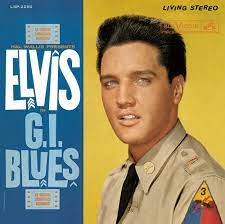
Shopping Around was recorded by Elvis Presley in 1960 for the soundtrack of G.I. Blues, his first film after returning from military service. Written by Sid Tepper, Roy C. Bennett and Aaron Schroeder, the song is an upbeat number built around the idea of enjoying the single life before finally settling down.
In the film, Elvis plays U.S. Army specialist Tulsa McLean, stationed in West Germany. Shopping Around is performed in a nightclub after Tulsa is called onto the stage while trying to charm a woman at the bar, giving Elvis another opportunity to perform within the storyline.
The song appeared on the hugely successful G.I. Blues soundtrack album but was not released as a U.S. single. With its playful lyric and lively delivery, Shopping Around captures the lighter side of Elvis's early-1960s movie music.
What You'll Learn From This Lesson
Shopping Around is played in standard tuning with a capo on the 2nd fret to match the original key of E. You'll use just four chords: A, G, D and E. The introduction begins with downstrokes on the opening chords, and once you reach the D chord and the main part of the song begins, you'll switch to a steady down-up-down-up rhythm pattern.
Throughout the arrangement, you'll add hammer-ons and several bass runs while keeping the right hand moving steadily. These additions work with the rhythm to create the light, bouncy feel of the song. There is no lead guitar section to learn.
I'd rate this lesson beginner-to-intermediate, mainly because of the coordination required to work the hammer-ons and bass runs into the steady rhythm. With only four chords and one main strumming pattern, the foundation isn't difficult. Learn the chords and rhythm first, then add the hammer-ons and bass runs while keeping the groove moving. Once the complete guitar arrangement is comfortable, add the vocals if you're singing the song yourself.
Guitar Lesson Details - (chords & lyrics sheet incl with lesson)
Back To Song List
Sing You Children - Learn To Play On Acoustic Guitar
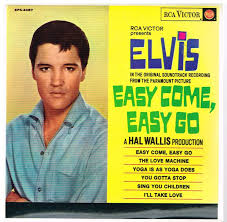
Sing You Children was recorded by Elvis Presley for the soundtrack of his 1967 film Easy Come, Easy Go. Written by Gerald Nelson and Fred Burch, the song has an upbeat, gospel-influenced feel that stands apart from much of the romantic pop material associated with Elvis's movie soundtracks.
In the film, Elvis plays Ted Jackson, a Navy frogman who becomes involved in a search for buried treasure after leaving the service. Sing You Children is performed during a lively musical sequence, with Elvis joining the group onstage and playing tambourine as the song builds around its energetic rhythm and group vocals.
The track appeared on the Easy Come, Easy Go soundtrack EP rather than being released as a single. Its gospel flavor makes it one of the more distinctive songs from Elvis's later Hollywood period.
What You'll Learn From This Lesson
Sing You Children is played with a capo on the 4th fret to match the original key. I use Drop D tuning, although that's optional for this arrangement. I prefer Drop D because it allows me to strum all six strings when playing the D chord. The only other chords you'll need are A7 and Em.
For the rhythm, I use a steady root-down-up-down-up-down-up pattern that drives the song from beginning to end. During the verse, you'll hear a short horn phrase on the original recording. I recreate those few notes on guitar by briefly stopping the rhythm, picking the notes and then moving straight back into the strumming pattern.
The original recording eventually moves up one fret, but I leave that key change out of my arrangement because it would introduce two additional sharp or flat chord shapes without adding much value for a beginner player.
I'd rate this lesson beginner-friendly. There are only three chords, one steady rhythm pattern and no bass or lead work to master. The horn notes are optional, so you can leave them out and simply maintain the rhythm if you prefer. Once you can play the complete guitar arrangement comfortably, add the vocals if you're singing the song yourself.
Guitar Lesson Details - (chords & lyrics sheet incl with lesson)
Back To Song List
Spinout - Learn To Play On Acoustic Guitar
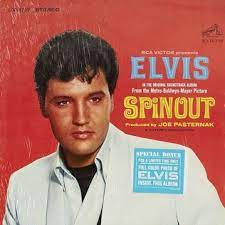
Spinout was recorded by Elvis Presley as the title song for his 1966 film of the same name. Written by Sid Wayne, Ben Weisman and Dolores Fuller, the song was built around the movie's auto-racing theme and gave Elvis one of the more energetic title numbers from his mid-1960s film career.
In the movie, Elvis plays Mike McCoy, a singer and race-car driver who finds himself juggling his music, racing and the attention of several women. The driving rhythm and racing references in Spinout fit naturally with the film's fast-moving storyline.
Released as a single in 1966, Spinout reached No. 40 on the Billboard Hot 100. It was also featured on the Spinout soundtrack album and remains one of the better-known title tracks from Elvis's later movie years.
What You'll Learn From This Lesson
Spinout was recorded in A#, so I play it in standard tuning with a capo on the 1st fret to keep the chord shapes manageable. You'll use A, D, E, Gbm, C#7 and B7.
In the verses, I use a down-down-down, followed by a quick down-up rhythm that moves immediately into a short riff. This happens over both the A and D chords, so you'll need to keep the rhythm moving as you work those riffs into the progression. Outside the verses, the rhythm simplifies to downstrokes. The song also has several stop-and-start sections where you'll use accented downstrokes to help capture the punchy feel of the original. There is no lead break to learn.
I'd rate this lesson beginner-to-intermediate, mainly because of the coordination required to move from the rhythm directly into the two quick verse riffs. Start by learning the chords and playing the entire song using downstrokes. Once you can comfortably follow the progression, return to the verses and add the fuller rhythm pattern and riffs. Finally, work in the stops and accented chord hits. Once the complete guitar arrangement is comfortable, add the vocals if you're singing the song yourself.
Guitar Lesson Details - (chords & lyrics sheet incl with lesson)
Back To Song List
The Lady Loves Me - Learn To Play On Acoustic Guitar
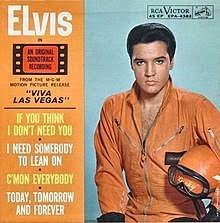
The Lady Loves Me was recorded by Elvis Presley and Ann-Margret for the 1964 film Viva Las Vegas. Written by Sid Tepper and Roy C. Bennett, the song was created as a playful duet between Elvis's character, race-car driver Lucky Jackson, and Ann-Margret's Rusty Martin.
Performed as the two characters trade teasing lines about whether Rusty is actually attracted to Lucky, the song makes good use of the natural chemistry and friendly rivalry between Elvis and Ann-Margret. Their back-and-forth vocals give the number a lighthearted quality that fits the romantic comedy of the film.
Although The Lady Loves Me was featured prominently in Viva Las Vegas, it was not commercially released on record at the time. It later became available on Elvis collections and is now remembered as one of the most entertaining Elvis and Ann-Margret musical moments from the film.
What You'll Learn From This Lesson
The Lady Loves Me is played in standard tuning with a capo on the 3rd fret. The original recording begins one fret lower before moving up a half step, but I keep the capo in one position throughout my arrangement to avoid that key change. The chords you'll need are G, Ddim, Am7, D7, D, C and D#.
I use one rhythm pattern throughout the song, played down-down-up-down-down, which gives the arrangement its light, bouncy feel. There is no lead work, but you'll add several bass runs along with a few starts and stops in the rhythm. A short section in the middle also uses walking bass, and near the end you'll accent the Ddim chord with individual upstrokes or downstrokes.
I'd rate this lesson beginner-to-intermediate, mainly because of the walking bass and the coordination needed to keep the rhythm flowing while adding the bass movement and rhythmic stops. Learn the chords first, followed by the main rhythm pattern. Then add the bass runs and finally work through the walking-bass section before putting the complete guitar arrangement together.
Since The Lady Loves Me was written as a conversation between Elvis and Ann-Margret, I keep the original male and female lyrics intact when performing both parts myself. It would also make a great duet if you have both a male and female singer available.
Guitar Lesson Details - (chords & lyrics sheet incl with lesson)
Back To Song List
They Remind Me Too Much Of You - Learn To Play On Acoustic Guitar
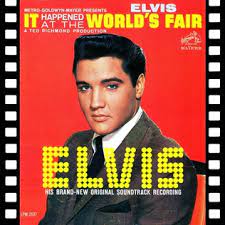
They Remind Me Too Much of You was written by Don Robertson and recorded by Elvis Presley for his 1963 film It Happened at the World's Fair. Robertson wrote several songs recorded by Elvis, and this gentle ballad was well suited to the romantic side of his early-1960s movie material.
The lyric finds Elvis surrounded by things that remind him of a former love, making even familiar sights and sounds difficult to escape. Its restrained arrangement and melancholy theme provide a quieter contrast to some of the lighter songs featured in the film.
They Remind Me Too Much of You appeared on the It Happened at the World's Fair soundtrack album alongside songs such as One Broken Heart for Sale and A World of Our Own. Although it was not released as a single, it has remained a favorite among listeners who enjoy Elvis's lesser-known movie ballads.
What You'll Learn From This Lesson
They Remind Me Too Much Of You is a beautiful slow ballad played in standard tuning with a capo on the 1st fret to match the original key. There are a few picked notes at the beginning and end of the song, while the main accompaniment uses one soft down-down-up rhythm pattern throughout.
The chords are C, Cmaj7, G, Am/G, Dm, Aaug/D, Dm7, G7, Fm, C7, F/C, Edim, D7 and Adim. Although there are quite a few chord shapes to work through, the slow tempo and simple rhythm give you time to make the changes cleanly. There is no major lead section to learn beyond the few picking notes used to open and close the arrangement.
I'd rate this lesson beginner-to-intermediate, mainly because of the number and variety of chords. Learn the chord progression first and become comfortable with some of the less familiar shapes before adding the soft, light rhythm. Finally, work in the opening and closing picking notes. Once you have the complete guitar arrangement together, add the vocals if you're singing the song yourself.
Guitar Lesson Details - (chords & lyrics sheet incl with lesson)
Back To Song List
Tonight's So Right For Love - Learn To Play On Acoustic Guitar
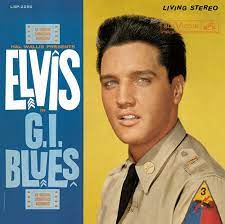
Tonight's So Right for Love was recorded by Elvis Presley for his 1960 film G.I. Blues. Written by Sid Wayne and Abner Silver, the song was adapted from Johann Strauss II's Tales from the Vienna Woods, giving the romantic number a melody with roots in 19th-century European music.
In the film, Elvis plays Tulsa McLean, an American soldier stationed in West Germany. The song accompanies one of the movie's romantic scenes and fits naturally with the European setting while giving Elvis an opportunity to move away from the more energetic rock and roll numbers in the soundtrack.
Tonight's So Right for Love appeared on the highly successful G.I. Blues soundtrack album alongside songs such as Wooden Heart and the title track. It was not released as a U.S. single but remains one of the soundtrack's distinctive romantic recordings.
What You'll Learn From This Lesson
Tonight's So Right for Love is played in standard tuning using a quick root-down-up-down-up-down-up rhythm pattern that repeats throughout the song. Underneath the strumming, you'll work in a repeating 1-2-1-2 bass movement, which helps drive the arrangement forward.
The chords you'll need are C, G7, Dm7, C7, F, D7, C/G and A, along with one variation of the A chord that I'll demonstrate in the lesson. There are also several short riffs blended into the rhythm in different places throughout the song.
For the main instrumental break, I use a short sliding melody riff that lasts about one verse. Rather than picking a series of individual lead notes, you'll use sliding movements to carry the melody while keeping the arrangement flowing.
I'd rate this lesson beginner-to-intermediate, mainly because of that sliding riff break. Start by learning the chords and getting comfortable with the main rhythm pattern. Next, add the underlying bass movement and the smaller riffs used throughout the song. Finally, work on the sliding melody break and blend everything together. Once the guitar arrangement is comfortable, add the vocals if you're singing the song yourself.
Guitar Lesson Details - (chords & lyrics sheet incl with lesson)
Back To Song List
Young And Beautiful - Learn To Play On Acoustic Guitar
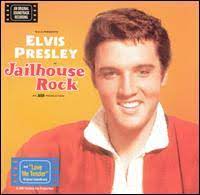
Young and Beautiful was written by Aaron Schroeder and Abner Silver and recorded by Elvis Presley for his 1957 film Jailhouse Rock. The romantic ballad provides a softer contrast to the hard-driving rock and roll songs that dominate some of the movie's best-known musical scenes.
In the film, Elvis performs the song as Vince Everett, whose rise from prison inmate to successful recording artist drives much of the story. Elvis recorded more than one version of Young and Beautiful, including a solo version and another featuring vocal backing, giving the song a slightly different character depending on the recording.
Young and Beautiful was included on the Jailhouse Rock soundtrack EP released in 1957. Although never one of Elvis's major singles, the song has endured as one of the quieter romantic performances from one of his most celebrated early films.
What You'll Learn From This Lesson
Young And Beautiful is played in standard tuning using the chords F, Dm, Gm, C7 and A#. I use one down-up-down-up-down rhythm pattern throughout the song, played with a relaxed feel to suit this slow romantic ballad.
This is a pure rhythm arrangement with no lead picking, bass runs or riffs to worry about. That allows you to concentrate entirely on making clean chord changes and keeping the strumming smooth and steady from beginning to end.
I'd rate this lesson beginner-friendly because there are only five chords and one rhythm pattern to learn. Start by getting comfortable with the chord progression, then add the strumming pattern and work your way through the complete song. Once the guitar arrangement feels natural, add the vocals if you're singing the song yourself.
Guitar Lesson Details - (chords & lyrics sheet incl with lesson)
Back To Song List
Frequently Asked Questions About Elvis Movie Songs on Guitar
Are Elvis movie songs easy to play on acoustic guitar?
Many of them are. Several lessons on this page, including Blue Hawaii, Crawfish, El Toro, Mirage, Sing You Children, and Young And Beautiful, are beginner-friendly arrangements with straightforward rhythm patterns and little or no lead work. Other songs add bass runs, hammer-ons, riffs, walking bass or picking sections and are better suited to beginner-to-intermediate players.
Do I need a capo to play these Elvis movie songs?
It depends on the song and the arrangement. Some lessons use a capo to match Elvis's original recorded key while allowing you to play more manageable chord shapes. Others are played without one. The lesson information for each song explains the tuning and capo position I use, and you can sometimes move the capo if you need to adjust the key for your own purposes.
Are these Elvis movie songs played in standard tuning?
Most of the arrangements on this page use standard tuning. Sing You Children is one exception where I use Drop D along with a capo on the 4th fret, although Drop D is optional in that arrangement. I use alternate tuning only when it provides a practical advantage for the acoustic guitar part.
Do these lessons include riffs, bass runs and lead guitar?
Where the song calls for them, yes. Some arrangements are pure rhythm guitar, while others include bass runs, hammer-ons, slides, walking bass, short riffs or picking sections. Songs such as King Creole, Spinout, and Tonight's So Right for Love contain more involved guitar parts, while songs such as Mirage and Young And Beautiful can be played with chords and a single rhythm pattern.
What's the best way to learn these Elvis songs on guitar?
Start with the chord progression and make sure you can move comfortably between the shapes. Next, learn the main rhythm pattern and play through the complete song using just chords and rhythm. Once that foundation is solid, add any bass runs, hammer-ons, riffs, slides or picking sections one at a time. This layered approach makes the more detailed arrangements much easier to learn.
Can I play these arrangements if I'm not singing the Elvis songs myself?
Absolutely. These are acoustic guitar arrangements, so you can play them on your own, accompany another singer or use them as the rhythm guitar part in a duo, trio or larger group. If you are also singing, learn the complete guitar arrangement first and then add the vocals once the guitar part feels comfortable.
These Elvis movie songs offer a great cross-section of the different musical styles he explored throughout his film career. Beginners can start with straightforward rhythm songs such as Crawfish, Mirage, or Young And Beautiful, while developing players can move into arrangements such as Puppet On A String, Shopping Around, Spinout, and Tonight's So Right for Love as they become comfortable adding bass runs, hammer-ons, riffs and other embellishments.
You don't need to master every technique at once—learn the chords and rhythm first, then build the additional guitar parts into the arrangement one step at a time. Whether you're playing on your own, accompanying another singer or adding the vocals yourself, these lessons are designed to help you turn each song into a complete acoustic performance.
If you enjoy Elvis Presley's timeless rock 'n' roll style, you may also enjoy guitar lessons from fellow 1950s pioneers including The Everly Brothers, Roy Orbison, Ricky Nelson, Chuck Berry, and Buddy Holly. You can also return to our 50s Guitar Songs directory to explore even more classic artists and songs.
If you liked this Elvis guitar songs from the movies page you might also like ... (click images)
Top Hits Of The 50s
Latest 100 Tutorials
© 2019–2026 KirbysGuitarLessons.com — All Rights Reserved